Stay up-to-date on our latest blogs, upcoming webinars, and cutting-edge research.

Editor's Choice

Read the Latest Stories

For Individuals

Sponsorship – Why go it Alone? Building Yourself a Sponsorship Coalition

For Individuals

Sponsorship – Why go it Alone? Building Yourself a Sponsorship Coalition
Leadership is always topical; no matter where we turn, it seems we are surrounded by examples of leadership, sometimes good, sometimes bad, or at least according to our own assessment! And if we extend this consideration to 'inspirational leadership', it’s likely that you will call to mind the names of many people whom you find inspirational, or maybe not so inspirational. The examples set by leaders is certainly a prominent (and topical) part of our social discourse, particularly as we navigate current social and economic challenges. Leadership vs. Sponsorship As a change management consultant and trainer, working across the public and private sector, I often reflect on the value that leaders bring to the project and programme domain as sponsors of change. Having been associated with Prosci, the leading international research organisation focussed on change management, since being certified as a practitioner by Prosci’s founder Jeff Hiatt in 2004, the topic of sponsorship, and more specifically, the impact of sponsorship on the successful outcomes of change projects has remained an ongoing topic of interest for me for almost 17 years. Tellingly, in all 11 of Prosci’s Best Practice Research studies over the last 20 years, active and visible sponsorship has remained the #1 contributor to the success of change projects. The weight of 20 years of research on this topic is difficult to ignore, and so it’s not hard to make the case for the importance of active and visible sponsorship. Deeper exploration of this topic in Prosci’s Best Practice research provides an even more compelling consideration, namely the strong correlation between the effectiveness of sponsorship and the extent to which projects meet or exceed their objectives, as illustrated by the following excerpt from the latest edition of the bi-annual research study: What Constitutes Effective Sponsorship? Effective sponsorship is as much about ‘being’ as it is about ‘doing’ – sponsors need to BE engaging and accessible, remain focussed on supporting those responsible for driving the changes they sponsor, and communicate their own support for the change as they interact with impacted stakeholders across the business. These requirements place strong demands on the time of senior leaders who typically have a limited amount of that precious resource! Therefore, sponsors need support, primarily from change practitioners responsible for planning the interventions and events which they are required to headline, and also from the project managers who drive these respective initiatives. In addition to the support of change and project managers, one of the critical activities which sponsors need to undertake is to build a coalition of sponsorship with other influential leaders across the organisation. The absence of this collective leadership support for change makes it extremely difficult to ensure that all the impacted people across the organisation receive the backing they need from those entrusted with steering their organisation towards mutually beneficial objectives. Ok, so? So…when it comes to sponsorship, it certainly does not pay to go it alone! The support of your project and change manager together with a coalition of your peers will ensure that you are significantly more likely to be a successful sponsor. And this, in turn, will contribute to successful project outcomes. If you would like to know more about Sponsorship, and how to build a sponsorship coalition, watch one of our sponsorship-themed on-demand webinars and see what live webinars we've got coming up!
My Top 3 Prosci Tools within Proxima

For Individuals

My Top 3 Prosci Tools within Proxima
To be a successful change practitioner, having access to a structured set of tools is imperative, and helps make the job a lot easier. Proxima: An Insiders Recommendation As a Prosci certified change practitioner, you have access to a wonderful resource within the Prosci Portal called Proxima. Proxima was designed to successfully navigate your way through managing the people side of change. For those of you who cannot work without structure, like me, this is ideal. Proxima guides you through the Prosci 3-phase process with cleverly designed prompts. Need to explain the value of Change Management? Not to worry - Proxima has a space for that. Need to put your project on 1 page? Proxima has something called the 4P’s -an immensely powerful tool that sums up your project’s benefits to the organisation on 1 page. Proxima allows you to create a new project from scratch, collate all the information in one place, share it with your colleagues, and collaborate with them. The thing I really enjoy about Proxima is that it makes you think hard about your project and the employees impacted by the project, it sparks conversations and gives you a concrete application to work with and to track where you are in the change management process. There are many wonderful functionalities within Proxima, and once you get started you will find the tools that work best for you and your organisation. So, without further ado…. Here are my 3 favourite tools to use in Proxima. Risk Assessment The most important thing here is not the risk assessment itself, but the Risk Grid Customisation Guidelines that helps you to interpret the scores of the Risk Assessment. So, if you scored quite high (4 or 5 in any category) there are handy tips and mitigation strategies to help you move the organisation through change. Whether you are facing executives or senior managers that lack skills and knowledge with regards to change competency or your organisation is over saturated with change, the Customisation Guidelines gives you a myriad of ways and strategies to mitigate those factors, so that you can implement your change successfully, even with the stakes against you. You have the option to do a high-level assessment of the overall change, or even go down to a more granular level by doing a risk assessment for each group to ascertain which groups you need to focus on just a little bit more. Change Management Plans The ADKAR Blueprint (a plan that sets out the activities to be undertaken to address each stage of ADKAR) is considered to be the “backbone” of Change Management. However, I would argue that your Change Management Plans are what really sits behind the success of your change initiative. With the assistance of your Blueprint, you can build out a variety of Change Management plans to assist you in successfully driving your change by moving the impacted individuals through the ADKAR Model. As Change Management Plans address specific ADKAR elements, you can customise your plans to accomplish the highest value change management activities. The best thing is that it allows you to add as little or as many details and activities as you want to your plans – so, customisable and scale-able to fit every project and situation. Change Management Plans are also a fantastic way of reminding everyone that Change Management is not just communications and training, but that it needs input and effort from a variety of role players within the organisation, such as your Sponsor and People Managers for instance. Prosci Change triangle Lastly, but definitely not least – if you want a snapshot of where your strengths and weaknesses are, you don’t have to look any further than the Prosci Change Triangle. With one glance you can see if your organisations’ view of success is defined, what your leadership/sponsorship looks like and how the disciplines of Project Management and Change management are doing in the organisation. It helps define the reason for the change as well as the project objectives and organisational benefits. The PCT helps you to track the overall health of your project and the assessment scores are a leading indicator of the potential for successful implementation of your project. Once you get the 3 legs of Leadership/Sponsorship, Project Management and Change Management to work together collaboratively, the success of your project will be guaranteed. It is recommended that you do the PCT at least 3 times during the lifespan of your project – at kickoff, go-live and then again at your outcomes date (To track this you can use your roadmap – another great functionality in Proxima) . And trust me - there is nothing more satisfying than seeing all your reds and ambers turn to green due to all your change management efforts. Making Change Better with Proxima I have to admit - choosing just three tools in Proxima has not been easy and took a bit of agonising over, as there are so many great functionalities available to empower you as a change practitioner. It doesn’t matter whether you have just started out as a Change Practitioner, or if you have been a Change Practitioner since you can remember, (sometimes if feels like it is all you can remember, right?) you are sure to find something in Proxima that is going to make you DO CHANGE BETTER. For the novice practitioner it works great to remind you what to do step by step from start to finish, and as an experienced practitioner you can choose the tools that works best for you and integrate them with some of the tools you already have available in your change management arsenal. The best of all is that all these amazing tools are held in one central repository, available to you online. Your access to Proxima also includes access to Prosci’s Knowledge Hub as well as the Research Hub - which holds volumes of valuable research that was conducted by Prosci about topics such as Resistance Management, Communication, Change Saturation and much more. Proxima is not just for show, but most definitely a tool to master, to integrate into your organisation’s change management arsenal and to work through step by step, to enable you to be the best Change Practitioner you can be. Learn more and gain access to Proxima If you'd like to learn how to use and navigate your way through Proxima, and simultaneously become a certified Prosci change management practitioner, consider attending an upcoming Prosci Change Management Practitioner Program. We also offer private, single-company on-site training and advisory support worldwide you can find here.

Projects and Initiatives

City of Leeuwarden Improves Work Practices With Prosci

Projects and Initiatives

City of Leeuwarden Improves Work Practices With Prosci
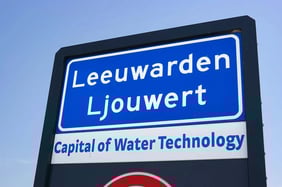
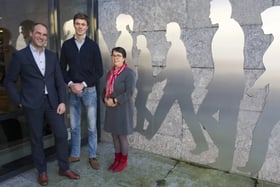
It’s not uncommon for the implementation of new standard practices in a municipal government to turn into a series of mounting headaches. But the city of Leeuwarden figured out how to avoid the major pitfalls with the help of the Prosci Methodology. In 2020, the city of Leeuwarden embarked on the significant task of introducing a more standardized way of working The city had already made multiple attempts to implement a more standardised system. There had been talk of a temporary system, but many of the employees did not understand how that system worked. Jelda Veninga was a member of the project team leading the introduction of this new methodology. Albert van Holthoon served as the programme manager of the Leeuwarder Digital Agenda. According to him, “Implementing new standard practices hasn’t always gone well in the past. This time it needed to work.” Making the task even more complicated, the city chose to tackle it jointly with two other towns: Noardeast-Fryslân and Waadhoeke. Discovering the Prosci Methodology Together, the three towns forged the bonds of collaboration through roundtable discussions about change, implementation and onboarding. Along the way, they realised that the Prosci Methodology could help them make this mission a reality. The project team took part in Prosci training led by Erik Steketee, a Prosci Certified Advanced Instructor. The goal was to use the Prosci Methodology to help the entire municipal team feel invested in the new way of working and champion the approach. “Over the course of the three-day training, Erik led us in a light-hearted way through some fairly heavy topics,” van Holthoon remembers. “It was just before the lockdown began, and thus in person. And what I found really powerful was the simplicity of Erik’s story. It just really energised us.” This energy spurred the project team members to first hold talks with everyone in the local government. They pieced together the big picture of which departments would be most impacted and where resistance behaviors were likely to emerge as well as where they were already occurring. “[This was] important,” says Veniga, “because key users want to stay ahead of the game; we need to make sure we’re including them." While the programme managers shared the strategy with the people at the top of the organisation, Veninga turned her attention to the impact it would have on the work floor and actively sought out the points of resistance. Most of the team felt positive about this change, but there were definitely opponents. Luckily, they were well prepared to discuss why the change was needed and why it needed to happen now. The Value of ADKAR Assessments One of the three models in the Prosci Methodology is the ADKAR® Model for individual change. Its first two letters stand for Awareness and Desire. Conducting a series of online and in-person ADKAR Assessments or "ADKAR checks" to evaluate where people stood on their change journeys, the project team organised with the management team and key users. According to the programme manager, it became evident that people had either very positive or very negative feelings about the project. “There was nothing in between, and that was great because that says something about the people themselves.” For Jan van der Werf, project leader on the city of Leeuwarden’s people side of change, it was his first time encountering this part of the Prosci process. “I learned from the ADKAR checks that you shouldn’t let a negative score rattle you. It gives you the insight to direct your attention towards the problem areas. This pushed us to reach out and get everyone more involved in the project. I think the advantage was that it opened up more conversations with the team, to help us realise this change. I hadn’t experienced this working in the government sector before. It was wonderful." Veninga agrees. “We needed to get 1,700 employees through the process. That’s quite a lot. The strength of this method is the follow-up and active feedback. The Prosci Methodology allows you to take advantage of an exponential learning curve. In the end, everyone in the organisation scored well on the criteria: ‘I understand why this change is needed and I want to be part of it’.” A change management wake-up call However, there a disparity in understanding about the pace of adopting change. The key users had already thought about the process changes before they went live, but that was less true of other users across departments. “In hindsight, we should have given them an even bigger wake-up call,” suggests Veninga. “The actual impact on people only became clear later in the process. On the change side, we were ahead in our technical planning.” That led to members of the project team getting lost in the details, including the technical ones. Van der Werf notes in retrospect: “I think that the supplier of these new standard practices might have found us a bit difficult for this reason.” The new system of practices went live in Leeuwarden in June 2021. Barely a month later, the members of the project team looked back at that launch with satisfaction: “Right from the moment that we went live, we were ready to help with any issues people encountered. We got compliments for that. That was the moment all our earlier investments paid off. All together, we spent a lot of time on this; but when I see the results, it was more than worth it.” Veninga heartily agrees. Most of all, she is happy that the organisation is now looking to the standard practice principles rather than towards past experiences. “In my experience, that success comes first and foremost from our collaborative approach, the Prosci Methodology. That gives you a common language to use.” Van Holthoorn says that the use of the Prosci Methodology will expand in Leeuwarden. “We’re using it now for all major IT changes to help people see the forest for the trees. Just as with implementing standard practices, it helps people get the how and why.” The municipality management team has also become a Prosci fan, according to Veninga. “They are just speechless. As they should be. Even the biggest opponents in the organisation eventually found that they had nothing left to complain about.” “The Prosci Methodology allows you to take advantage of an exponential learning curve”
Shared Services Center Drechtsteden Improved Customer Satisfaction through Integrated Service Center

Projects and Initiatives

Shared Services Center Drechtsteden Improved Customer Satisfaction through Integrated Service Center
From eight separate service counters for the 11 affiliated customer organizations to one central service office. The Drechtsteden Shared Services Center realized their ambition. In the past, each department of the Drechtsteden Shared Services Center had its own service desk (online, call and counter) with its own service levels, tools and processes. These service desks were occupied in turn by employees of the department. Many employees did this work in addition to their ‘regular’ work. As a result, a telephone call was sometimes felt as a disruptive interruption of the daily work. However, this was not the case in the IT and Finance departments, because they had already teams that focused specifically on client services, and that worked very well. The IT service desk, for example, used an advanced service management process and tool, a knowledge management system and the recording of incoming calls. It was therefore decided to introduce this model for the entire services center in order to improve central accessibility for clients (one-stop-shopping and integrated services) and the desire to increase service levels for the entire organization. The immediate ‘why’ for launching this change project was a reorganization of the Facility Services department and a decreasing customer satisfaction. This led to the merger of al service desks into one central and integrated service office. How did you end up at Prosci? “One of their consultants had previously done a job for Drechtsteden, regarding services to the citizen that was a successful change. Nevertheless, there were also two other service providers on our shortlist. We were looking for an adviser who could think in terms of customer impact and guiding the organization though a transition. There was a match with this project/change manager. You would think: a process specialist only focuses on processes, but that turned out to be incorrect. The project manager focused on all relevant aspects of the change; he mastered the entire scope. Both technical and people side. “ "We did not get an answer to our question, but a solution to our problem." — Marvin Suijker, Manager IT What kind resistance have you met in the organization? “We had to ensure that the departments were willing to hand over their first-line client services to us. The starting point was and is the cooperation with these departments, where the best possible service to the customer was our shared focus. Of course there was some hesitation at the beginning, because they assumed they would lose control of quality and their work. Prosci has helped us very well with this. We split the change into smaller projects for all involved departments to chart customer questions, processes and systems. There were of course some people who had their doubts about these developments. We invested most time and energy in the large majority who was willing to embrace the plans without forgetting the others. Everyone undergoes a change in his or her own pace. Those who need longer time can indulge in the exemplary behavior of others who are already further in their individual change process. The change phases are the same, but the pace and needed approach is different per group and individual.“ "The project/change manager has not done a job for us but with us." — Annemarie van de Ven, Direct Supervisor SCD Services How did you get buy-in from the impacted employees? “There was an important role for the Prosci ADKAR® model (Awareness, Desire, Knowledge, Ability, Reinforcement) that was introduced. It all starts with awareness of the need for change. Then the next crucial question raised: ‘what’s in it for you at an individual level?’ That was a moment when sometimes frustration came up. We have noticed that the ADKAR® model is very useful to get all employees step by step on board and make a succesful individual transition. Even though the steps are sometimes small or challenging, the model always works.“ "It all starts with awareness of the need for change. Then the next crucial question raised: what’s in it for you at an individual level?" — Michiel Vrijhof, Customer Services Advisor What happened in practice? “The project/change manager always said: if you want a change to really work for employees, you have to keep talking about the Why and WIIFM (five to seven times). The project/change manager supported on the communication messages and approach for each impacted department and group of employees. We succeeded in taking away the idea that something was taken away from them and on the contrary delivered the insight that the services to our clients would improve. Moreover, he convinced us of the usefulness of sponsorship at executive and direct supervisor level. They openly expressed their support. That helped people to understand the necessity of the new way of working.“ How is the organization doing now? “There are still people who have difficulty with this change. But we recently examined to what grade employees are satisfied with their job and the new way of working. This led to an average score of 7.9. Of course there are people who find it difficult to let go of tasks or take up new activities, but in general people are in the right place and delivering great work.“ "The project team and steering committee has made this change a success by supporting this change with much enthusiasm from their own specific role during this change. Marvin, as a visible and active primary sponsor and building a good sponsorship coalition at board level. Annemarie, by supporting the employees as direct supervisor during the change, which was sometimes perceived and experienced different for each impacted employee. Michiel, by developing the services of the new team step by step together with the different departments and by guiding employees in their journey. An excellent collaboration! It was a great pleasure to be part of this team." — Andy Schoonbroodt, Project / Change Manager When you look back? “Our assignment to the project/change manager was fairly clinical in nature: organize first-line services in a customer-oriented way of working. We now always say: "We did get an answer to our question, but a solution to our problem. And we can also look ahead. At one point the project/change manager consciously stayed in the background and handed us the tools to do it ourselves. The moment he gets out, the services and improvement must of course continue. The project/change manager has not done a job for us but with us. By the way, we still have a help line, because it is our ambition to bring client services to the next level. ” About Shared Services Center Drechtsteden The Drechtsteden Shared Services Center is the shared service center for seven municipalities and four related organisations that together form the Drechtsteden. For these organizations, the SCC provides services in the area of IT, HR, Finance, Purchasing, Information services, Communication, Facility Services and Legal Affairs. To improve the service for their clients (employees of their customer organizations), the SCC decided to set up one central entry point for all customer questions and one integrated services office.

Enterprise

4 Dos and Don’ts When going “Agile” Enterprise Wide

Enterprise

4 Dos and Don’ts When going “Agile” Enterprise Wide
Going Agile entreprise wide? We help you navigate the waters of organisational change. And to get you there, we take a deep dive into Change Management best practices. Key contributors, obstacles, lessons from past experiences … here is all you need to keep in mind before embarking on the journey. “How Did They Get There?”: 4 Success Factors Worldwide surveys conducted by Prosci over the years pinpoint 4 success factors closely tied to how well organisations can manage the change in a structured and consistent way: Not addressing resistance upfront. Managing resistance is a big part of dealing with the change. And it should be done at three different points in time: reventively by explaining the value of Agile, proactively by addressing doubts and concerns, and reactively when resistance starts to hinder progress. Maintaining traditional waterfall approaches. Problems arise when Agile is not yet the norm. Its principles and practices must be applied to every single initiative. Partial or fragmented implementation ends up consolidating the status quo and legacy routines. Fearing failure. This goes against the mindset and everything the approach stands for. But as Edwards Deming wisely said, “transformation is not automatic. It must be learned; it must be led”. That brings us to the final obstacle, and probably the biggest hurdle. Not treating the change as a cultural change. Agile transformations take time and targeted Change Management skills. It is essential to map out culture, understand and measure it to effectively shift mindsets and behaviours. For that reason, agile transformations are never … that agile. Enablers Barriers Active and Visible Executive Sponsorship Not addressing Resistances Effective Communication Still using of Traditional Waterfall Approaches Training on Agile Fearing the Change Agile Experts Not treating Agile as a Cultural Change 4 Major Lessons from Successes and Failures When asked what they would do differently in hindsight, respondents to Prosci's survey emphasised several key points that sum up a lot of the above: Create a Change Management plan. A robust Change Management plan can address recurring issues, starting with the need to create awareness and desire, or deal with resistances before they surface and spread. Create buy-in from impacted groups. Improving adoption rates takes intentional efforts. Generating buy-in among top executives and involving sponsors is only half of the battle. To get everyone on board and cascade the change, managers are your best allies. Deliver more coaching on Agile. Oftentimes teams fail to embrace the approach because they haven’t been properly equipped and feel they are tiptoeing through a minefield with the approach technicalities. Apply Agile sufficiently. Creating organisational agility (agile) is one thing. Choosing and implementing specific Agile methodologies to run the portfolio is another (Scrum, Lean, Kanban, …). As mentioned earlier, make sure to apply Agile sufficiently. In our experience, the biggest challenge with organisations asking us to do Change Management in Agile is their patchy implementation of Agile.
Calculating the ROI of Enterprise Change Management

Enterprise

Calculating the ROI of Enterprise Change Management
Demonstrating the ROI of an organisational activity is often an essential consideration when determining future budget spend. Projects and initiatives are scrutinised heavily for their successes and their continuation dependant on financial returns. Enterprise Change Management as an organisational initiative comprises of an interwoven framework of processes and systems applied to each movement of change within an organisation. Return of Investment of Change Management Reflective of it's complex nature, it can be difficult to calculate the ROI of enterprise change management; facing the challenges of justifying the return on budget, time, work and effort required to manage the people side of change. Implementing change management effectively throughout the entirety of an organisation is not an instantaneous fix; but rather one that is dependent on high levels of employee engagement; senior staff buy-in; time and resource. Achieving high enough levels in each of these to ensure the successful adoption of change management requires considerable commitment of attention and budget share. However, as an initiative it is not one that ROI can be directly calculated. Instead, the return of investment of change management becomes wholly inseparable form project ROI. As a popular topic of contention it was one that Prosci, global leaders in enterprise change management, gave due consideration resulting in the identification of the following concepts for calculating ROI for enterprise change management. Analysing ROI for Enterprise Change Projects At a base level the result of applying change management is the effective achievement of the intended results and outcomes of a project. Therefore, the ROI of change management is the additional value created by a project due to employee adoption and usage. Calculating the return on investment is an analysis process that all project and senior leaders are familiar with; weighing out the ‘expected project benefits’ against the ‘project costs’. When considering the ROI of change management, it is the figures associated with the ‘expected project benefits’ that fall under the greatest consideration. As part of this consideration it becomes important to determine how these benefits can be subcategorised as either: ‘Independent of adoption and usage’ or ‘Dependent on adoption and usage’. The deployment of a replacement software program has a number of benefits that can be subcategorised accordingly. The requirement of lower licence and maintenance fees are benefits that are achieved independently of adoption and usage by employees. But on the other hand, when used proficiently, the software enables the production of more accurate and timely data, increasing performance and reducing errors. Achieving these benefits is dependent upon the impacted employees effectively adopting and using the replacement software. It is the benefits dependant on adoption and usage that are realised through increased change management capabilities. How to calculate the ROI for Change Projects? Enterprise change management largely focuses on the considerations made to management of the employees operating within a changing environment and the influence this has on behaviours, attitudes and roles. Therefore, it is important to consider the extent of the impact each project will have on the people of your organisation; the larger this impact the greater the necessity of effective change leadership. This enables the consideration of the question: ‘what would the expected benefits be if adoption and usage were 0’? By establishing figures linked directly to the expected benefits if adoption and usage was 0 the value and the expected benefits contributed to what can be considered the people side the value and ROI of change management can be illustrated. The final stage would be to divide the people side benefit contribution into the expected project benefits. Creating a model around these figures and calculations results in a percentage figure that represents the weighting of expected project benefits that can be attributed to change management. However, this also operates on the assumption that all other factors have been effectively designed, developed and delivered. Effective change management is an organisational initiative that can require intensive resource attention during the implementation processes that ultimately lacks readily available results of the tangible nature. This makes calculating the ROI associated with change management difficult; however, by breaking down the expected benefits of a project it becomes possible to subcategorise these benefits into those that are dependent on employee performance and those that are not. It is these benefits which are highly dependent upon effective employee performance which are subjective to change management capabilities and therefore contribute to the ROI of enterprise change management.

Lead Successful Changes

Learn how to apply the Prosci Methodology, models and tools to help deliver better project outcomes.

GET CERTIFIED

See Results

Learn how organizations around the world are succeeding at change by partnering with Prosci.

READ SUCCESS STORIES