5 Mins
Published: April 22, 2026



Most data governance initiatives begin with the right intentions: improved data quality, reduced regulatory risk, increased data security, or better decision-making. Yet, these intentions often translate into defining policies, roles and tools, failing to account for the fact that data governance also changes the way people work.
Without accounting for the people side of change, even well-designed governance frameworks become policies without effective practices. This is where change management becomes essential. Here’s how to use change management effectively in data governance.
Change Management in Data Governance
Data governance refers to the framework of policies, processes, roles, and standards that define how an organization creates, manages, protects, secures, and uses data. Its purpose is to define data ownership, ensure data integrity, and maintain data quality. Enterprises introduce data governance changes to enable better decision-making, support regulatory compliance, improve data quality, and scale digital initiatives.
When an organization introduces changes, they typically affect how people define, enter, access, and interact with data, making data governance both a people and a technical shift. Change management is critical because data governance only works when people consistently follow policies, practices and procedures. The foundations of a change management strategy, including clean communication, training, and leadership engagement, help employees understand why data governance matters and how their behaviors influence data outcomes.
When is Change Management the Right Tool in Data Governance?
Not every data governance change requires a complete change management strategy. Minor, localized updates, such as slight data definition changes within a small team, may not need a change management plan. However, when data governance changes affect multiple systems, roles, or ways of working across the organization, change management becomes mission-critical. Change management is the right tool in data governance when supporting:
Mergers and acquisitions (M&A)
During mergers and acquisitions, organizations integrate datasets from multiple separate companies, each with its own systems, standards, definitions, policies and practices. It’s not uncommon for M&A activity to expose conflicting and inconsistent data practices across the individual entities. In addition, data ownership can become murky without clarity during the merge. Change management helps clarify roles, align stakeholders around shared governance practices, and guide employees through the transition to a unified approach to managing data across the newly combined organization for ongoing success.
Exponential organizational growth
As organizations experience rapid growth, the volume, variety, and complexity of the data teams use often increase significantly. What worked from a governance perspective when the organization was smaller may no longer be sufficient as the enterprise develops new data, teams, products, and structures to support its market growth. Change management is necessary during periods of explosive growth, as a strategic approach helps employees adopt formal data governance practices, reinforcing accountability and ensuring that data quality and management keep pace with growth.
New regulations and updated compliance requirements
When navigating regulatory and compliance requirements, there’s little margin for error, as organizations that fail to meet them risk fines, penalties, and reputational damage. Changes in regulatory and compliance requirements typically require enterprises to manage data differently, such as by collecting new information, restricting access to particular datasets, or introducing new security measures. These changes can significantly impact daily operations and decision-making. A change management strategy ensures employees understand what they need to do, why it matters, and how to comply, reducing risk while meeting governance expectations.
Key Components of Change Management in Data Governance
Effective change management turns data governance from a set of rules and policies into sustained behaviors. While governance frameworks define what should happen, change management focuses on how people adopt and follow those expectations. The following components are foundational to successful data governance changes:
A clear definition of success
Data governance initiatives struggle when organizations fail to define success and how they will measure it clearly. Change management ensures teams prioritize establishing what “good” looks like, whether that’s improved data quality, clearer data ownership, or role-based restricted data access verified through auditing. Clear success definitions give the change team and people impacted direction while creating a shared understanding of why the change matters.
Stakeholder engagement
Data governance affects numerous stakeholders, including data owners, individual contributors, and senior management. Engaging these groups early in the process and clarifying roles and responsibilities builds ownership of the change. Sponsors and people managers interact directly with individuals who need to change and are equipped to deliver communications, support, and coach teams through their transitions. Change practitioners and project managers facilitate the change behind the scenes and develop and coordinate the plans that sponsors and people managers will execute. A coordinated system of key roles drives change in an organization, and stakeholder engagement is crucial to its coordination.
Training and knowledge transfer
Governance changes typically require people to work with data differently, following new standards or policies, or by using new tools. Targeted training programs equip stakeholders with the knowledge and skills needed to manage data governance processes effectively. In practice, this looks like training on data management practices, governance policies, decision-making rights, and compliance requirements, tailored to how different roles interact with the data.
Continuous monitoring and feedback
Data governance is an evolving, fluid effort that requires monitoring and opportunities to gather feedback for continuous improvement. Implementing a system to track progress and gather feedback on data governance initiatives is part of a solid change management strategy. This feedback loop enables ongoing adjustments and improvements, helping the governance framework remain adequate, relevant, and responsive as organizational needs evolve.
Best Practices for Implementing Data Governance with Change Management
The following best practices help organizations move from well-intentioned data governance practices to sustained adoption of behaviors:
Align data governance with organizational strategy
Data governance is most effective when clearly tied to business outcomes, not positioned as a standalone initiative or nice-to-have. Following a change management approach, such as the Prosci Methodology, helps organizations ensure that governance goals align with the broader organizational strategy.
One of the main components of the Prosci Methodology, the Prosci 3-Phase Process, is a structured, flexible framework for driving change at the organizational level. In Phase 1 — Prepare Approach, teams establish what they are trying to achieve and define what success on the project will look like.
/Methodology-EN.webp?width=417&height=431&name=Methodology-EN.webp)
Engage stakeholders early and often
Early and ongoing stakeholder engagement is critical to the success of data governance change. Involving data owners, IT, and end users throughout the change process helps surface real-world data challenges and builds shared understanding and ownership of new data practices. The input of these groups is crucial for understanding the data landscape and addressing concerns to foster increased buy-in and support. From a change management perspective, stakeholder engagement gives these critical stakeholders a voice in the change, driving forward progress and growing momentum.
Provide comprehensive training and resources
Policies live in documentation; practical training moves policy from paper to practice. Providing comprehensive, role-based, practical training that helps stakeholders understand their responsibilities and how to apply governance standards in their daily work moves individuals through the change journey. Supporting materials, including job aids, ongoing training opportunities, and skill refreshers, reinforce learning and build confidence over time.
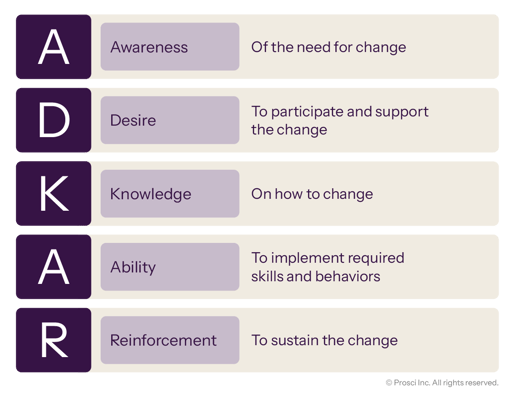
The Prosci ADKAR® Model, a framework for managing individual change in an organization, helps ensure that organizations not only equip employees with knowledge of data governance changes but also give team members opportunities to demonstrate their abilities through behaviors, mindsets, and other outcomes. It shifts thinking about training from a one-time initiative to a sustained behavior change.
Prosci ADKAR Model
Achieving Success in Executing Change Management for Data Governance Projects
Because governance changes often affect many roles and workflows, success depends on clear direction, consistent engagement, and adaptability. The following actions help organizations drive adoption and sustain data governance outcomes over time:
- Define clear objectives and success criteria – Clearly articulated objectives help teams understand what the data governance initiative should achieve. Defining success metrics early provides accountability and a way to measure progress over time.
- Engage stakeholders early – Involving key stakeholders from the start is critical for identifying impacts, surfacing concerns, and building shared ownership. Early engagement can also help prevent and reduce resistance to change.
- Implement a structured change management approach – A structured, adaptable, repeatable approach, such as the Prosci Methodology, enables individuals to navigate data governance changes successfully. It’s the difference between relying on communication and training alone versus using an approach designed to facilitate lasting change.
- Communicate effectively and frequently – Regular, transparent, tailored communication keeps stakeholders informed and aligned as data governance changes unfold. Effective communication plans incorporate and reinforce key messages, including what’s changing and why it matters.
- Provide training and support – Targeted training and support resources equip users with the knowledge and tools they need to move from the current state to the desired future state. Ongoing training is necessary to reinforce learning and build employee confidence in new ways of working.
- Monitor progress and adapt – Data governance is never a one-and-done project. The needs of your organization, data collection, and compliance regulations constantly evolve. Continuous monitoring ensures your organization’s data governance framework is adequate, up to date, and relevant.
Sustainable Data Governance Through People-Centered Change
Successful data governance requires people to understand, accept, and change their ways of using and working with data. Change management provides the structure needed to guide data governance changes. When organizations account for the human side of data governance as intentionally as they do the technical side, it enables growth, compliance, and confidence. That’s the power of change done right.