6 Mins
Published: May 8, 2026



Enterprise resource planning (ERP) systems unify processes, improve data visibility, and support decision-making across organizations. But the success of an ERP implementation depends on whether employees consistently adopt and use the system in their daily work.ERP user adoption is often the defining factor between a system that delivers measurable business value and one that struggles to achieve its intended outcomes. Understanding the challenges that influence ERP user adoption and the role change management plays in addressing them is essential for enterprises seeking to realize the full value of their ERP investment.

Key benefits of strong ERP user adoption
Successful ERP implementations unlock business opportunities and benefits for organizations, including:
- Higher productivity – High ERP user adoption leads to greater efficiency and productivity. As the workforce becomes proficient with the ERP software, they experience streamlined processes and workflows.
- Better data accuracy – With widespread ERP adoption, data entered into the system is more consistent and accurate, improving organizational data practices and governance.
- Improved reporting and decision-making – Strong ERP adoption ensures the organization fully leverages the system's capabilities, maximizing return on investment by enabling data-informed decision-making.
- Faster ROI realization – Effective adoption accelerates the realization of benefits from the ERP system, as users quickly integrate it into their daily operations and adjust their behaviors around it.
- Reduced shadow IT/workarounds – Strong ERP user adoption minimizes risks, as users are better equipped to manage system processes and troubleshoot issues without relying on manual workarounds and shadow IT.
- Increased employee confidence – When users are comfortable and proficient with the ERP software, satisfaction levels rise, reducing resistance and boosting morale.
Common challenges in ERP user adoption
Despite the benefits, ERP user adoption isn’t without its hurdles. The following challenges highlight the importance of a people-centered change management approach for increasing ERP user adoption.
Lack of leadership buy-in
Leadership plays a critical role in shaping expectations and reinforcing the importance of the ERP system implementation. Executive sponsorship is so critical to the success of change outcomes that it can make or break the work. Without effective executive sponsorship, adoption can stall as users revert to familiar processes and legacy tools.
Poor communication about business transformation benefits
When employees don’t understand the reasons for ERP transformation or how adopting it will benefit them, skepticism can grow. Vague communication about the ERP system’s benefits isn’t enough to get employees on board. Instead, a structured change management approach builds awareness through a targeted Communications Plan that clearly outlines the vision, benefits and objectives. Clear communication and transparency drive human transformation.
Inadequate ERP system training
Poor adoption and user frustration are common when organizations fail to equip employees with targeted training to succeed. Poor training can completely stall an ERP implementation. Change management ensures success with role-based training strategies that give people at every level the knowledge and confidence they need to implement the system in their daily workflows.
Overly complex ERP system configuration
Heavily customized or poorly designed ERP systems can create unnecessary complexity for end users. When workflows are difficult to navigate or processes require too many steps, frustration increases and adoption declines. Maintaining a focus on simplicity and usability during configuration helps ensure the new system supports efficient work rather than becoming a barrier.
No clear change management plan
Prosci research shows that human factors matter 6x more than technical factors in improving ERP benefits, underscoring the importance of a change management plan for successful ERP user adoption. That’s because implementation success hinges on the people side of change. If users don’t change their behaviors and adjust their ways of working, organizations can’t achieve satisfactory ERP adoption rates.
Failure to involve end users early
Resistance is a natural human response. But left unchecked, it can stall adoption and derail progress. Engaging users early to address their concerns and answer their questions head-on through a change management process fosters ownership and reduces resistance from the get-go. Engaging users throughout the ERP system implementation helps identify practical challenges early and builds a stronger sense of ownership and commitment to adoption.
The Role of change management in ERP user adoption
The success of your ERP user adoption hinges on your organization’s greatest asset: your people. And that’s exactly why change management is critical. By equipping and supporting people to embrace the new ERP system, change management helps you boost ERP user adoption and outcomes.
Change management plays a critical role in managing and mitigating resistance to ERP systems by understanding and addressing the root causes. Additionally, effective change management ensures clear, consistent communication, helping users understand the benefits and impacts of the ERP system, which is crucial to higher adoption rates.
Finally, following a change management approach, such as the Prosci Methodology, ensures that users receive the necessary training and support to develop the skills and confidence required to use the ERP software effectively, which is necessary for changing ways of working.
/Methodology-EN.webp?width=580&height=600&name=Methodology-EN.webp)
Best practices for successful ERP user adoption
Consider the following best practices to increase ERP user adoption rates within your organization:
Start with change management
Integrate change management with project management to address both the technical and people sides of the ERP initiative, achieving more effective outcomes. Our research shows that integrating change management with project management can provide a healthy boost to success rates. In a Prosci study, nearly 50% of projects that integrated the two met or exceeded objectives.
Prosci’s Unified Value Proposition
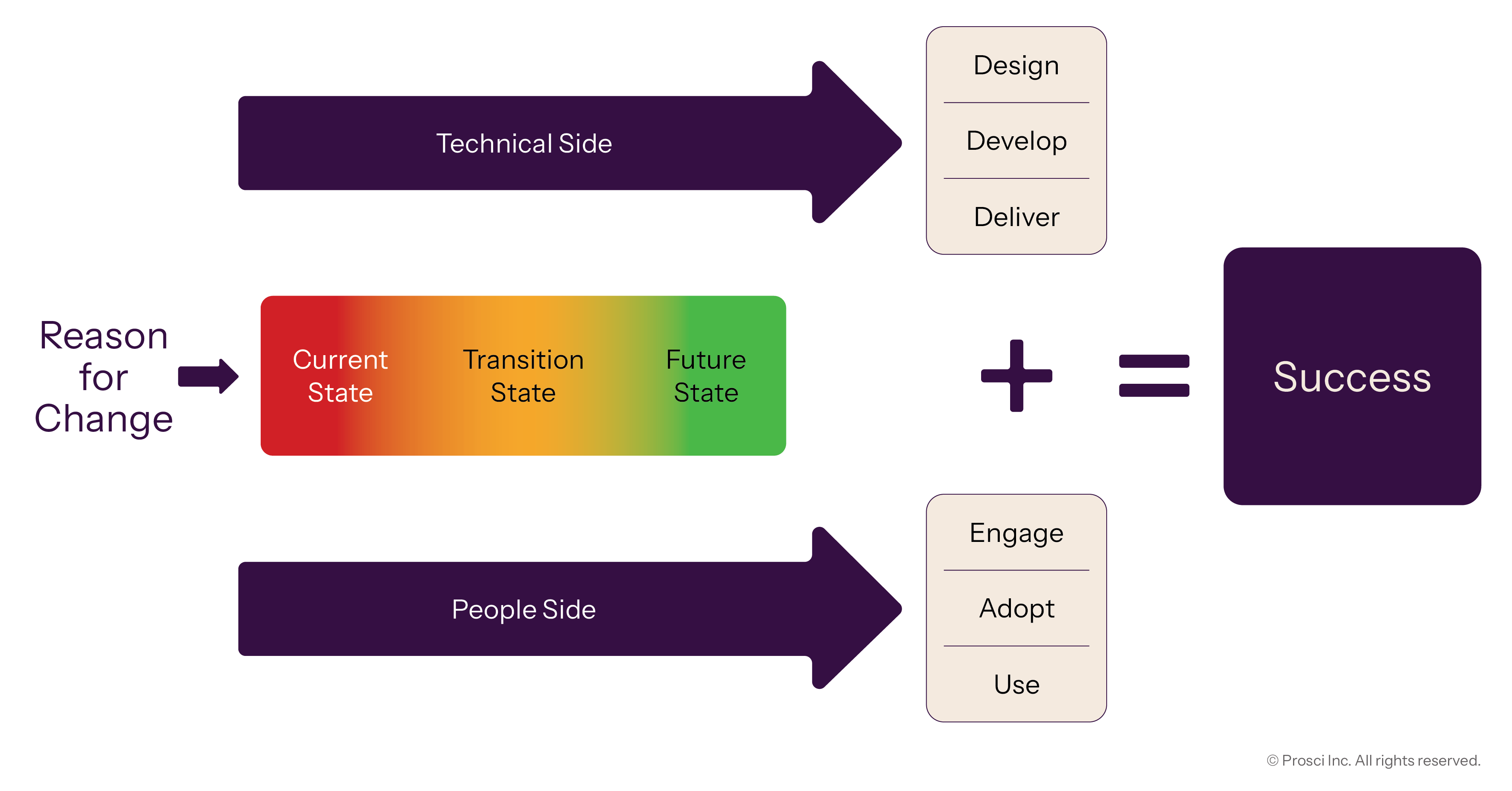
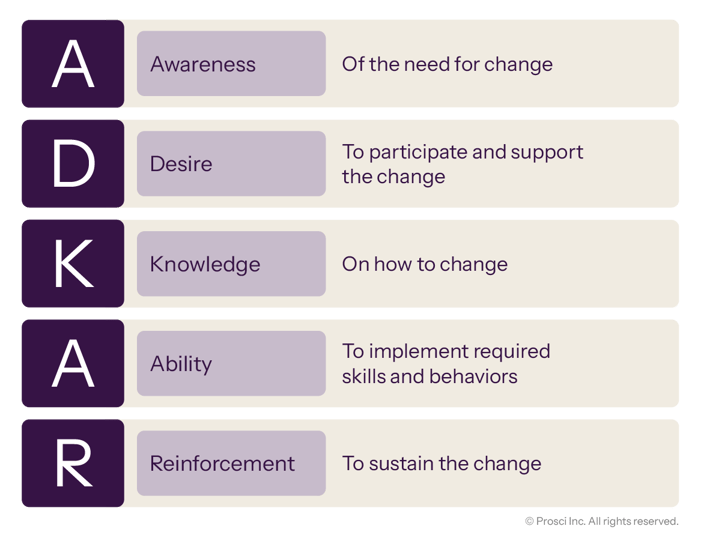
To effectively integrate change management and project management, align the Prosci ADKAR® Model with project milestones to ensure teams address the technical and people aspects throughout the implementation process to prepare users for ERP adoption.
Prosci ADKAR Model
Involve users early
Involve users early in the ERP implementation process to manage anxiety and establish a structured plan. Early engagement can help secure strong sponsorship, foster a sense of ownership, and empower employees throughout the implementation process.
Provide role-based training and ongoing learning, not one-time sessions
Provide detailed, role-specific training well before the go-live date to ensure users feel ready. Training should be continuous and customized to address the specific needs of different user groups. Practical ERP training, including comprehensive tailored training programs for all users before go-live, and post-go-live continuous learning, creates long-term capability in organizations.
Simplify the user experience with clear workflows
Effective ERP system usage requires optimized workflows. Prioritizing process optimization before configuration and simplifying the initial rollout to focus on basic workflows helps organizations ensure processes make sense while reducing overwhelm. While many ERP systems offer customization options, saving them for future upgrade phases can help reduce friction during the initial transition.
Stakeholder engagement
Engage stakeholders at all levels, from executives to end users, to ensure alignment and support for the ERP implementation. This involves defining clear success metrics and prioritizing change adoption from the project's inception. Without early stakeholder engagement, teams optimize for technical completion while business leaders expect transformational outcomes that require a people-centric change management approach.
Measure and optimize by tracking adoption KPIs
Organizations can’t improve ERP adoption rates without measuring them, so tracking adoption KPIs is necessary for success. Measuring active user rates and login frequency patterns can help teams spot barriers preventing users from accessing the system. Monitoring the percentage of users who complete required training programs and user competency levels can provide insights into additional training opportunities needed. Collect user feedback to gauge satisfaction with the ERP system and identify areas for improvement.
Pay attention to feedback
Organizations that treat go-live as the finish line misunderstand when value materializes. Establish feedback loops and provide ongoing support to users during the implementation process and after the ERP system goes live. This ensures that any issues are quickly addressed and that users continue to feel supported in their adoption journey. Once they begin navigating the ERP system post-implementation, users can better provide optimization suggestions for long-term improvement.
Increase ERP user adoption with Prosci
ERP transformation promises faster workflows, better data, and smarter decisions. But those outcomes depend on users adopting the systems for the long haul. Change management turns that promise into successful ERP implementations that drive lasting business results. That’s the power of change done right.
FAQs
How long does ERP user adoption take?
ERP user adoption timelines are not instantaneous, and adoption does not stop at go-live. While users may begin working in the ERP system immediately, achieving consistent, confident use across the organization requires ongoing training, reinforcement, and process refinement informed by user feedback. Most organizations can expect to achieve ERP user adoption long after the go-live technical milestone.
What is the biggest barrier to ERP user adoption?
The biggest barrier to ERP user adoption is people and change management factors, including inadequate training, poor stakeholder engagement, and a lack of a structured change management approach. Organizations that prioritize human factors during ERP implementations, provide role-based training, engage stakeholders early, and follow a scalable, adaptable change management approach, such as the Prosci Methodology, position themselves to overcome ERP user adoption challenges.
Who is responsible for ERP user adoption?
ERP user adoption is a shared responsibility across the organization. Executive sponsors and business leaders set expectations and reinforce system usage, project teams deliver the system and supporting processes, and change management leaders help users adopt new ways of working. All of these roles are critical to the success of ERP implementation and user adoption.
How can resistance to change be managed during an ERP implementation?
Managing resistance to change during an ERP implementation starts with applying a change management approach to help individuals navigate the transition in a structured way. Prosci research shows that preventing resistance to change is more effective than addressing it reactively. Prosci offers a comprehensive suite of resources, tools and training programs designed to help organizations address resistance to change.
Why is change management important in improving ERP user adoption?
Change management is critical because ERP user adoption depends on whether employees change how they work, not just whether the system goes live. A structured change management approach focuses on preparing and supporting employees as they transition to the new system. Change management helps ensure the ERP becomes embedded in daily operations rather than a costly investment no one uses.