
8 Mins
Updated: May 8, 2026
Published: August 29, 2025



When MSD, a public utility company, began its enterprise resource planning (ERP) transformation, the company faced a challenge, and it wasn’t just in the technical upgrade. Decades of ingrained habits and legacy systems loomed large. But instead of treating resistance as inevitable, MSD took a proactive path by embedding change management from day one. With a structured approach, leaders aligned early and adoption exceeded expectations.
MSD’s story isn’t unique, but it is instructive. Too often, organizations invest millions in ERP systems, only to face poor user adoption and missed ROI. Why? Because ERP transformation is more than a system change.
It’s a people change.
ERP promises faster workflows, deeper insights, and streamlined operations. But without managing the human side of change, those benefits remain out of reach. Resistance, digital skill gaps and weak leadership alignment can slow or even derail progress.
A people-centered change management approach helps teams adapt, engage and sustain new ways of working so business transformation sticks.
In this article, we’ll explore why change management is critical to ERP transformation success. You’ll learn how to navigate common pitfalls, apply proven Prosci practices, and turn ERP complexity into lasting business value.
What is ERP Digital Transformation?
According to Precedence Research, the global ERP software market is set to reach $110.15 billion by 2034, while Oracle NetSuite predicts the cloud-based ERP market will grow to more than $130 billion by 2028.
So why are so many organizations investing heavily in modernizing their ERP systems? For starters, a Hubspot report revealed that an incredible 97% of businesses with ERP systems report improved business processes.
It’s undeniable that ERP plays a key role in your digital transformation. Using advanced technologies within an ERP system, you can enhance operations, boost efficiency and improve data-driven decision-making.
ERP digital transformation involves integrating new technologies like cloud computing, AI and machine learning into your ERP. The benefits? Fast, automated business processes, real-time insights and the power to reshape how your business operates and delivers value.
Key benefits of ERP transformation
Major efficiency gains, more informed decisions and a more adaptable business model. It’s not surprising that SMEs and enterprises alike are increasingly prioritizing ERP modernization.
Here’s how you can benefit from transforming your ERP system with advanced technology.

Improved efficiency
ERP transformation integrates multiple business functions into one platform, eliminating the friction of scattered tools and disconnected data. Teams can work faster with every process operating in sync. The result is measurable efficiency gains across the organization.
And that extra efficiency can lead to cost savings. A report by Ultra Consultants found that 40% of companies saw a reduction in IT costs after implementing a new ERP system.
Automation of manual tasks
Replacing tedious manual tasks with fast, automated workflows accelerates productivity and eliminates wasted effort. With repetitive tasks automated, your people can focus on meaningful work that drives results.
Stronger decision-making
Better data means better decisions. Access to real-time data and powerful analytics drives more informed decision-making. You gain the visibility to make the optimal choice fast, leading your business toward sustained growth.
When a multinational food corporation needed better data collection to drive stronger decisions, it chose to transition from six different systems to a single unified SAP platform. Using Prosci’s structured change management approach to guide this huge undertaking, the successful implementation engaged over 500 users and provided the business intelligence needed to improve decision-making.
Opportunities for innovation
Modern ERP platforms set the foundation to integrate emerging technologies like AI, machine learning and IoT. With this infrastructure in place, you can adopt new tools at speed and develop innovative ways to create business impact.
Adaptability and scalability
Competitive markets demand agility. ERP transformation gives you the tools to adapt and grow without disruption. When customer demands or conditions change, your system will be ready to scale—keeping your business ahead of every shift.
Improved collaboration
When departments share a single source of truth, communication strengthens and silos break down. Teams coordinate effortlessly and collaboration becomes part of how the business operates every day.
Enhanced user experience
Intuitive interfaces and ‘anytime, anywhere’ access make ERP systems simple to use and quick to adopt. Employees spend less time getting to grips with new technology and more time using it to improve results.
Greater job satisfaction
Streamlined workflows and effective tools empower employees to excel. When you remove the friction from day-to-day tasks, you don’t just improve productivity—you boost job satisfaction and performance across the business.
You might think the benefits of ERP transformation are driven by technical factors. In fact, people are the key to lasting transformation. Next, we’ll explore why change management is instrumental to the success of your ERP initiatives.
Why Change Management is an Integral Part of ERP Transformation
You can have the most advanced ERP tools on the market. But if your people don’t adopt it, transformation stalls.
ERP initiatives often fail not because the system is flawed, but because employees resist or disengage. Structured change management addresses this head-on, guiding people through uncertainty and empowering them to embrace new ways of working.
From building Awareness to Reinforcing behavior, it provides the structure and support needed to turn ERP investments into lasting business outcomes.
Here’s how a people-centered approach strengthens ERP transformation success:
Facilitates user adoption
The success of your ERP system hinges on how well people adopt it. And that’s exactly why change management is critical. With a focus on equipping and supporting people to embrace new tools and technologies, change management helps you boost adoption and outcomes.
Supports resistance prevention
People resist change for many reasons. They might cling to established business processes or feel unprepared for a new digital environment. Change management helps you manage resistance by anticipating these concerns and addressing them early.
Reduces confusion and uncertainty
When people don’t understand the need for change, they’re left feeling confused and uncertain. The impact? Poor adoption and stalled momentum. Change management addresses this hurdle by prioritizing clear communication about the reasons and benefits of change.
Builds confidence and capability
Effective, sustainable adoption relies on more than just tech skills. To thrive, people need the confidence to put those skills into action and the capability to adapt to new ways of working. With its strong focus on training and development, change management ensures both.
Encourages sponsorship participation
The data is clear: strong sponsor access leads to more successful projects. A Prosci study found that projects with good or excellent sponsor access had a 72% success rate. Change management encourages active involvement from sponsors to strengthen project outcomes.
Correlation of Sponsor Access With Meeting Objectives

Keeps change efforts on track
Hitting your ERP implementation goals is one thing. But sustaining its adoption and usage over time? That relies on carefully tracking outcomes over time. A structured change management approach monitors progress and allows for ongoing adjustments.
Improves project outcomes
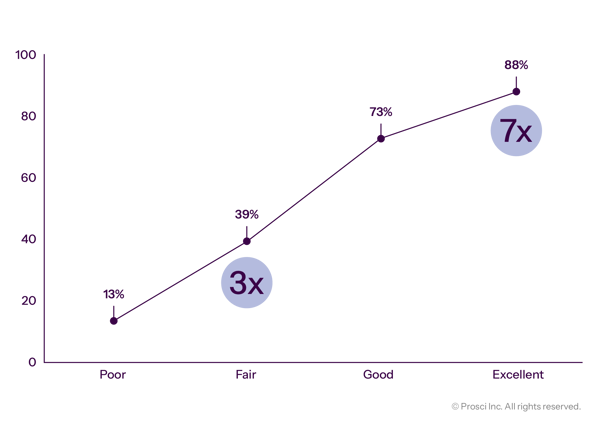
Change management does more than just guide your transformation. It significantly improves your chances of success. In fact, our research revealed that projects with excellent change management are seven times more likely to meet their objectives.
Correlation of Change Management Effectiveness With Meeting Objectives
With a robust change management approach providing a transformation roadmap, you’ll be equipped to tackle ERP implementation challenges.
Challenges of ERP Digital Transformation
ERP transformation can unlock many business opportunities. But it’s not without its hurdles. The following challenges have one thing in common: they can all be solved with people-centric change management.
Challenges of ERP Digital Transformation

Resistance to change
Resistance is a natural human response. But left unchecked, it can stall adoption and derail progress. Our research shows that most resistance to change—whether from employees or managers—is avoidable with a structured change management approach.
The number one reason for resistance is a lack of understanding. Why is this happening? How will it affect me? What if we stay the same? Change management addresses these questions head-on by involving employees early, gathering input, and tackling concerns. This fosters ownership and reduces resistance before it becomes a barrier.
Sunflower Electric experienced high resistance to change amid several large and complex change initiatives, including an Oracle Fusion ERP implementation. The company partnered with Prosci to embed change management and build change capabilities across the organization. Today, Sunflower Electric deploys change management from a solid foundation of organizational change capabilities amid a change-ready culture.
Avoidable Resistance

Lack of awareness
When employees don’t understand the reasons for ERP transformation, skepticism can grow, slowing adoption and eroding momentum.
A structured change management approach builds awareness through a targeted Communication Plan that clearly outlines the vision, benefits and objectives. Transparent messaging keeps everyone aligned and invested in the transformation.
Insufficient training
Without targeted training, even the best ERP systems fall flat. Poor adoption and user frustration are common when employees aren’t equipped to succeed.
Change management ensures success with role-based training programs that give people at every level the knowledge and confidence they need to excel.
Communication gaps
Inconsistent or incomplete communication breeds confusion and misunderstanding. Without a clear view of what’s changing and why, employees can lose trust in the process.
A structured change management approach bridges these gaps with regular, multi-channel updates that reinforce progress, clarify expectations and maintain alignment.
Integration issues
Integrating ERP with existing workflows and legacy systems can be complex and disruptive if handled in isolation. Misalignment between teams or issues with data migration can lead to delays and costly missteps.
Change management fosters collaboration between IT, project management and change management teams. This ensures legacy modernization and integration efforts are coordinated across the organization.
Resource constraints
ERP transformation demands time, budget and focus. Limited resources can stretch teams thin and jeopardize success if priorities aren’t clear.
Change management supports a phased approach that focuses on high-value functionality first, reducing strain and enabling incremental wins that build momentum.
Cultural resistance
Deeply ingrained habits and rigid ways of working can create invisible barriers to ERP transformation and new digital processes. When culture isn’t addressed, even the strongest technical solution can stall.
Change management tackles this head-on with initiatives that strengthen adaptability and reinforce new behaviors, including leadership engagement, workshops and recognition programs.
Each challenge creates an opportunity to apply proven change management strategies. Next, we’ll explore best practices for overcoming ERP transformation obstacles with Prosci.
Best Practices For Successful ERP Transformation Using the Prosci ADKAR Model
Implementing an ERP transformation can be a complex process. A proven change management framework like the Prosci ADKAR® Model can drastically improve your chances of success.
Here are some best practices for leveraging the ADKAR Model to guide your transformation roadmap.
Prosci ADKAR Model
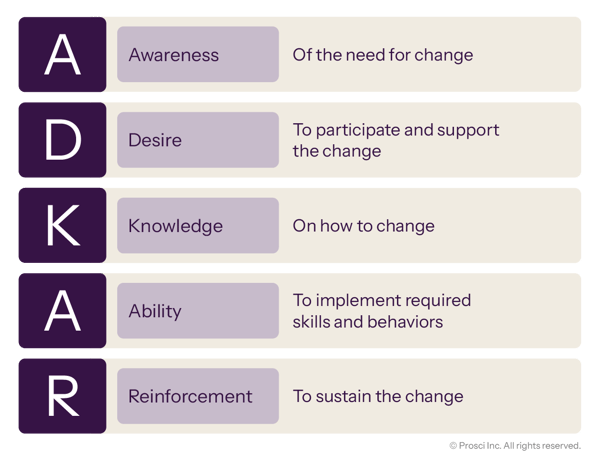
Awareness of the need for change
- Communicate the “why” – Explain the reasons for the ERP transformation. Use multiple channels (meetings, emails, workshops) to ensure everyone involved understands the necessity and urgency.
- Share success stories – Highlight industry-relevant examples of successful ERP implementations to show potential benefits in real-world settings.
Desire to participate in the change
- Engage people early – Involve impacted people in the planning stages. Early engagement fosters commitment and reduces the likelihood of resistance.
- Identify personal benefits – Show how the new ERP system will benefit people personally. Does it give them easier access to information? Improve their workflows? Make this known.
Knowledge on how to change
- Provide training – Develop a comprehensive training plan tailored to different user groups. Include hands-on sessions, tutorials and user manuals.
- Utilize change champions – Identify and train change champions within your organization who can support their peers and facilitate knowledge sharing.
Ability to implement required skills
- Conduct simulations – Use simulations or sandbox environments to allow people to practice with the new system in a risk-free setting.
- Offer ongoing support – Ensure that support resources are available beyond implementation, such as help desks or dedicated support teams.
Reinforcement to sustain the change
- Monitor adoption – Use ADKAR assessments to track progress and identify areas where reinforcement is needed. This can help address resistance or gaps in knowledge.
- Celebrate milestones – Recognize and reward people who successfully adopt the new system to reinforce positive behaviors.
Using our ADKAR Model to guide people through transitions can have a dramatic impact on your results. In a Prosci study, 51% of respondents rated the ADKAR Model as extremely effective in facilitating change.
Effectiveness of Using the Prosci ADKAR Model to Facilitate Change

Additional best practices
Use the following best practices to boost the results of using the ADKAR Model to guide your ERP transformation.
Integrate change management with project management
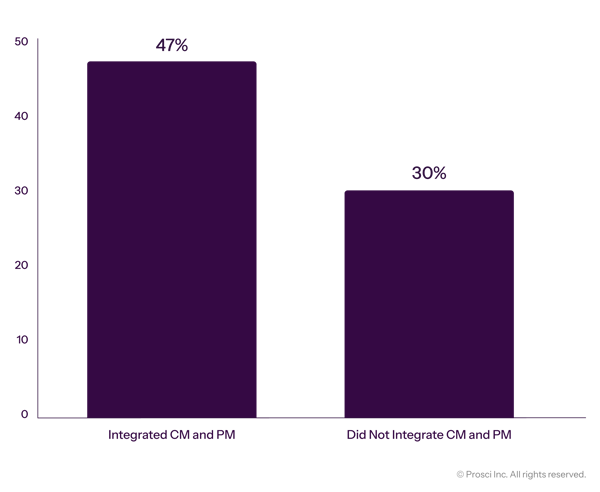
Our research shows that integrating change management with project management can provide a healthy boost to success rates. In a Prosci study, nearly 50% of projects that integrated the two met or exceeded objectives.
Here are some strategies to integrate change management and project management:
- Align ADKAR milestones with project deliverables. This ensures both technical and people-side aspects are addressed throughout the project lifecycle.
- Designate a change manager to work alongside the project manager. This will help integrate change management activities into the project plan.
- Make change management outputs a part of project deliverables, ensuring they’re prioritized and resourced appropriately.
Impact of Integration on Meeting Objectives
Conduct regular assessments
Regularly conduct ADKAR assessments to gauge the effectiveness of your change management efforts. This can provide valuable insights into areas needing improvement or extra support.
Additionally, implement feedback loops to gather insights about people’s experiences with the new ERP system. This data can drive continuous improvement.
Create a change management strategy
Develop a comprehensive change management strategy that outlines your approach to managing the people side of the ERP transformation. This should include objectives, key activities, timelines, and resources.
By adopting these best practices, you can strengthen your ERP transformation outcomes and enjoy a smoother transition.
Achieve ERP Transformation Success With Structured Change Management
ERP transformation promises faster workflows, better data, and smarter decisions. But those outcomes depend on people—not just systems.
Change management turns that promise into performance. Equipped with a practical change framework like the Prosci ADKAR Model, you can ensure a seamless ERP transformation that delivers on every objective.
Guided by Prosci’s research-backed approach, you’ll unlock the full potential of your ERP investment and be ready to adapt to future challenges.