6 Mins
Updated: April 29, 2026
Published: April 23, 2026



Projects fail more often than organizations like to admit, and rarely for one reason. Missed deadlines, budget overruns, and low adoption rates are symptoms of deeper issues: poor leadership, inadequate planning, ineffective communication, and a lack of change management.Understanding why projects fail is critical for improving project outcomes and avoiding repeat mistakes. By addressing both delivery and the human side of change, teams organize and complete projects that deliver lasting value and build change-ready organizations along the way.
In this guide, we explore the most common causes of project failure, the role of change management in project success, and practical steps organizations and project managers can take to reduce risk and achieve the outcomes they hope for in every new initiative.
The Importance of Understanding Project Failure
Understanding why projects fail is critical to preventing similar situations in the future. When organizations look beyond surface-level issues, such as missed timelines and budget overruns, they can identify recurring root causes and address them proactively through systemic changes. This insight allows project managers and teams to plan more effectively, communicate risks earlier, and increase the likelihood of project success with each new initiative.
Assessing project failure also builds credibility and trust with stakeholders. Openly acknowledging what went wrong strengthens transparency, improves communication, and aligns teams around more realistic expectations. Most importantly, it enables organizational learning, turning failed or struggling projects into valuable development opportunities that build stronger, more resilient teams.
8 Common Causes of Project Failure
Project failures rarely stem from a single issue. Understanding the most common causes of project failure helps organizations recognize early warning signs and take corrective action to get the project back on track.
1. Poorly defined goals
When project goals are vague, conflicting, or poorly understood, teams lack a common goalpost to work toward. Without clear objectives and a shared definition of success defined in the project charter, team members may struggle to prioritize the project alongside other responsibilities, make well-informed decisions, or measure their progress. Over time, ambiguity leads to significant gaps in misalignment and wasted effort.
2. Scope creep
No project is immune to scope creep. When stakeholders add requirements without a proper evaluation or approval process, scope creep occurs, even when the additions are small. Despite good intentions, unmanaged scope changes can increase complexity, deplete resources, delay schedules, and introduce unforeseen or missed dependencies. Without strong governance, slight changes accumulate into significant project delivery risk.
3. Inadequate planning and unrealistic timelines
Compressed project schedules and insufficient planning create undue pressure, undermining high-quality outcomes and team morale. When teams set project timelines without accounting for factors such as dependencies, risk management, and organizational readiness, they end up executing reactively and under pressure. This often results in rework, missed milestones, and burnout.
4. Weak leadership
Too many leaders make the mistake of initiating or assigning a project and removing themselves from the picture, expecting teams to complete the work in their absence. But projects need visible, engaged leadership to provide direction, make timely decisions, and remove barriers. Weak sponsorship and unclear accountability leave teams without the necessary authority to resolve issues and keep the project moving.
5. Communication breakdown
Poor communication leads to misaligned expectations, confusion, risks, and frustration among project team members. When stakeholders miss or don’t receive essential updates, they get left behind. When project updates focus solely on tasks and timelines, stakeholders may disengage without a clear understanding of the project's purpose and impact. Communication gaps amplify uncertainty and resistance.
6. Lack of stakeholder engagement
When project managers and teams exclude stakeholders from planning and decision-making, teams miss critical insights and inevitably create resistance. Stakeholder engagement is a necessary foundation for starting the project off right. Plus, engaged stakeholders are more likely to support the project and adopt new ways of working when teams include them from the beginning.
7. Insufficient project resources
Under-resourcing projects in staffing, skills, or time hinders the team’s ability to deliver successful project results. While a conservative resourcing approach might feel like a win from the project budget perspective, these decisions often do more harm than good. Competing priorities and overloading team members increase errors and lead to severe burnout. Resource constraints rarely reveal themselves until delivery is already at risk.
8. Inflexibility in change
Projects fail when organizations treat plans as fixed, even as conditions evolve. Inflexible project planning limits the team’s ability to respond to new information, emerging risks, or shifting business priorities. At the same time, inflexibility in managing change, such as ignoring feedback and assuming people will adapt without an effective change strategy, increases the chances of project failure. Successful projects balance discipline with adaptability, adjusting plans as needed while supporting people through change.
How Change Management Impacts Project Success
Change management has a direct, measurable impact on project success when teams integrate change management with project management from the outset. While project management focuses on the technical aspects, change management ensures that people affected by the project's changes are prepared to embrace them.
A change management approach provides a structured methodology to help individuals transition from the current state to the desired future state. This involves preparing, equipping, and supporting individuals to adopt and use the changes effectively, driving organizational results by engaging employees and inspiring them to adopt new ways of working.
Prosci’s Unified Value Proposition model is effective for positioning change management and defining its critical contribution to project and organizational outcomes.
The Unified Value Proposition
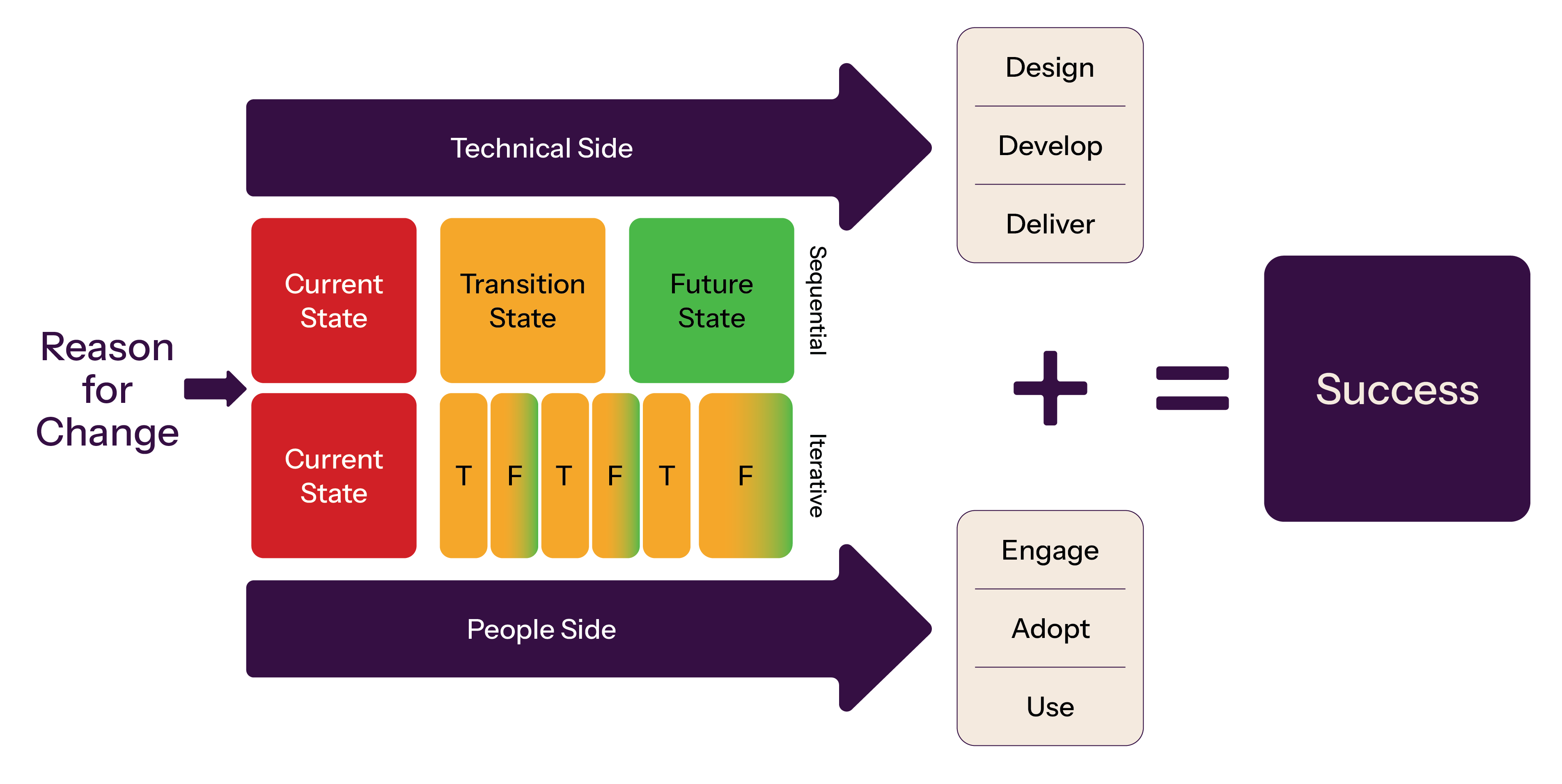
Finally, change management helps teams identify and address resistance to change, enabling smoother transitions and better project outcomes. Projects succeed only when employees change how they work, and change management works alongside project management to increase the chance of success.
How to Avoid Project Management Failure
Avoiding project failure requires intentional focus and dedication to the technical and people sides of change. While no project is risk-free, organizations that prevent and address common causes of failure early are more likely to achieve better project outcomes.
Consider these best practices for avoiding project failure:
- Define success early – Establish clear objectives and success criteria from the start. Engage stakeholders in defining success and ensure alignment with organizational goals. The 4 P’s Exercise can jumpstart a discussion on change management and why it’s critical for project success.
- Plan realistically – Develop a structured plan that is realistic, flexible and sustainable. Break projects into manageable phases with clearly defined milestones to recognize and celebrate short-term successes.
- Engage stakeholders continuously – Build alignment and ownership across stakeholders around a common definition of success. Involve key stakeholders and sponsors early in the project to clarify roles and expectations, both from a technical and change management perspective.
- Communicate relentlessly – Project managers must start communication early and involve all key stakeholders. Frequent, transparent communication keeps teams aligned and reduces uncertainty. Use structured, innovative communication plans to ensure clear, concise, and frequent communication.
- Adapt to change – Remain flexible, recognizing that project objectives may shift for various reasons, and use the project’s defined success criteria to guide the work and assess shifting objectives. Prosci’s PCT Model helps teams ensure clarity and alignment on project objectives, enabling organizations to achieve better outcomes.
- Invest in people, not just plans – Projects succeed when people are prepared to adopt new ways of working. And teams build organizational readiness and change resilience by prioritizing the people side of change.
Change-ready organizations equipped with change management expertise are 7x more likely to succeed on must-win projects. Change done right, no matter the project, is critical to business agility. Partner with Prosci when you don’t want your projects to fail because we’ve spent over 25 years studying how organizations and people thrive through transformation.
FAQs
What is the most common reason projects fail?
Typically, multiple factors contribute to project failure, including unclear goals, misalignment among stakeholders, and insufficient budgets and resources. The reasons projects fail also depend on the type of project. For example, technology projects fail because the project isn’t defined enough, there is a lack of leadership and accountability, communication is inefficient, timelines are poor, there is no user testing, or teams are trying to solve the wrong problem.
Can agile prevent project failure?
Agile can reduce certain project risks related to inflexibility by promoting flexible planning, incorporating feedback, and using incremental delivery. But agile can never entirely prevent project failure, as using agile alone doesn’t address critical success factors such as stakeholder engagement and alignment, or effective communication. Without strong leadership and sponsorship, stakeholder engagement, and a change management approach, projects can still fail, even in agile environments.
How often do projects fail?
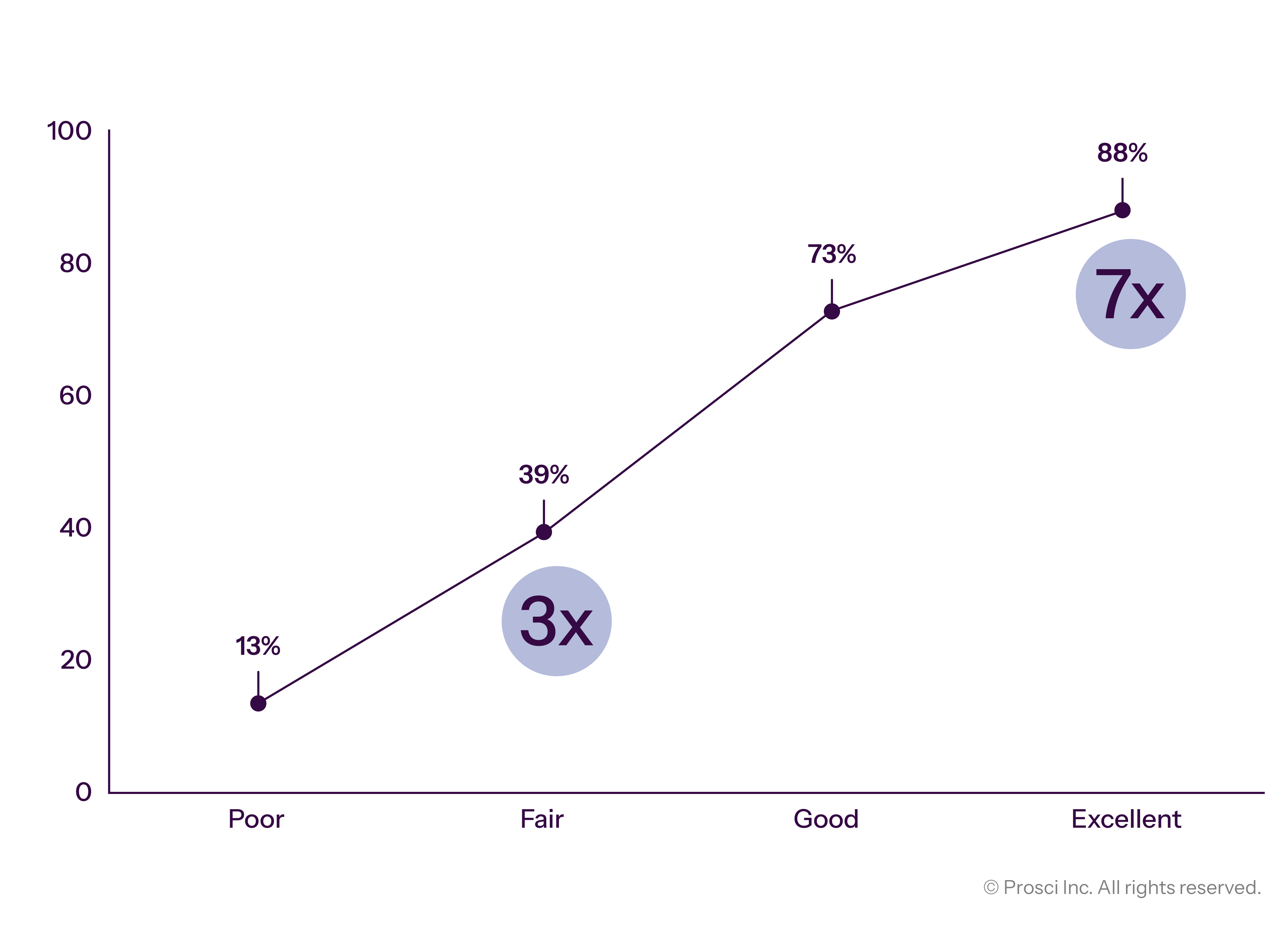
While project failure rates vary by industry and project type, Prosci’s research shows that projects with excellent change management are 7x more likely to achieve their objectives than those with poor change management. This finding highlights the importance of following a structured yet adaptable change management approach to reduce the frequency and severity of project failure.
Correlation of Change Management Effectiveness With Meeting Project Objectives
What role does change management play in preventing project failure?
Change management addresses the people side of change, a necessary aspect of helping individuals move from the current state to the future state. An intentional, well-defined approach to managing change, such as the Prosci Methodology, provides the structure needed to stay on track. It allocates sufficient time for meaningful activities and creates space to identify and address gaps throughout the project lifecycle, addressing risks before the project fails.
Why is leadership support crucial for project success?
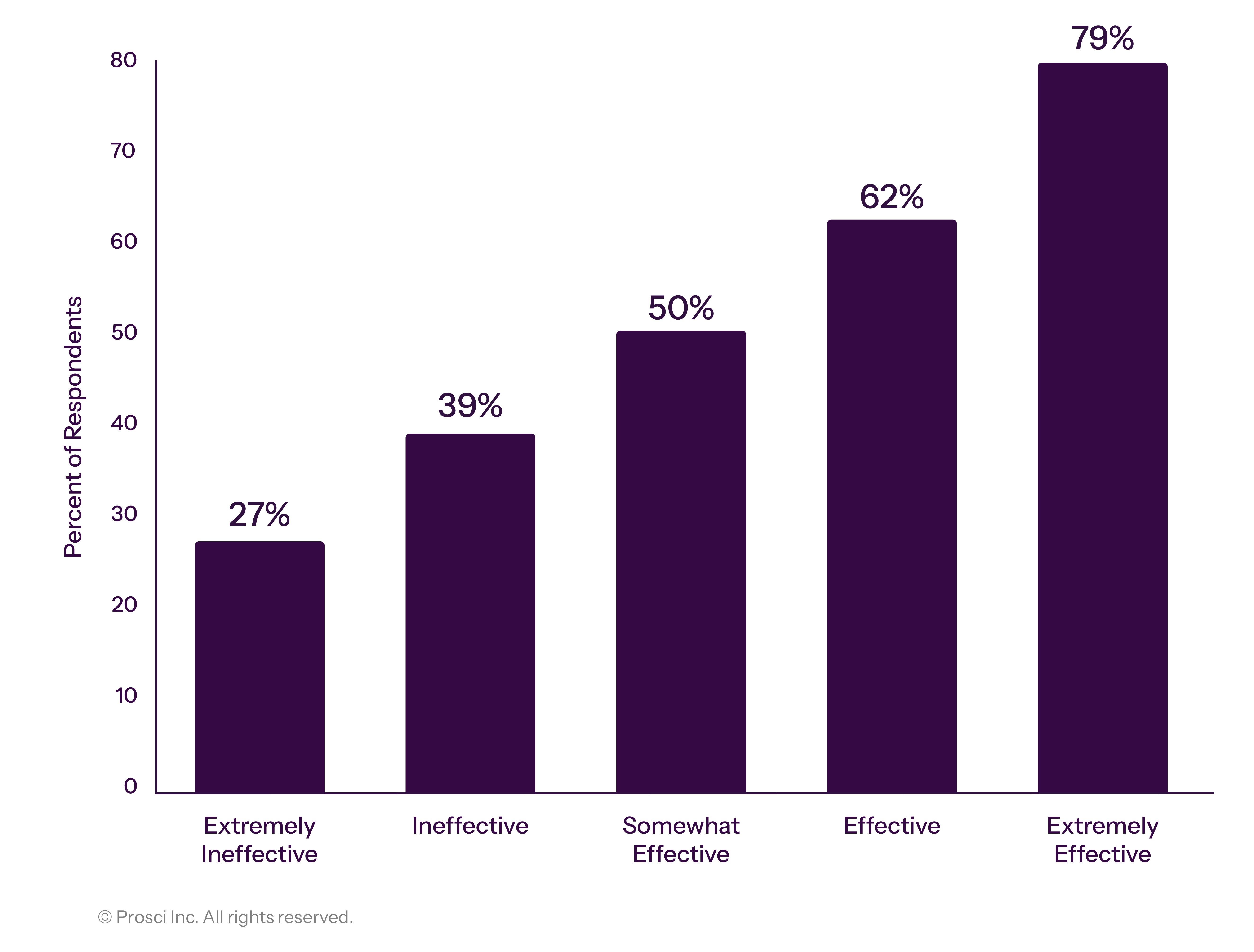
Prosci research shows that projects with extremely ineffective sponsors were only 27% likely to meet their objectives, compared with 79% with extremely effective sponsors. Having a positive leader who actively guides the organization through change and is visibly involved throughout its lifecycle has been the top contributor to success rates since 1998.
Correlation of Sponsor Effectiveness With Meeting Objectives