6 Mins
Updated: August 7, 2025
Published: August 19, 2024



Beware of the digital adoption trap. New technologies promise greater productivity—45% of respondents in our Best Practices in Change Management – 12th edition research cite technology and digital transformation as the top change today. Yet digital projects get derailed and fail due to organizational resistance and integration challenges.
Here, we dive into effective digital adoption strategies that promise to avoid common pitfalls. By marrying these strategies with a structured change management framework, your business can significantly uplift the user experience, manage resistance, and achieve smooth integration.
Let's explore how aligning digital adoption strategies with your organizational goals can transform challenges into opportunities for sustained success.

What Is Digital Adoption?
Digital adoption means seamlessly integrating software, products, apps, websites, etc., into your daily routine. This leads to improved business outcomes, better employee experiences and higher productivity.
For example, consider a real estate agency that integrates a Customer Relationship Management (CRM) system across its operations.
By adopting this digital tool, the agency makes it easier for its staff to access and update customer data, track interactions and manage follow-ups efficiently. This means less time spent on manual record-keeping and more time for client interaction and service, leading to higher productivity and better customer satisfaction.

To avoid confusion, let's differentiate digital adoption from digitization, digitalization and digital transformation.
- Digitization is converting information from a physical format (analog) to a digital one. For example, a library scanning its collection of books and turning them into PDFs is digitization. The information is still the same, but it's now in a format that can be accessed electronically.
- Digitalization uses digital technologies to make business processes more efficient. For example, a retail store implementing an online ordering system. This speeds up the ordering system and lets more customers buy things from the store.
- Digital transformation is more comprehensive. It incorporates digital technology into all business areas, fundamentally changing how the business operates and delivers value to customers. An example would be a traditional bank changing into an online-only financial institution.
Digital adoption is crucial to fully benefit from your digitization, digitalization and digital transformation initiatives.
Importance of Digital Adoption
With companies averaging over 315 SaaS applications by the end of 2022 and Gartner predicting a 6.8% rise in IT spending to reach $5 trillion by 2024, the need for digital adoption has never been clearer.
However, digital technology is only valuable if your customers and employees fully utilize it. Here are some benefits of digital adoption:
- Increased efficiency – Automating routine tasks saves time and reduces errors
- Better decision-making – Easy access to data helps managers and employees make informed decisions quickly
- Improved customer experience – Consistent use of digital tools can provide customers with faster, more personalized service
- Enhanced employee satisfaction – When technology makes jobs easier, employee morale and productivity often rise
- Cost savings – More efficient processes and digital tools can reduce operational costs over time
- Improved workflow – Receive real-time updates for task delegation, remove lengthy emails and complete tasks faster
How can you make sure your company is ready for digital adoption? The Prosci Advisory Services team works with clients to assess your organization's change management maturity and change readiness. Applying the Prosci Change Management Maturity Model and tools, we help you identify your business's current state and areas for improvement, which is crucial for successfully implementing digital adoption strategies.
Let's dive into the top seven digital adoption strategies that maximize employee engagement and productivity.
Digital Adoption Strategies
Before exploring digital adoption strategies, it's essential to assess your organization's change management maturity level. This gauges the current health of your organization's change management function. The higher your maturity level, the better prepared you are for successful digital adoption.
1. Align digital adoption with business outcomes

Link digital adoption directly to your business goals, showing employees how it can transform key processes and enhance overall outcomes. Tailor digital initiatives to specific organizational objectives, thereby improving key performance indicators (KPIs) like operational efficiency and customer satisfaction.
For example, in a healthcare clinic, driving effective adoption of a new online appointment system can streamline scheduling, reduce patient wait times, and enhance service quality, directly contributing to improved efficiency and satisfaction.
2. Understand and cultivate required digital behaviors
Utilize analytics tools to understand employee engagement with digital applications and pinpoint areas for improvement.
Tailor digital tools to fit the specific needs of different departments to enhance efficiency. For instance, sales teams might use CRM software to track client interactions, while support teams manage customer queries. Providing targeted training and opportunities to practice ahead of going live ensures each team can effectively use these tools.
Focus on the human aspect of digital adoption by seeking feedback and observing how employees use the tools. You should also assess the areas that will impact the way people work. This approach ensures that technology aligns with user needs. Additionally, evaluate and nurture a company culture that supports change, facilitating smoother adoption of digital innovations.
3. Personalize digital content for diverse employee needs

Promoting digital adoption means stepping up the training game and recognizing that tech skills, job roles and learning preferences vary widely across an organization. This variety makes traditional, one-method training irrelevant.
The solution? Move beyond just handing out logins or manuals.
Consider using on-screen guides or in-app guidance customized for each user's role and needs. Personalizing the content in apps used daily is crucial, whether in manufacturing, healthcare or government sectors. This approach ensures that each user can navigate and utilize the tools effectively.
4. Iterate and optimize digital tools based on continuous feedback
True digital adoption means that your employees are making the most of your organization's technology; for that, you need to measure and improve their usage patterns.
Monitoring the level of technology adoption by employees through the analytics tools is important, but remember, metrics like time spent on an application barely offer in-depth insight. You'd be better off tracking user engagement, behavior and experience they have with the app.
With the help of this data, you can track the features that are a hit or a miss. This will let you further build relevant training addressing those issues.
5. Overcome resistance with Prosci change management principles
Digital adoption projects fail, and employee resistance is the top reason. Without proper assessment for change readiness and maturity and a well-defined change management strategy, employees might resist using the new digital tools because of a lack of understanding, fear of change, or inadequate training.
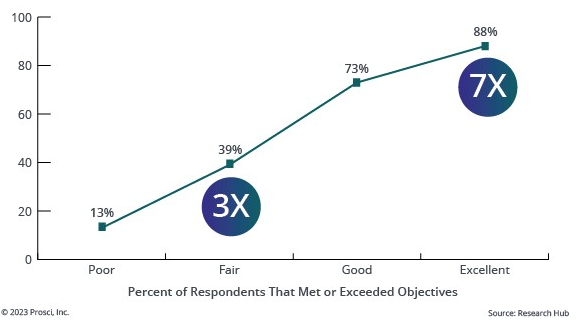
With an effective change management strategy in place, research shows you're up to seven times more likely to achieve success with an enterprise-wide digital adoption process.
Focusing too much on technological upgrades, instead of a holistic approach to managing change, is a critical oversight. For example, implementing new ERP systems without sufficiently preparing users and addressing necessary preliminary steps like data cleansing.
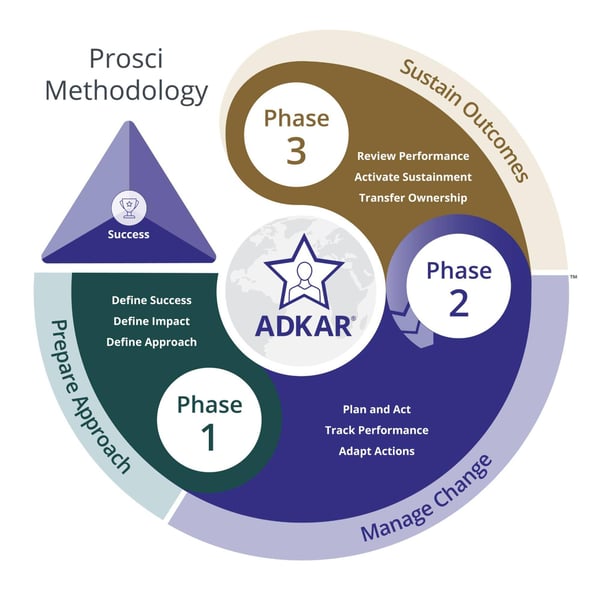
The Prosci structured, people-focused change management approach can help you overcome digital adoption challenges.
The Prosci Methodology includes:
- Prosci Change Triangle (PCT) Model – Shows the critical aspects of any change and how they relate to project health
- Prosci ADKAR Model – A model for individual change designed to guide people through transitions while addressing barriers to adoption
- Prosci 3-Phase Process – A structured framework for driving successful change and adoption at scale
The Prosci Methodology
 Prosci also offers client-specific training with communication plans and strategies, which we'll explore shortly.
6. Leverage leadership and change advocates
For digital adoption to work well, it's important that leaders fully back the effort. When top managers sponsor the digital adoption effort, it boosts the team's spirit and momentum. Equipping these leaders to perform their key roles during change is critical to overcoming obstacles.
Building a team of supporters throughout the company helps spread the enthusiasm for adopting new digital tools. These supporters, or change agents, play a key role in promoting the use of these tools and collecting feedback to improve them. Celebrating every success, big or small, helps create a culture that is always looking to improve and supports ongoing digital adoption.
7. Partner with a change management company
Prosci Unified Value Proposition
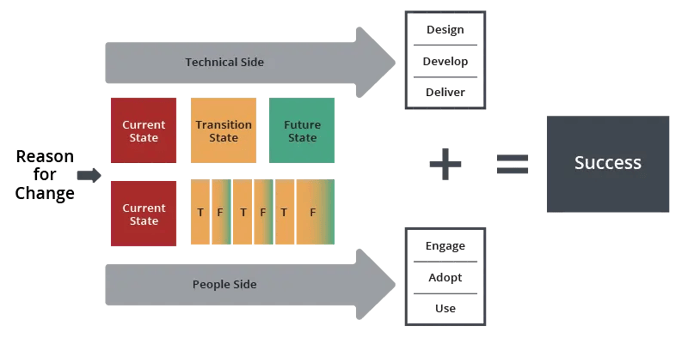
Partnering with a proven change management provider helps your digital transformation efforts with:
- Research-based models and frameworks
- Expert skills and experiences
- Hands-on support and capability building
All this will help you manage the change more smoothly while remaining aligned with your organizational goals and culture.
For instance, a certified Prosci change leader with deep experience in project management/change management integration, ERP systems implementation and digital transformation can:
- Provide personalized coaching
- Guide employees new to the Prosci Methodology
- Help individuals apply the methodology to their specific roles and projects
With support from a Prosci Advisor, employees learn to implement the Prosci Methodology successfully, more quickly, and with fewer disruptions to the project timeline. Studies have shown that organizations applying excellent change management experience significantly higher rates of success.
Correlation of Change Management Effectiveness With Meeting Objectives
Learn how SURA Asset Management, a leading Latin American financial services firm, accomplished its digitalization and other complex change initiatives with the help of Faculta (now part of Prosci).
How ADKAR Helps With Digital Adoption
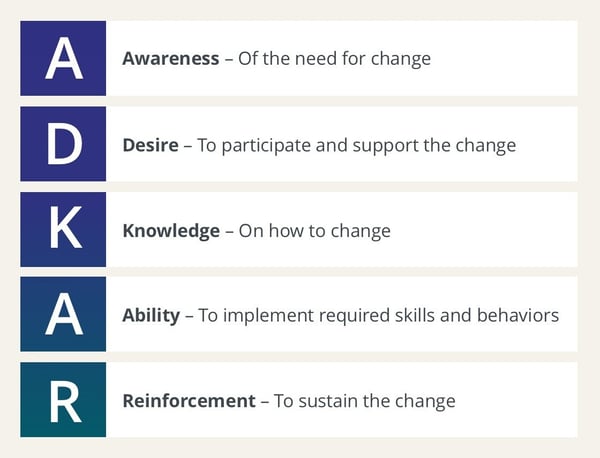
It’s important to focus both on the technology and the people using it when integrating digital technologies. The Prosci ADKAR® Model offers a structured approach for successful digital adoption.
Prosci ADKAR Model
The common pitfalls companies face during digital adoption include:
- Overemphasizing the technology itself, rather than those who need to adopt and use it
- Failing to convey the change's reasons, benefits and personal impacts
- Assuming employees will welcome new technology without creating a clear plan for its uptake
- Not providing enough resources for users to become proficient
- Overwhelming employees with too many changes at once
The ADKAR Model helps with digital adoption by helping build:
- Awareness – Of the need for change
- Desire – To participate and support the change
- Knowledge – On how to change
- Ability – To implement required skills and behaviors
- Reinforcement – To sustain the change
Read how a multinational food corporation successfully launched its complex SAP system with the help of Prosci training and tools.
The Way Forward: Digital Adoption Strategies for Sustainable Growth
Now that you know how combining digital adoption strategies with structured change management can lead to lasting success, get ready for the next step. With over two decades of experience, Prosci understands the challenges and opportunities that digital adoption brings, so we're well-equipped to support your digital integration effectively.