
7 Mins
Updated: April 13, 2026
Published: August 7, 2025



Businesses across various industries are prioritizing digital transformation, integrating technology across business functions to reshape their operations and enhance customer experiences. From smarter operations to faster decisions, digital transformations, when executed effectively, offer numerous benefits in delivering business value at scale while developing resilient and adaptive teams.
But executing a large-scale digital transformation can be even more challenging than implementing a smaller business transformation. While they will vary in size, scope, and application, successful digital transformations share one commonality—they follow a structured change management methodology and best practices to balance the right technology, people, and processes, creating lasting change that sticks.
When embarking on digital transformation, leveraging best practices can significantly increase the likelihood of transformation success. This article breaks down digital transformation best practices and explains how to apply them to your digital transformation strategy planning.
What is Digital Transformation?
Let’s briefly cover what digital transformation is before diving into the best practices that can help set your digital transformation plans up for success.
Successful digital transformations reshape business models
Digital transformation is more than just implementing digital technology. Digital transformation integrates digital technologies across business functions, ultimately reshaping business processes, company culture, and customer experiences. In other words, digital transformation touches the entire organization and the company’s business model, requiring a shift in how employees work.
Digital transformation is about redefining how a business creates value and differentiates itself from the competition by providing unique and personalized customer experiences. That’s what makes digital transformations more complex than other changes—they require exploiting digital technologies to rethink a business model.
Some examples of digital transformation trends on the rise include:
- The rise of AI-powered technology and machine learning, including generative AI, AI-driven automation, and AI agents
- Cloud-native applications and multi-cloud strategies for combining multiple cloud services
- Personalized, connected digital experiences through hyper-personalization, edge computing, and IoT (Internet of Things)
- Improved security with zero trust architecture
Whether your business is pursuing one or more of the digital transformations mentioned above, or another transformation entirely, the reality is that transformation only occurs when people adopt new ways of working. Organizations must understand how to effectively shape the digital future and support their people as they navigate their new business model.

Digital Transformation Best Practices
Although digital transformations vary based on an organization’s characteristics, goals, and challenges, there are a few best practices that practitioners and teams should apply, regardless of industry or scale, to help drive their digital transformation strategy. Consider the following digital transformation best practices to increase the likelihood of success within your organization.
Engage leadership and secure sponsorship for transformation success
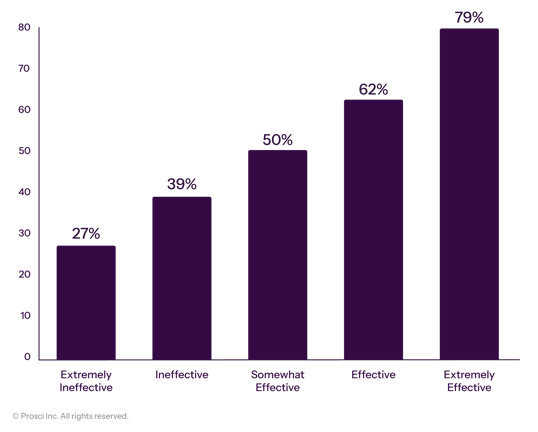
A successful digital transformation begins at the top of the organization. Strong leadership support is critical for successful digital transformation. Leaders must be actively involved in the change process, demonstrating commitment to the success of the transformation. Sponsorship has consistently ranked as the top contributor in all of Prosci’s benchmarking reports since 1998. It has a direct impact on whether digital transformations meet their objectives.
Correlation of Sponsor Effectiveness With Meeting or Exceeding Objectives
Enabling sponsors involves preparing, equipping and supporting the appropriate leader to fulfill their critical responsibilities during the digital transformation—what Prosci refers to as the ABCs of Sponsorship. This framework emerged from over two decades of research on Best Practices in Change Management. The ABCs of effective sponsorship are:
A) Active and visible participation throughout the project
Even more critical in digital transformation initiatives than other types of change projects is sustained presence from sponsors. Digital transformation requires bold, visible leadership at every step. Yet, many transformation efforts stall before they start due to hesitant or disengaged leaders. Active and visible sponsor participation is not a nice-to-have; it’s necessary to build and maintain momentum for change.
B) Build a coalition of sponsorship
Primary sponsors play a critical role in mobilizing other key business leaders and stakeholders, which helps drive the profound shift in organizational culture and processes as part of a digital transformation.
C) Communicate, support and promote the change to impacted groups
Transformation efforts often fall apart when leaders fail to communicate the vision and strategy effectively across departments. Teams may work in silos, misunderstand objectives, or lack visibility into how their work connects to broader initiatives that will contribute to the success of the digital transformation.
To avoid these pitfalls, communication must be ongoing, cross-functional and directly connected to the "why" behind the change. Every person in the organization must understand the broader purpose of the digital transformation and their role in achieving success.
Utilize the Prosci ADKAR® Model to drive digital transformation success
A structured, people-focused approach is crucial to driving successful digital transformation, as organizational change hinges on individual transitions. That’s why following a structured change management approach can make all the difference when it comes to digital transformations.
At the heart of the Prosci Methodology is the Prosci ADKAR Model, a proven model that breaks down individual change into five key elements: Awareness, Desire, Knowledge, Ability and Reinforcement.
The Prosci ADKAR Model
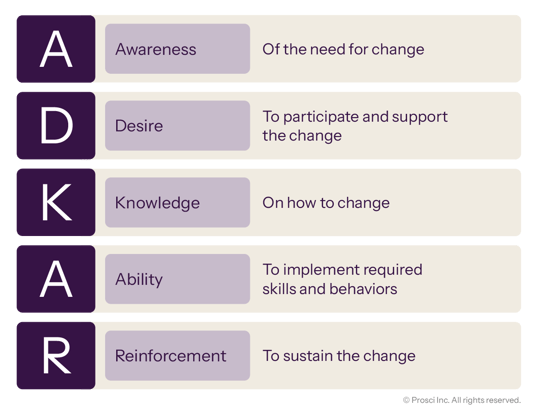
The ADKAR Model drives successful change on an individual level. At Prosci, we understand that organizational change can only occur when individuals change, especially when it involves completely reshaping operations and company culture as part of a digital transformation.
By understanding where people are in the digital transformation journey, leaders can pinpoint specific barriers and provide targeted support, whether that’s through communication, training or coaching.
People need to understand why the change is happening, what’s in it for them, and how the business and leaders will support them through the transition. The ADKAR Model enables leaders and supporting change management teams to focus their activities on what will drive individual change, ultimately achieving the desired results of a digital transformation.
Communicate effectively and frequently
While communication is part of the ABCs of sponsorship, the role of communication doesn’t stop there. Clear and consistent communication is vital throughout the digital transformation process.
Sharing regular updates isn’t enough. Instead, develop a comprehensive communications plan so that every person in the business understands the purpose of the change and how each individual and department fits into the bigger picture. Additionally, beyond explaining the reasons for change, incorporate the benefits of the new technologies and how the changes impact each employee group and their day-to-day work.
Rather than sending communications without a structured schedule and format, creating a robust communications plan drives real results and change. Well-designed communications plans incorporate key messaging aspects, including:
- Key messages
- Target audiences
- Preferred communication channels
- Frequency of updates
- Preferred senders
Prosci research indicates that individuals prefer to receive specific change messages from designated roles within the company. When it comes to messages about the impact of change on the business or organization, people want to hear from the person in charge, often a senior manager or executive. They want to know:
- Why are we changing?
- What is the risk of not changing?
- How does this change align with our business direction?
But when it comes to change-related impacts on their work, people want to hear from their manager. They want to understand:
- How does this impact me and our team?
- How will this change affect my day-to-day responsibilities?
- What’s in it for me or WIIFM?
- What’s in it for us (our team or workgroup)?
Preferred Senders of Messages
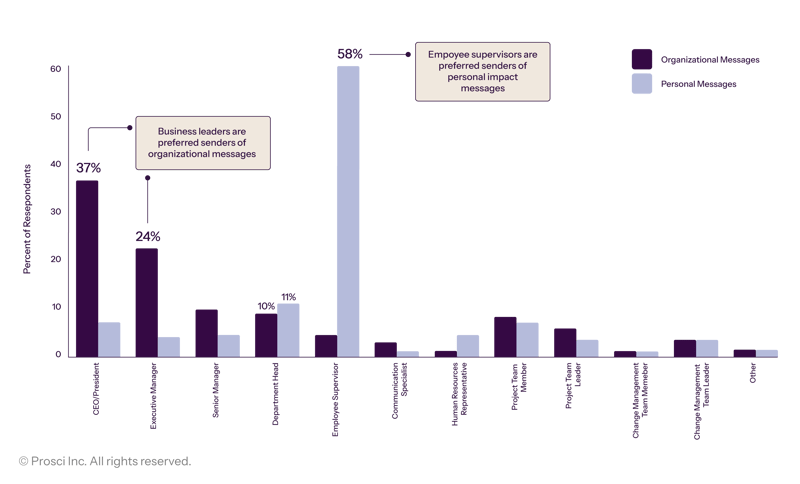
To ensure people are receptive to communication, it’s essential to consider their preferences, especially when significantly altering the business model and ultimately the course of their day-to-day duties.
Invest in training to support the digital transformation journey
Digital transformation succeeds when employees fully embrace and adopt new technologies. While today’s digital technologies can revolutionize how businesses operate and serve customers, people need support, opportunities to learn, and sufficient training and development to understand and apply these tools and digital technologies in their work. To achieve this, organizations must provide role-specific, hands-on training aligned with their transformation objectives.
Without the right support, employees may be apprehensive about new systems, underutilize tools or revert to old ways, undermining the entire initiative. In this case, a digital transformation may fail.
While the ADKAR Model drives successful change on a personal level, the Prosci 3-Phase Process scales the impact across the organization, helping ensure that organizations equip employees with the digital skills and competencies necessary for an enterprise-wide digital transformation.
Here’s an overview of the three phases:
- Phase 1 – Prepare Approach – In this phase, change leaders define success, assess readiness and build a tailored strategy for change.
- Phase 2 – Manage Change – In this phase, the team develops and delivers the bulk of change management activities, from communication and training to resistance prevention and assessments.
- Phase 3 – Sustain Outcomes – In this phase, the organization measures adoption, collects feedback and takes steps to ensure the change sticks.
The Prosci 3-Phase Process
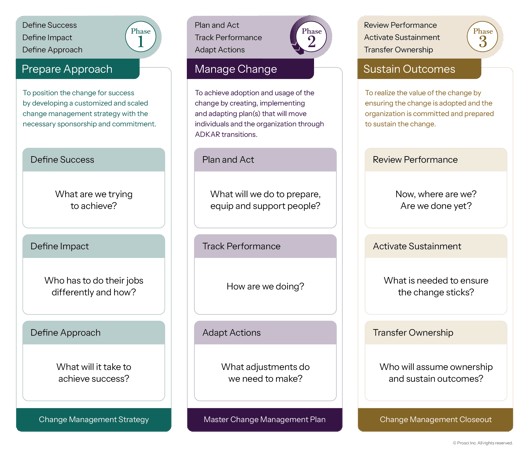
In particular, the second phase encompasses the training process, ensuring that practical plans are in place to educate and guide employees as they learn new behaviors and adopt new ways of working. This phase bridges the gap between a digital transformation plan and human adoption, encouraging people to utilize new tools and systems to their full potential, thereby enabling them to fulfill their roles effectively.
Measure and celebrate successes to accelerate adoption
One of the most powerful ways to sustain momentum and accelerate long-term adoption during a digital transformation is to measure and celebrate success throughout the process. Doing so reinforces progress, builds confidence, and motivates people to continue to engage even when it may feel difficult.
This is why defining and tracking success metrics from the outset is key. During the initial phase of the Prosci 3-Phase Process, practitioners work with stakeholders to position the digital transformation for success by developing a customized, scaled change management strategy by answering the following questions:
- Define Success – What are we trying to achieve?
- Define Impact – Who needs to do their job differently, and how?
- Define Approach – What will it take to achieve success?
This includes identifying the specific business outcomes the digital transformation is expected to achieve—whether improved efficiency, enhanced customer experience, or increased agility. Individually, it means ensuring that employees adopt and use the new digital technologies and processes effectively.
As the digital transformation progresses, the Prosci Methodology builds in key activities to directly measure and celebrate successes. For example, various assessments and evaluations help organizations assess adoption levels, identify areas of resistance, and measure performance. The results of these tools and activities help leaders and teams refine their strategies and demonstrate the return on investment.
Ultimately, recognizing achievements builds momentum, and celebrating successes helps embed the digital transformation into cultural change. It signals that the transformation is shifting how the business operates for the long haul and lets employees know they are on the right track.
Following a structured yet adaptable change management approach helps organizations ensure that their digital transformation efforts lead to lasting business success.

Putting Digital Transformation Best Practices Into Action
Digital transformation projects are about reshaping how an organization operates, delivers value, and adapts to a constantly evolving landscape. By applying proven best practices, organizations can reduce risk, improve change outcomes, and position themselves for long-term success. These best practices serve as guiding principles, helping teams navigate complexity, anticipate and mitigate resistance, and maintain momentum as the culture shifts.
But no two organizations are exactly alike, which is why it’s essential to tailor digital transformation approaches to your unique context, culture, and business goals. What works in one environment may fall short in another.
A structured change management approach, such as the Prosci Methodology, provides the frameworks and strategy necessary to guide individuals through the adoption of digital transformation. When you follow a people-centered approach, your digital transformation will become a lasting business success and strategic advantage for years to come.