4 Mins
Published: December 23, 2025



ServiceNow has become a cornerstone of digital transformation, helping organizations streamline workflows, eliminate manual processes, and create more seamless employee and customer experiences. But as with all digital transformations, these enterprise-wide implementations hinge on whether people embrace and adopt new ways of working. This article explores why change management is essential for ServiceNow, best practices, and the key enablers that facilitate successful ServiceNow implementations.
Understanding ServiceNow organizational change management (OCM)
ServiceNow is a cloud-based platform for organizations, designed to bring together artificial intelligence (AI), data, and workflows to reinvent and automate existing processes across business areas such as IT, HR, customer service, and operations. By replacing manual tasks and disconnected systems with integrated, user-friendly workflows, ServiceNow helps organizations reduce technical debt to work smarter and faster.
The ServiceNow platform touches multiple business functions, requiring employees across the organization to adopt new processes, workflows, and ways of working. That’s why organizational change management is critical for implementations. Effective change management prepares employees for new workflows, helps leaders model the desired behaviors, and ensures the organization fully embraces the platform’s capabilities.

Integrating change management within IT service management (ITSM)
IT Service Management (ITSM) refers to the set of practices and processes organizations use to design, deliver, manage, and improve the IT services provided to employees, customers and business functions. Without a structured change approach, ITSM rollouts risk low adoption, resistance and inconsistent usage. Here’s how to integrate change management within ITSM rollouts for a higher likelihood of success:
Embed people-focused change strategies into ITSM rollouts
ITSM implementations require people-centered strategies that help employees understand, learn and embrace new processes. Applying core OCM practices helps ensure users adopt new ITSM tools and processes effectively. For example, stakeholder mapping and impact analyses help organizations identify who is affected and how their roles and behaviors will change. Clear, timely communications convey what’s changing and why it matters to employees. This foundation accelerates adoption and helps ITSM solutions deliver the performance improvements they’re designed for.
Integrate change enablement into process design
Successful ITSM process design goes beyond configuring workflows and automations and incorporates the elements people need to successfully adopt new ways of working. Effective sponsorship ensures the change is visibly supported, reinforcing its importance to encourage teams to shift their behaviors. Building training directly into the process rollout helps employees gain the confidence and capabilities they need to navigate new IT services or processes. Finally, reinforcement mechanisms, including recognition and feedback loops, help sustain new habits after go-live.
Align ITSM governance with change maturity
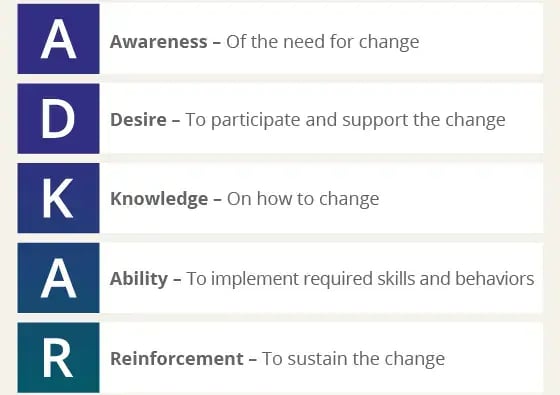
Strong ITSM governance requires leaders equipped to drive both process and behavioral change alongside technical updates. Incorporating OCM frameworks like the Prosci ADKAR® Model supports the people side of change. When organizations adopt a people-focused approach to governance, it shifts from a procedural function to a people-centered discipline, ensuring smoother adoption and more sustainable process improvements aligned with change readiness.
Prosci ADKAR Model
Measure adoption and readiness alongside system metrics
In ServiceNow and other ITSM platforms, system performance metrics address only the technical side of the implementation. Organizations should also track people-focused metrics such as user engagement, training completion rates, and feedback to gauge whether employees are learning new business processes and adopting the change. When combined with traditional ITSM metrics, such as incident resolution times and change success rates, organizations can gain a better view of the people and technical aspects of change. This balanced approach helps IT and change leaders quickly identify gaps, address resistance, and reinforce desired behaviors.
Why organizations need change management for ServiceNow
Organizations implementing ServiceNow often experience significant shifts in workflows, collaboration patterns, and day-to-day employee behaviors. Here’s why having the right approach to manage change is essential for success:
- Drive user adoption and utilization – Without a structured change approach that moves individuals through transitions, such as the ADKAR Model, adoption of ServiceNow and other similar platforms may stall or fail.
- Reduce resistance and disruption – By addressing concerns early and preparing users for new business processes, organizations minimize resistance and workflow disruption, resulting in a smoother transition.
- Align processes and culture – Following a structured change management framework helps ensure that technical changes fit with organizational norms and cultural changes needed to make the rollout successful.
- Maximize ROI and sustain improvement – High adoption leads directly to better data quality, more efficient workflows, and faster issue resolution, enabling organizations to achieve and maintain value realization.
Best practices for implementing change management in ServiceNow
The following best practices help organizations facilitate successful and lasting adoption of ServiceNow and similar tools through effective change management:
Engage stakeholders throughout the change process
All stakeholders, from executives and employees to customers and external partners, can influence whether a change initiative thrives or falters. Tools like a stakeholder engagement plan (SEP) help teams identify and analyze stakeholders and involve them throughout a project or change initiative.
Align change management processes with organizational goals
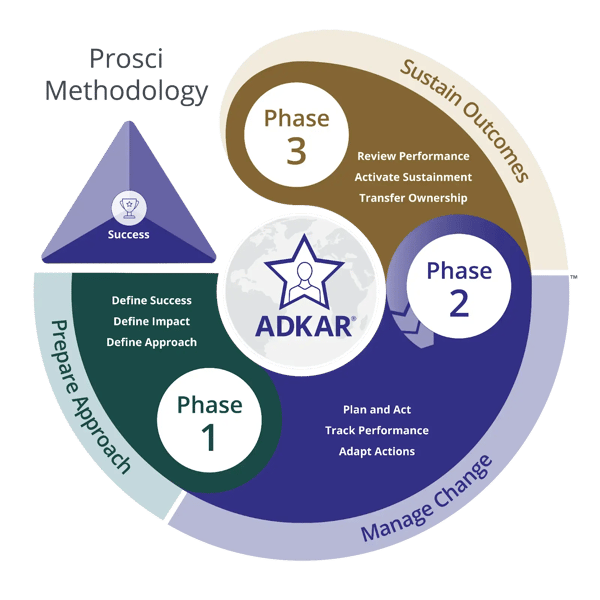
Connect ServiceNow changes to strategic business objectives so employees understand the “why” behind new workflows and changes to existing processes. The first phase of the Prosci 3-Phase Process assists with this by supporting change and project teams in developing their strategy with the end in mind, ensuring the change aligns with organizational goals to position it for success.
Train employees on using ServiceNow
The second phase of the Prosci 3-Phase Process involves developing plans and actions, including how best to prepare, equip, and support employees. Providing role-based, hands-on training that builds the knowledge and ability employees need to use new workflows confidently is crucial. Reinforce learning with hands-on practice and coaching to strengthen adoption beyond initial training sessions. Prioritize ongoing training sessions and learning opportunities to expand knowledge of the tool over time.
Continuously monitor and refine change management practices
Spending time adjusting your organization’s change management strategy, preparing adaptive actions, and continuing to track performance helps keep the change on track, even as obstacles arise. Use feedback loops and adoption metrics to track progress, identify gaps, and adjust strategies to meet employee needs.
Achieving success with change management in ServiceNow
Successful ServiceNow implementations require coordinated leadership, engaged employees, and a structured approach to managing the people side of change. Prioritize the following for success:
- Active and visible sponsorship – Prosci research demonstrates that sponsors are so critical to change efforts that they can make or break a project or initiative. Executive sponsors must visibly support the change, build coalitions, and communicate directly.
- Employee engagement and participation – Involving employees early through feedback sessions, pilot groups, and workflow reviews can help build ownership and reduce resistance to change.
- Frequent and open communication – Clear, ongoing communication ensures employees know what’s changing, why it matters, and how they’ll be supported.
- Integration with project management – Prosci benchmarking research shows that 47% of participants who integrated project management and change management reported meeting or exceeding project objectives.
- Engagement with people managers – People managers are crucial to the success of change because of their direct relationships with employees. Engagement with people managers has been named a top contributor to change management success in Prosci's Best Practices in Change Management benchmarking research since 2011.
Unlock the Potential of ServiceNow with Change Management
The ServiceNow platform delivers its greatest value when organizations prioritize the people side of change alongside the technical implementation. By following a structured change approach, such as the Prosci Methodology, organizations position themselves to achieve adoption and lay a foundation for long-term digital maturity. Change done right is how we create better outcomes.