5 Mins
Updated: April 29, 2026
Published: August 18, 2025



When Microsoft shifted to subscription-based licensing models for its core technology solutions and transitioned to cloud services, everything changed. Suddenly, success wasn't just about delivering software—it was about ensuring customers actually adopted and used these solutions to drive business value. Without adoption, there's no renewal. Without renewal, there's no sustained revenue. This fundamental shift made change management essential to Microsoft's business model. But they needed more than DIY approaches. They needed a scalable, research-backed methodology that could work across thousands of customers and 250,000+ employees, partners, and stakeholders worldwide.
The solution? Partnering with Prosci to increase customer adoption rates. Microsoft's approach represents a fundamental shift in how they think about technology adoption—moving from a focus on features and functionality to understanding the people side of change.
ON DEMAND WEBINAR: How Prosci and Microsoft Are Redefining Change Success in the AI Era
Microsoft’s Director of Business Programs, Steve Green, joined Prosci for a live discussion about building change capability at scale, managing continual change driven by AI, and how organizations should prepare to lead change in the future. Watch the on demand webinar above, or keep reading to hear more about Microsoft's win with building change capability in it's CSR group.
Why Traditional Customer Success Approaches Fall Short
At most Software-as-a-Service (SaaS) organizations, customer success teams rely on "lighter-weight" adoption frameworks as a benefit that comes with the purchase of the service. These can work well for straightforward implementations, but when adoption gets complicated—when resistance emerges, stakeholders become cautious, or projects stall—informal approaches often fail to move the needle.
Microsoft's Customer Success Organization, which works with larger customers across Microsoft 365, Dynamics, and Azure, discovered that many customers underestimate what's truly needed to adopt and realize value from new technologies. The challenge isn't technical—it's human. It's about changing behaviors, shifting mindsets, and helping people see the value in new ways of working.
This realization led Microsoft to embrace Prosci's research-backed methodology and the ADKAR Model as their foundation for customer success. The methodology provided both the framework and the credibility they needed to have meaningful conversations about change with enterprise customers.
How Microsoft Uses ADKAR to Drive Customer Adoption
The Microsoft 365 Customer Success organization applies the ADKAR Model in four primary ways to influence buy-in and overcome adoption barriers.
1. Building awareness of the need for change management
The ADKAR Model's strength lies in its simplicity and universal applicability. Microsoft's customer success managers (CSMs) use practical exercises to help customers understand the change process. For example, they might ask someone to write their name with their non-dominant hand, then explore the questions that immediately come to mind: "Why should I change?" "What's wrong with how I've always done this?"
This simple exercise reveals a profound truth: even minor changes feel awkward and require conscious effort. When customers experience this firsthand, they begin to understand that everyone impacted by a technology implementation must go through this same psychological process—or the project won't achieve the adoption and success they're aiming for.
2. Backing conversations with research and data
Microsoft's partnership with Prosci provides access to extensive research that CSMs use to build compelling cases for structured change management. When customers see data on project failure rates without proper sponsorship, or understand the correlation between change management effectiveness and sponsor engagement, they're more likely to invest in doing change right.
Correlation of Sponsor Access with Change Management Effectiveness
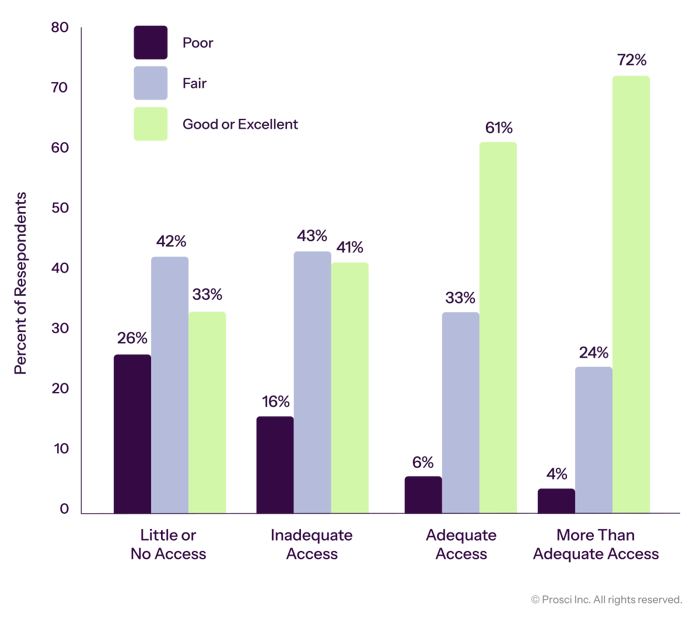
This research-backed approach gives Microsoft's teams instant credibility. Customers recognize Prosci as the leader in change management research, so when Microsoft professionals show up with these insights and tools, they're seen as experts in driving adoption, not just technology vendors.
3. Diagnosing and addressing adoption barriers
The ADKAR Model provides a diagnostic framework for understanding where adoption efforts get stuck. CSMs use it to identify common blockers:
Lack of Sponsorship: When decisions aren't getting made and stakeholders seem cautious, it usually points to weak sponsorship. Effective sponsors actively and visibly participate in the change, build a coalition of sponsorship, and communicate support and promote the changes to impacted groups. The ADKAR Model helps CSMs communicate how customers can encourage their sponsors to adopt their role and actively participate in and promote the change.
ADKAR Barrier Points: By mapping customer challenges against the ADKAR elements, CSMs can quickly identify whether adoption issues stem from lack of Awareness (people don't understand why change is needed), insufficient Desire (people aren't motivated to participate), missing Knowledge (people don't know how to change), limited Ability (people can't implement the change), or weak Reinforcement (people aren't supported in sustaining new behaviors).
The Prosci ADKAR Model
 Anticipate and Prevent Resistance: Customer success teams frequently encounter resistance as they guide customers toward new, more people-centric approaches to technology adoption. Rather than waiting for resistance to emerge and then trying to overcome it, Microsoft's approach focuses heavily on prevention—identifying potential sources of resistance early and addressing root causes before they escalate.
When resistance does emerge, CSMs apply techniques like "listen and understand objections" and "show benefits in real and tangible ways" to address concerns directly. For example, when someone resists a new system or process, it's typically because they lack Awareness of why the change is necessary, don't see personal benefits (Desire), feel unprepared to make the transition (Knowledge/Ability), or haven't received adequate support to sustain new behaviors (Reinforcement).
4. Creating a common language for change
One of the most valuable aspects of Microsoft's approach is how the ADKAR Model creates a shared vocabulary for discussing change with customers. Rather than talking past each other about "user adoption" or "training needs," Microsoft teams and their customers can have precise conversations about awareness building, desire creation, knowledge transfer, ability development, and reinforcement planning.
This common language helps break down barriers between technical teams and business stakeholders, between Microsoft consultants and customer project managers, and between leadership and end users. Everyone understands the process, everyone knows their role, and everyone can contribute to success.
Building Enterprise Change Capability at Scale
Microsoft's commitment to change management extends far beyond their Customer Success teams. They've built an enterprise-wide capability that includes:
- Certified instructors who can deliver Prosci training globally
- Customized resources tailored to Microsoft's culture and customer needs
- Self-serve tools that partners and customers can access independently
- Integration with existing Microsoft frameworks and methodologies
This comprehensive approach ensures that change management isn't just something that happens during customer engagements—it's embedded in how Microsoft operates as an organization.

The competitive advantage of change done right
Microsoft's investment in change management creates differentiation in a crowded technology market. While competitors focus primarily on features and capabilities, Microsoft can demonstrate expertise in the most critical aspect of technology success: getting people to actually use the solutions they've purchased.
As Steve Green, Director of Business Programs as Microsoft explains, "We weren't unsuccessful before—we were very successful. But we always wanted to accelerate how quickly we can achieve success. Having access to research, to people who are like-minded and want to achieve success, has made a big difference."
This acceleration shows up in measurably better customer outcomes, stronger renewals, and deeper relationships that extend beyond individual technology purchases to strategic partnerships.
Key Takeaways for Customer Success Teams
Microsoft's approach offers valuable lessons for any organization focused on driving customer adoption:
-
People-side challenges require people-side solutions: Technology adoption is fundamentally about behavior change, not just training.
-
Research and data build credibility: Backing recommendations with proven methodologies and statistics helps customers see the value of investing in change management.
-
Simple frameworks enable complex conversations: The ADKAR Model's straightforward structure makes it easy to discuss sophisticated change management concepts with diverse stakeholders.
-
Diagnosis before prescription: Understanding where adoption efforts are stuck allows for targeted interventions rather than generic solutions.
-
Common language accelerates progress: When everyone speaks the same change management language, collaboration improves and results come faster.
Change as a Strategic Capability
Microsoft's transformation demonstrates what becomes possible when organizations treat change management as a core competency rather than an afterthought. By embedding a structured change management methodology throughout their Customer Success organization and beyond, they've created a sustainable competitive advantage that drives both customer success and business growth.
The lesson isn't just about using better tools or frameworks—it's about fundamentally changing how you approach the human side of technology adoption. When you get that right, everything else follows.