10 Mins
Updated: August 20, 2025
Published: November 1, 2024



Change is an emotional journey. If you ignore that, your initiatives are unlikely to take hold, no matter how solid your plan looks on paper.
The Kübler-Ross Change Curve Model helps you understand that journey. It helps you understand how people experience change, from resistance to acceptance. But while it highlights how people feel at each stage, it doesn’t show you how to keep them engaged and supported in practice.
The Prosci Methodology provides the structure, tools and strategies to both support your people through change and deliver lasting results.
In this article, we explore how the Kübler-Ross Change Curve and the Prosci Methodology work together. By pairing emotional insight with a proven, human-centric approach, you can give people the targeted support they need to adopt change with confidence.
What is the Kübler-Ross Change Curve for Change Management?
The Kübler-Ross Change Curve Model describes the emotional stages a person typically goes through when experiencing change. The Change Curve Model is adapted from the 5 Stages of Grief model, developed by Dr. Elisabeth Kübler-Ross in 1969. These five stages of grief are defined as denial, anger, bargaining, depression and acceptance.
Although the Change Curve Model is often linked to negative changes, it has been adopted as a useful framework for organizational change management. Applying the model can help you understand and navigate employee reactions during any transition.
The Change Curve Model offers valuable insight into the psychological journey of change. But it isn’t a comprehensive change management tool. While it highlights how people feel during transition, it doesn’t provide the tools or resources to support them through it.
The Prosci Methodology addresses these gaps with a clear framework for supporting emotional engagement at each stage of change. By coupling the Change Curve Model with Prosci’s structured change management approach, you can:
- Plan targeted support for employees based on their emotional stage
- Anticipate emotional reactions and deliver clear, empathetic messaging that resonates with your people
- Identify and remove barriers to change adoption
Integrating emotional intelligence into change management empowers you and your organization to navigate transitions with empathy, turning resistance into readiness and uncertainty into growth.
The Stages of the Kübler-Ross Change Curve Model
The Kübler-Ross Model has been adapted into a change management framework that offers a practical lens for understanding employee behavior during change. These insights equip leaders to guide their teams effectively throughout the change journey.
Stages of the Kübler-Ross Model
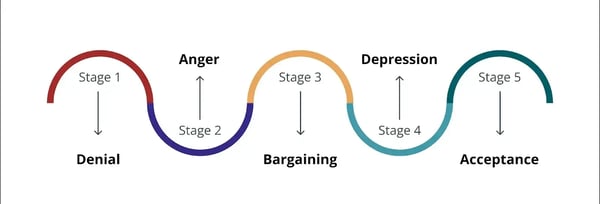
The Change Curve Model highlights five distinct emotional stages employees typically move through during change:
Stage 1 – Denial
This initial reaction often reflects disbelief or avoidance, with employees resisting the idea that change is happening. Comments like “This won’t affect me” or “Things will go back to normal” are common.
During this stage, employees often lack understanding of the change and why it’s needed. To reduce confusion, leaders need to take a proactive role in preparing employees for what’s ahead. Clear communication and active sponsorship help ensure people understand the reasons behind the change.
Stage 2 – Anger
Once the reality of the change sets in, frustration, fear or anger often follow. Employees may direct these emotions at leadership, coworkers or even the circumstances.
Empathy and patience are key to helping employees work through these feelings constructively. Leaders and managers play a critical role. Demonstrating the personal relevance of the change helps people understand how the change will benefit their role. Leaders must show how the change connects to and impacts people on an individual level.
Stage 3 – Bargaining
At this stage, employees may attempt to negotiate or delay the inevitable change by offering alternatives. They might seek exceptions to the change in hopes of avoiding its full impact.
In the Bargaining stage, people often lack clarity about what to do next or how to succeed in the new environment. Leaders should listen to feedback, clarify expectations and guide employees toward understanding the necessity of the change. It’s also crucial to equip people with the skills they need to adopt change effectively.
Stage 4 – Depression
As employees fully grasp the implications of the change, some may experience sadness, loss or disengagement. Even with the right skills, some may still feel unprepared, which can result in withdrawal or low performance.
Emotional support and opportunities for open dialogue can help employees regain focus and momentum. People need both confidence and capability to adapt to new ways of working.
Stage 5 – Acceptance
In this final stage, employees accept the change and begin adapting to the new environment. But sustained effort is crucial to prevent people from slipping back into old habits.
Leaders can shift from reactive support to proactive coaching, helping employees make the most of their new opportunities. Recognition of positive behaviors and open feedback both help to embed new practices into organizational culture.
When you understand what people are feeling, you can support them effectively. And this means smoother adoption and stronger outcomes.
With the right approach, the Change Curve Model offers a powerful tool for supporting your people through change.

Benefits of the Kübler-Ross Change Curve in the Workplace
The Change Curve Model offers a structured lens for understanding the human response to organizational change. Leaders can use this model to anticipate resistance, identify key inflection points in the transition journey, and apply targeted interventions that foster resilience and alignment.
Key benefits of the Kübler-Ross Change Curve Model in change management include:
Helps people understand emotions during change
The Kübler-Ross Model helps employees recognize and process their emotional responses to change. It frames reactions as normal and expected. This allows people to navigate transitions with greater self-awareness and resilience.
Facilitates emotional support to employees
The Change Curve helps leaders guide teams through change by addressing emotional responses, supporting morale and fostering engagement. By humanizing transitions, the model enables change practitioners to support employees through resistance and build trust. This paves the way for smoother adoption of new initiatives.
Encourages employee engagement
Engagement often declines during periods of upheaval. But leaders who proactively involve employees in the process, validate their emotions, and maintain open communication can sustain commitment and keep staff committed.
Reduces resistance to change
Although resistance most often stems from a lack of awareness of the reasons for change, fear or misunderstanding are also common contributors. Using the Change Curve Model in the workplace humanizes the change process, so employees feel supported, engaged and ready to move forward.
Using the Change Curve Model can offer many benefits for navigating the emotional side of change. But unlike the Prosci Methodology, it doesn’t provide a complete change management framework on its own.
Limitations of the Kübler-Ross Change Curve Model
While the Change Curve Model provides valuable insights into people’s emotional responses, it is not a comprehensive framework for driving organizational change. It does not offer the structured processes, actionable tools or adaptability required to lead change at scale. As a result, relying solely on this model may leave organizations without the guidance needed to build change capability or sustain long-term outcomes.
These are some of the limitations of the Kübler-Ross Change Curve Model. Later, we’ll explore how the Prosci Methodology can address these gaps.
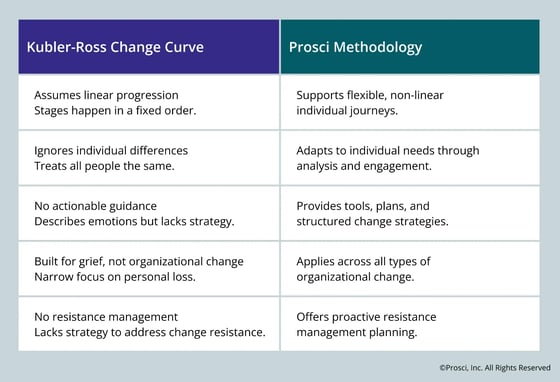
Linear progression
The Change Curve Model suggests that people progress linearly through each stage. In reality, responses may overlap, repeat or cycle back, depending on the person.
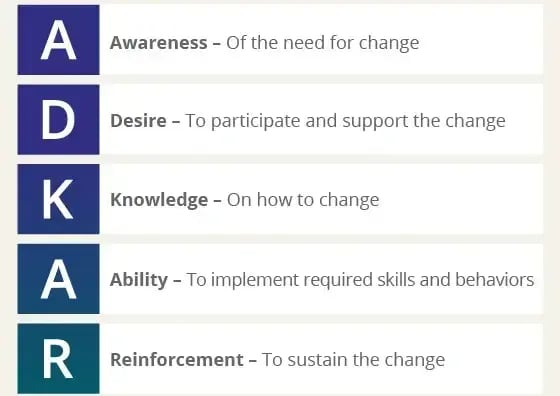
The Prosci ADKAR® Model allows for a more flexible understanding of individual transitions. Its five elements—Awareness, Desire, Knowledge, Ability and Reinforcement—aren’t restricted to a linear progression.
Prosci ADKAR Model
Individual variability
Everyone experiences change differently, but the Change Curve Model doesn’t account for this variability. This can lead to an oversimplified view of change responses.
The Prosci Methodology emphasizes the importance of understanding individual differences, using tools like stakeholder analyses and engagement strategies to deepen this understanding.
Lack of actionable guidance
The Change Curve Model doesn’t provide specific strategies for managing the emotions it describes. It lacks clear actions for facilitating the change process.
A comprehensive change management framework like the Prosci Methodology equips you with specific tools and plans, such as the Change Management Plan and Communications Plan. These offer structure and guidance throughout the transition.
Limited scope
The Change Curve Model is primarily focused on grief and personal loss. As a result, it doesn’t apply universally to all types of organizational change.
The Prosci Methodology was specifically designed for workplace change, making it applicable to a wide range of change types, not just those involving loss or grief.
Resistance management
Resistance is a natural reaction to change. But the Change Curve Model doesn’t address how to support employees through this resistance or facilitate a smoother transition.
The Prosci Methodology includes a robust Resistance Management Plan to help you effectively manage resistance and provide people with the support they need.
A comprehensive change management model—or complete methodology, like Prosci’s—allows you to address these limitations, strengthening the outcomes of your change initiative.
Combining the Change Curve Model With the Prosci Change Management Approach
Change disrupts routines, triggers uncertainty, and often leads to emotional responses such as fear, frustration or disengagement. By supporting the Change Curve Model with the structured approach of the Prosci Methodology, change leaders can gain the psychological insights they need to guide people through the mental and emotional hurdles of transformation.
Using the Prosci Methodology to support the Kübler-Ross Change Curve Model
The Prosci Methodology offers an adaptable and repeatable approach to managing the people-side of change. It equips employees and leaders with the tools they need to drive successful outcomes across change initiatives.
The Prosci Methodology consists of three main components:
The Prosci Change Triangle (PCT) Model – a simple but powerful framework for establishing and connecting the most important aspects of any successful change effort.
The Prosci ADKAR Model – a highly effective model for supporting people through each element of the change process.
The Prosci 3-Phase Process – a structured, flexible process for driving change at the organizational level.
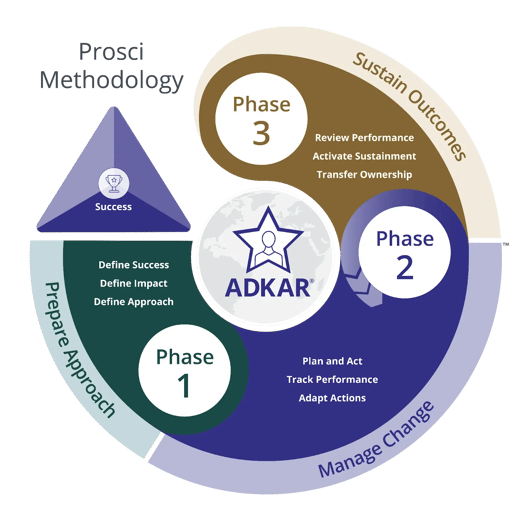
The following steps show how you can use the Prosci Methodology to complement the Kübler-Ross Change Curve.
Develop change management plans
Use our ADKAR Model to create targeted Change Management Plans that address the emotional responses identified in the Change Curve Model.
These plans help to:
- Build understanding of the change
- Foster a willingness to participate in it
- Develop the skills and capabilities to adopt it
- Reinforce the change to sustain new behaviors
Implement support mechanisms
You can use support mechanisms from the Prosci Methodology to help people through each phase of the Kübler-Ross Change Curve Model.
For example, during the Anger phase, training programs can help people build Knowledge to manage their emotional responses. In the Bargaining phase, workshops that encourage discussions about the change help develop the Ability to move forward with clarity.
Use feedback and adaptation
Use the Track Performance stage from the Prosci 3-Phase Process to gather feedback on how people are experiencing their emotional journey.
Prosci 3-Phase Process
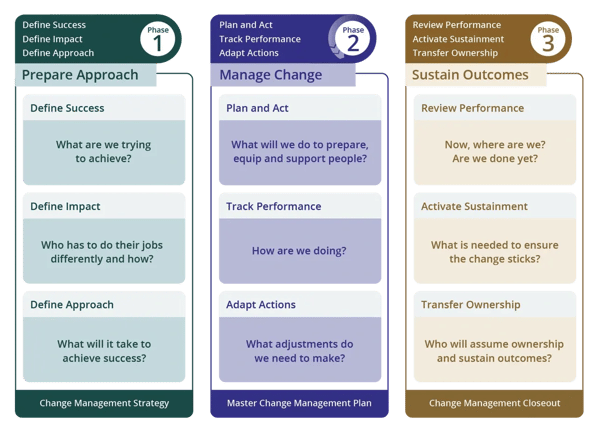
Feedback mechanisms let you collect insights about individual responses at different stages of change. This feedback can be used to adapt change management strategies to keep them relevant and supportive.
How the Change Curve Model aligns with the ADKAR Model
While the Kübler-Ross Change Curve Model emphasizes understanding emotional responses to change, the ADKAR Model provides a structured pathway to drive individual adoption and sustain organizational results.
Together, these models offer leaders a human-focused approach to guiding people through change.
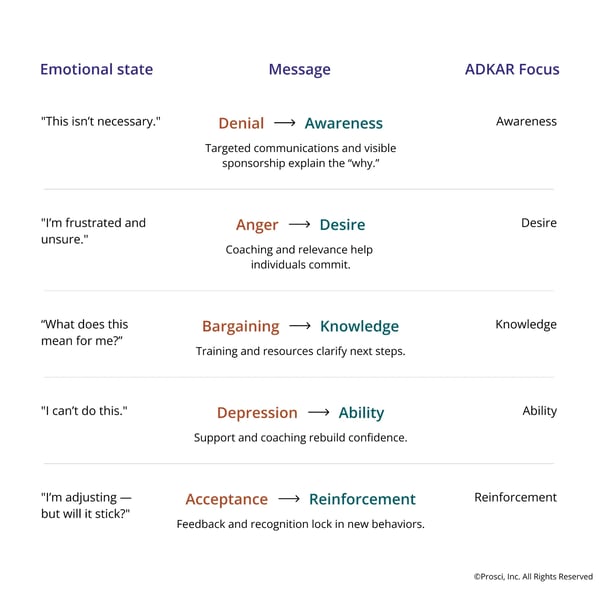
Here’s how the stages of the Change Curve align with the Prosci ADKAR Model—and how to support people through each stage.
Denial
The Awareness element of the ADKAR Model helps to reduce confusion and encourages people to accept the reality of the change. Targeted communication is key to ensure everyone understands the reasons for change, while active sponsorship creates visibility.
Anger
Desire helps build commitment to participate in the change. Coaching, support, and role-specific relevance let employees see how they’ll benefit from the change, reducing anger and resentment.
Bargaining
The Bargaining stage is often fueled by a lack of clarity about how to succeed in the new environment. Knowledge equips people with the skills and information they need to navigate the change. Training, resources and clearly-defined responsibilities are key.
Depression
Ability helps to overcome feelings of overwhelm and unpreparedness that can lead to depression. It develops confidence and capability to adopt the change. Proactive support and coaching reduce stress and rebuild momentum during this stage.
Acceptance
Reinforcement solidifies behavior change and prevents people from reverting to old practices. Focus on recognizing and rewarding behaviors and milestones. Encourage open feedback and provide ongoing support to embed the new approach into daily work.
Acknowledging emotional responses while providing structured support creates an environment where employees feel seen, heard and equipped to succeed. Ultimately, leaders need a dual perspective: one rooted in contextualizing human behavior and the other in driving tangible results.
Applying the Change Curve Model to Workplace Leadership
As a people manager, you have day-to-day operational responsibilities. But during periods of change, your role expands into critical new dimensions.
Supporting your team through the emotional and practical challenges of change requires focused, empathetic leadership. The type that makes employees feel prepared and supported to adopt change.
Prosci’s Best Practices in Change Management research identifies five key roles that people managers must fulfill during change. Together, these roles form the acronym CLARC:
Communicator
The primary reason employees resist change is a lack of awareness about why it’s needed. Your role is to deliver clear, consistent messages about the change. This ensures that people understand the why, what and how of the transition.
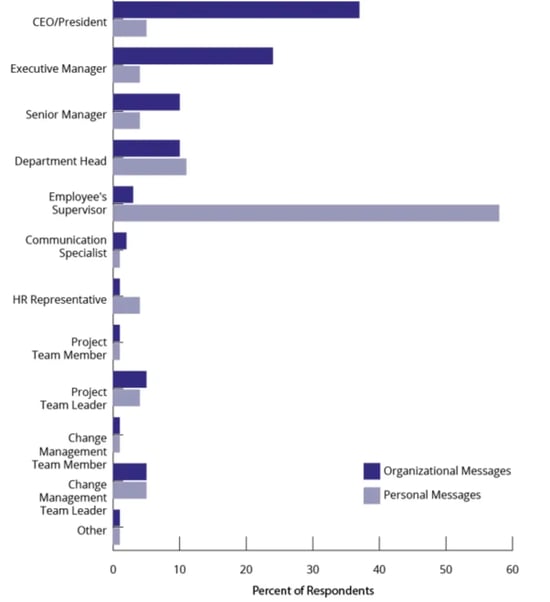
Prosci research reveals that a majority of employees preferred to receive messages about the personal impacts of change from their direct supervisors rather than from more senior leaders.
Preferred Senders of Messages During Change
How to do it:
- Connect the change to organizational goals to strengthen awareness.
- Use the same core message across all forms of communication (email, verbal updates, collaboration tools) to reinforce understanding.
Clear communication sets the tone for the change journey, building understanding and trust.
Liaison
Feedback loops are critical during any stage of change. To help your team move forward, you have to be the bridge between them and the project or leadership team.
Sharing your team’s insights with decision-makers ensures that the change process reflects real needs and concerns. If you come back to your team with updates and solutions, it will strengthen their confidence in adopting the change.
How to do it:
- Provide recurring feedback to the project team to influence decisions and adjustments.
- Report back with developments that show people their voices shaped the change.
When people feel heard and see action, their commitment to change grows.
Advocate
Anger and Bargaining often involve frustration, fear or resistance. But your visible support for the change can inspire your team to engage with it rather than push back.
Your words and actions set the tone. If you believe in and champion the change, your team will likely follow your lead.
How to do it:
- Share personal reasons for supporting the change to build connection and credibility.
- Recognize early adopters to show that commitment is valued and visible.
Your visible support helps reduce uncertainty and build momentum.
Resistance Manager
Resistance often manifests during the anger or depression stages. As a people leader, your role is to identify potential barriers to change that could cause resistance. Once identified, you need a clear plan to address these barriers and prevent resistance from happening.
How to do it:
- Listen actively to uncover what’s driving hesitation or resistance.
- Connect resistance to specific elements of change (e.g., lack of Awareness or Ability).
Addressing the underlying causes of resistance early helps prevent more severe disruptions later.
Coach
During the Acceptance stage, people begin to internalize and adapt to the new reality. Helping people process change also requires equipping them with the tools they need to succeed in this new environment.
Providing training, resources and hands-on support helps solidify the transition. It also fosters a sense of ownership and confidence in the new way of working.
How to do it:
- Flag skill gaps early and connect people with targeted learning opportunities.
- Offer real-time support as challenges arise, not just after the fact.
Effective coaching and training help people sustain results and performance.
From Emotional Challenge to Organizational Strength
Change brings emotional complexity. But it also creates an opportunity to lead with empathy. The Change Curve Model helps you identify what people feel. The Prosci Methodology shows you what to do about it.
When you combine emotional awareness with structured support, you create the foundation for successful adoption and sustainable change. While the Change Curve offers valuable insight into employee reactions, it doesn’t provide the tools to guide them forward.
The Prosci Methodology fills that gap, equipping leaders with a clear, flexible framework to manage change effectively. Because leading change starts with understanding how people experience it, and acting with intent at every stage.