
5 Mins
Published: December 23, 2025



SAP implementations fundamentally reshape how organizations operate, making them some of the most complex transformations a business can undertake. Success ultimately depends on how well people understand, adopt, and use the new processes and tools.
This post outlines the key principles, steps, and best practices needed to guide the people side of SAP change.
Understanding SAP change management
SAP systems are enterprise resource planning (ERP) software that enable businesses to manage and operate core business functions, including finance, human resources (HR), and supply chain management, in a single system. Since SAPs touch nearly every part of an organization, implementations often redefine business processes, data structures, and ways of working.
While SAP implementations offer several benefits, these projects are complex and can present several challenges. Common challenges include finding skilled personnel for the implementation, resistance to change, insufficient training, system complexity, and unclear roles and responsibilities. Without a thoughtful approach to the people side of change, users may struggle to adopt the new system, leading to errors, workarounds, and failed transformation efforts. Change management is crucial for ensuring adoption, minimizing resistance, and achieving business value.

Key principles of SAP organizational change management (OCM)
Based on Prosci’s research from over 1,700 practitioners, several key principles help organizations overcome human transformation challenges during SAP implementations, including:
Core training and capability building
Adopting a new SAP system requires new knowledge, tools, and development opportunities for lasting behavior change. Providing tailored training ensures employees develop the knowledge and skills they need to use the new SAP system effectively in the long term. Proven ways to do this include:
- Conducting role-based, hands-on, and ongoing training tailored to specific user needs
- Leveraging gamified learning systems with challenges and rewards to boost engagement and skill development
- Offering cross-training and peer learning opportunities designed to build collective expertise
Engagement and communication strategies
SAP programs impact a wide range of users, from frontline employees to senior leaders, and their buy-in is crucial for success. Early involvement in the process and stakeholder engagement from the start foster ownership, prepare them for role or process changes, and can help reduce resistance to change.
Additionally, maintaining open, honest, and two-way dialogue throughout the project, including through feedback loops, is necessary for success. Creating structured opportunities for employees to voice their concerns and influence decisions ensures they feel heard and supported throughout the SAP implementation.
A systematic approach to continuous improvement
The initial deployment of the SAP implementation is only the first step. Organizations should foster a culture of adaptability and continuous improvement by encouraging employees to embrace new knowledge and adopt new system capabilities over time. For example, a phased implementation with a gradual rollout can reduce overwhelm, allow for adaptation, and extend learning over a longer period. Additionally, teams should provide assistance beyond go-live, including coaching and check-ins to help close any information gaps.
Influence and recognition strategies
Successful SAP transformations require motivating employees to adopt and sustain new ways of working. Identifying and empowering change agents who can advocate for the new SAP system and model behaviors creates peer-level influence and builds trust. Change champions make the change more relatable and reinforce change messaging throughout the organization.
Equally important are mechanisms to recognize and reward SAP implementation efforts throughout the change journey. Celebrating milestones, highlighting adaptable individuals or teams, and reinforcing early successes help maintain momentum.
Organizational and leadership support
Strong organizational leadership support is foundational to any ERP implementation, including SAP system implementations. Active and visible executive sponsorship provides endorsement for the change, legitimizing its importance across the business. Sponsors must communicate the vision, reinforce the “why,” and consistently model new behaviors. Leaders must also prioritize creating psychologically safe environments in which employees feel comfortable expressing concerns, asking questions, and admitting when they need help for the best results.
Steps for implementing SAP organizational change management
A successful SAP implementation requires a structured, people-centered approach to change that aligns with the technical side of the work. Below are five steps for managing the people side of an SAP transformation for better results:
1. Assess organizational readiness for change
Undertaking large-scale change initiatives, such as SAP implementations, that are too resource-intensive or complex for an organization can lead to failed transformations and wasted investments. Assessing change readiness provides an opportunity to gauge whether a change initiative is likely to be successful or whether additional resources and support are needed. Change readiness assessments include organizational readiness, attitudes toward change, and individual readiness.
2. Define the scope and objectives of the SAP implementation
SAP implementations affect multiple functions, processes, and user groups, so it is critical to clearly define what is changing, who is impacted by the change, and the expected outcomes.
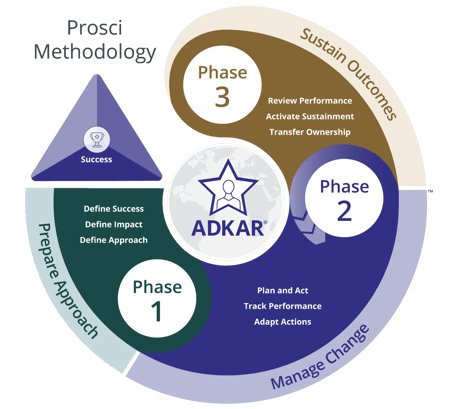
Prosci’s 3-Phase Process provides a structured yet flexible framework for driving change at the organizational level. In Phase 1 – Prepare Approach, practitioners establish what the organization is trying to achieve, how the change impacts individuals, and the steps required to achieve success.
3. Develop a comprehensive change management plan
The second phase of the Prosci 3-Phase Process brings plans and actions to life. During this phase, practitioners establish how to prepare, equip, and support people affected by the change. This stage also focuses on tracking and sustaining progress, and adapting the change management strategy based on learnings.
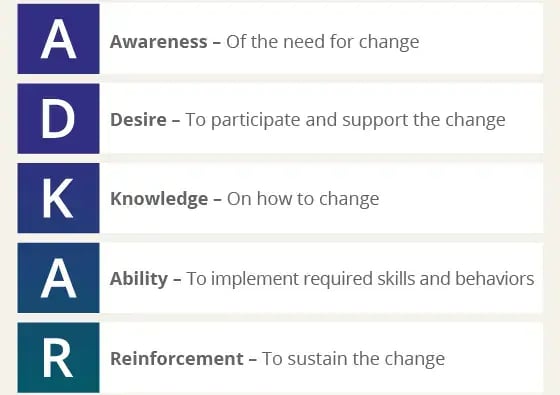
Organizational change only happens when individuals change. The activities in this phase help move individuals through the Prosci ADKAR® Model to facilitate successful organizational change.
Prosci ADKAR Model
4. Create a communication plan to inform and engage employees
In Phase 2 – Manage Change, practitioners help develop a communication plan. Clear, consistent communication is essential for reducing uncertainty and building trust during SAP transformations. A well-crafted communication plan identifies key audiences, develops targeted messages, and selects effective channels. Effectively planning communications and integrating them into the overall change management and project plans ensures that information delivery aligns with project progress, without missing messages or points in the timeline.
5. Provide training and support to facilitate skill development
Because SAP introduces new processes, terminology, and system behaviors, employees need practical, role-based training to move through the Knowledge and Ability transitions of the ADKAR Model. Training should align with roles and responsibilities and be supported by hands-on practice.
Best practices for successful SAP change management
The following best practices help organizations minimize disruption, accelerate adoption, and sustain long-term value from their SAP investments:
- Follow a structured change management approach – Proven frameworks for managing change, like the Prosci Methodology, help ensure stakeholders are engaged early, tailored training programs are built effectively, and communications are planned for transparency and consistency.
- Monitor performance and drive continuous improvement – Incorporate structured feedback loops, monitor key performance indicators, and provide ongoing optimization and training support post-implementation.
- Design processes that align with business strategy – Prioritize process optimization before configuring the SAP system, and align the goals of the new SAP system to business objectives so employees understand the purpose behind the changes.
- Plan better and start earlier – Improve preparation and requirements gathering early in the process, and bring in external change management support and additional resources when needed.
Successful SAP implementation case studies
The following real-world examples demonstrate how using a people-centric change management approach drives successful SAP implementation outcomes.
Multinational Food Corporation Exceeds Expectations with SAP Implementation
A multinational food corporation elected to deploy a new, integrated SAP platform over three years to eliminate six legacy systems by combining them into a single unified system. The team partnered with Prosci to scale their change management knowledge through Prosci’s certification programs. Using the Prosci Methodology, the team launched the SAP implementation successfully on time and achieved its immediate objectives.
Energy and Utility Company Change Management Office Launches SAP Implementation
AVANGRID, Inc., a diversified energy and utility company, set out to build an enterprise-wide change management capability. The company created a Change Management Office and invested in Prosci training to build change management knowledge. One of their first projects was an SAP Implementation, which was considered a huge success, with only 10% of employees requiring refresher training.
Unlock the value of an SAP implementation with change management
SAP initiatives succeed when organizations invest as much in their people as they do in the technology. By investing in the people side of change, businesses turn SAP from an implementation into a true strategic advantage. We know from experience that change success happens when it’s focused on as a discipline, not an add-on to a project.