
7 Mins
Updated: April 13, 2026
Published: August 29, 2025



Digital transformation is a key technology initiative for 80% of C-suite leaders. But success is rarely straightforward. Every type of digital transformation brings unique challenges. And each one demands a tailored approach to deliver the best outcomes.
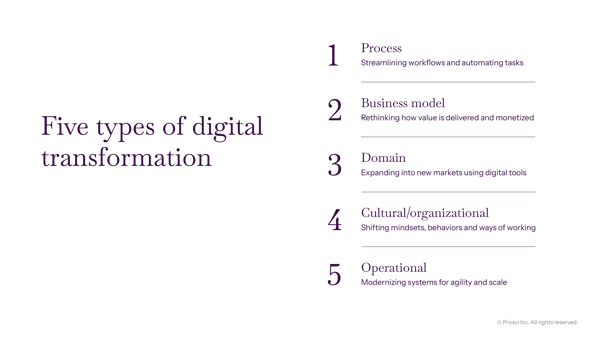
In this article, we explore five types of digital transformation—process, business model, domain, cultural and operational—and show how change management supports each one.
With an effective change management framework in place, you can turn any type of digital transformation into lasting business impact.
Five Types of Digital Transformation and How Change Management Supports Them
Digital transformation isn’t one-size-fits-all. Its implementations differ based on a business's intricacies: its processes, models, domains, culture, and operations. Each type calls for its own strategy, but when executed correctly, it drives efficiency, agility, and stronger outcomes for your people and your customers.
With the digital transformation market projected to grow at a CAGR of 23.9% from 2024-2030 and global spending to hit USD 3.9 trillion by 2027, it’s clear: organizations aren’t just experimenting with change—they’re betting big on it.
Based on research conducted by TEKSystems’ 2025 State of Digital Transformation, that’s exactly why 75% of digital leaders plan to increase spending to support digital transformation initiatives. And, since a study of over 1000 global firms found that only 22% are “future-ready,” the imperative of these transformations couldn’t be more timely.
Getting digital initiatives right starts with understanding each type of transformation and how to support it with change management. We’ll explore each, including examples, below.
Process transformation
Business process transformation is about streamlining workflows and optimizing operations. It uses digital solutions like robotic process automation and machine learning to reduce manual errors, shorten cycle times and free up employees to focus on more strategic work.
This transformation is clearly needed. For example, automating manual tasks in the healthcare industry can reduce labor expenses by 50-60%.
Examples of process transformation
Process transformation can apply to all kinds of business functions:
- Digital onboarding processes – Redesigning onboarding to be fully digital, allowing new hires to complete paperwork and training online.
- Performance management overhaul – Shifting from annual performance reviews to continuous feedback and development to enhance employee engagement.
- Lean manufacturing implementation – Adopting lean principles to eliminate waste and improve process flow, resulting in faster production times and reduced costs.
- Adoption of smart manufacturing techniques – Using advanced technologies like AI and machine learning to optimize production schedules and maintenance.
A smooth path to process transformation was essential for Texas A&M, one of the largest systems of higher education in the United States.
When the company needed to update its legacy human capital management system, it turned to the Prosci Methodology to support an enterprise-wide move to Workday. The decision paid off, with over 58,000 users prepared and equipped to adopt new digital processes.
How change management supports process transformation
Process transformation only succeeds if people adopt the new processes in question. And that means equipping them with the digital literacy skills and support they need to thrive in a new digital environment.
Backed by a structured change management framework to achieve your process transformation business goals, you can:
- Align processes – Change management helps align new digital processes with existing workflows. This ensures employees understand how to adapt to new procedures.
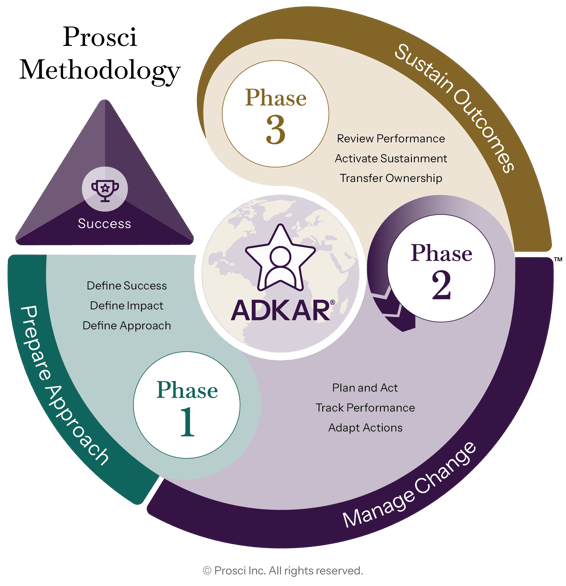
- Provide training – The Prosci ADKAR® Model emphasizes training and support to equip employees with the Knowledge and Ability to adopt new technologies effectively.
- Communicate clearly – Clear communication about process changes and expected outcomes helps to address potential concerns and resistance to change.
Prosci ADKAR Model

Business model transformation
Business model transformation reimagines how your company generates revenue, delivers value to customers and interacts with the market.
This type of digital transformation can lead to new revenue opportunities, a better customer experience and a stronger competitive advantage.
Examples of business model transformation
Business model transformation is all about rethinking your business strategy and how you create and capture value. It can include:
- Subscription services – Transitioning from product sales to SaaS models, requiring sales and support teams to shift from one-time transactions to long-term relationship management.
- Outcome-based pricing – Adopting pay-per-use or performance-based pricing, prompting teams to track and deliver results more collaboratively across departments.
- Digital marketplaces – Launching digital platforms that shift internal roles from direct selling to managing partner relationships, content, and digital operations.
How change management supports business model transformation
Even the most well-planned digital business model transformations will fail to deliver value if people don’t embrace change.
Integrating a human-centric approach from the start of your digital transformation journey will keep your people engaged and committed at every stage.
With a robust change management approach to guide your digital transformation strategy, you can:
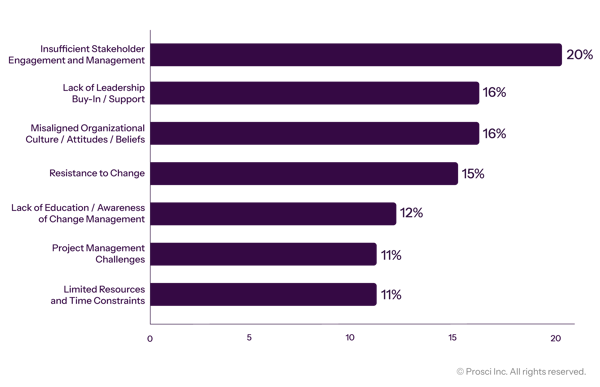
- Engage stakeholders – 20% of change professionals cite insufficient stakeholder engagement as their greatest obstacle. Change management facilitates engagement with key stakeholders to boost support for new business models.
- Build Awareness and Desire – Our ADKAR Model creates Awareness of the need for change and Desire to embrace the new model through clear, consistent messaging.
- Create feedback mechanisms – Feedback loops allow for strategic adjustments based on employee experiences and concerns.
Obstacles to Change Management
Domain transformation
Domain transformation leverages digital technologies such as cloud computing and IoT to expand into new, related markets or industries. It can even involve creating entirely new offerings.
This type of transformation involves using your existing strengths and resources to enter a different domain rather than refining your current offering. It can result in a measurable competitive advantage, not to mention new business opportunities.
According to studies, as many as 87% of companies use a multi-cloud approach in their digital transformation initiatives. Additionally, enterprise IoT technology spend is projected to grow at a 14% compound annual growth rate (CAGR) through 2030. Both are indicators of businesses looking to expand and innovate—but, first, they must retool their existing infrastructure.
Examples of domain transformation
Enabled by emerging technologies, domain transformation initiatives can drive your business into a completely new area. For example:
- IoT services – A hardware manufacturer expands into IoT-enabled offerings, requiring engineers and service teams to learn data analytics and support cloud computing.
- Digital retail – A traditional retailer creates a digital marketplace, shifting staff from in-store sales to digital merchandising, advanced analytics and partner management.
- Fintech expansion – A legacy bank is developing a mobile payment app, which requires product teams to adopt agile development methods and customer service to support digital-first users.
How change management supports domain transformation
Domain transformation can create exciting opportunities for value creation. However, these changes can’t be sustained unless people are prepared and supported to succeed in the new domain.
Change management offers a clear framework for guiding people through the digital journey. Equipped with a solid change management approach, you can:
- Encourage cross-functional collaboration – Change management enhances collaboration across departments, helping people to adapt to new domains and integrate diverse perspectives.
- Improve cultural readiness – Your organizational culture needs to be ready for changes that come with entering new domains. Change management focuses on building a mindset that’s open to new ways of working.
- Measure impact – A structured approach helps you measure the effect of domain transformation on employee performance and engagement, ensuring alignment with business goals.
Organizational transformation
Organizational transformation (also known as cultural transformation) involves a significant shift in your business processes and organizational culture. It’s about improving your adaptability to future challenges.
This strategic shift is crucial for successful digital transformation, ensuring a digital-first culture that embraces new technologies and agile ways of working.
Examples of organizational transformation
This type of digital transformation changes the way people think, lead, and work together across the organization:
- Embracing experimentation – Moving from a risk-averse mindset to a culture that encourages testing, learning and digital innovation at every level.
- Enabling digital decision-making – Empowering cross-functional digital teams to make fast, informed decisions without relying on top-down approvals.
- Leading with agility – Embedding adaptability, resilience and iterative thinking as core leadership competencies across the business.
A leading insurance company turned to the Prosci Methodology to transform how it implements strategic initiatives. Using our research-based approach, leadership training programs, and the creation of a change management Center of Excellence, the organization successfully integrated change management into the fabric of its organizational culture.
How change management supports organizational transformation
Changing mindsets doesn’t happen overnight. And to sustain these shifts, a people-centric approach is essential to encourage a culture of openness, innovation and agility.
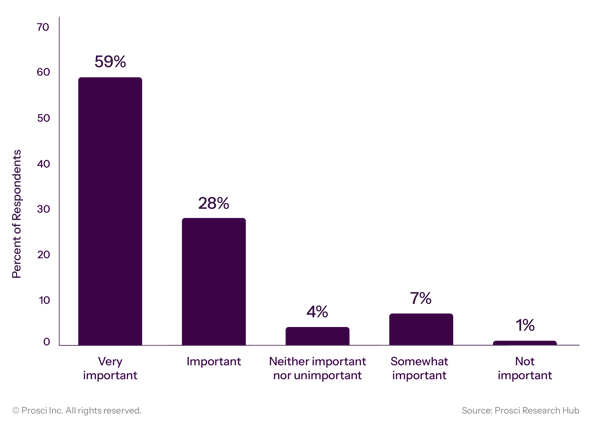
Prosci research found that 59% of respondents rated organizational culture awareness as very important for successful change management.
With an effective change management strategy to support your organizational transformation, you can:
- Identify cultural gaps – A cultural assessment can help you establish areas that must be addressed to support digital transformation.
- Engage leadership – Change management involves leaders driving cultural change by modeling desired behaviors and fostering an environment that embraces change.
- Sustain change – Comprehensive change management includes strategies to reinforce new cultural norms and values, ensuring transformation is sustainable in the long term.
Importance of Organizational Culture Awareness
Operational transformation
This type of transformation is a fundamental reimagining of how work gets done and how value is delivered.
Operational transformation involves integrating digital technologies into your core operational functions. As a result, you benefit from efficiency gains, boosted agility and better customer experiences.
Examples of operational transformation
Operational transformation redefines how work gets done across systems, tools and teams. In practice, it can look like:
- Cloud migration – Moving to cloud-based infrastructure, prompting IT teams to adopt new deployment methods and collaborate across locations.
- ERP integration – Adopting enterprise resource planning systems, requiring employees to standardize processes, use shared systems and adjust established workflows.
- Artificial intelligence in supply chain – Using AI to predict disruptions, requiring planners and operations staff to interpret real-time insights and respond proactively.
When two leading HR technology firms merged to form UKG, they leveraged the Prosci Methodology to guide their operational transformation. Over 1000 employees successfully adopted a new digital system by integrating change management with project management. The result was streamlined processes, enhanced customer experiences and accelerated growth.
How change management supports operational transformation
For operational transformation to be successful and sustainable, people must adopt new processes and workflows.
Integrating change management into your operational transformation project can allow you to:
- Optimize processes – Change management helps you identify the areas where digital tools can enhance efficiency and effectiveness.
- Manage resistance – A proven change management tool like the ADKAR Model addresses resistance to operational changes by providing support and resources.
- Deliver continuous improvements – Establishing a culture of continuous improvement through change management encourages ongoing adaptation and refinement.

Types of Digital Transformation: FAQs
What is digital transformation?
Digital transformation is a process of change covering every aspect of a business’s operations, including how it provides service and delivers value. It uses technology to modernize, simplify, and scale more efficiently. Organizations that successfully realize digital transformation initiatives see outcomes like increased efficiency, improved customer experience and enhanced agility.
Why is digital transformation important?
Digital transformation is critical for organizations to adapt and stay ahead. Advanced technologies like big data analytics and robotic process automation help streamline tasks, increase customer satisfaction and meet evolving market demands. In turn, this allows organizations to achieve sustainable growth while maintaining a competitive advantage.
What are the 5 main areas of digital transformation?
Different types of digital transformation impact different areas of a business. The five main types of digital transformation are:
- Process transformation – Redesigns how tasks are executed to improve speed, efficiency and consistency.
- Business model transformation – Changes how an organization delivers value, ensures customer engagement and generates revenue, often disrupting legacy approaches.
- Domain transformation – Expands the business into new markets or technologies that require new skills, tools or capabilities.
- Cultural/organizational transformation – Shifts the mindsets, behaviors, and structures that shape how people collaborate and adapt to change.
- Operational transformation – Transforms work processes across teams, systems and infrastructure to boost performance and adaptability.
How can change management impact digital transformation?
Change management plays a crucial role in the success of digital transformation initiatives as its processes address both the technical and people sides of change. It facilitates adoption, reduces resistance, enhances communication, builds competencies and aligns culture with strategy. This ensures that outcomes are more successful, comprehensive and sustainable.
Take the Best Path to Digital Transformation Success
Digital transformation takes many forms. From streamlining processes to shifting mindsets, each type of transformation needs a unique strategy and tailored approach.
But transformation success doesn’t revolve around technology. No matter the type of digital transformation, the people across your business need to adopt new tools, systems, and processes.
By integrating a proven change management framework like the Prosci Methodology into your digital transformation, you can provide the support to guide people through this transition, driving smooth adoption and long-term success.