
4 Mins
Updated: April 13, 2026
Published: September 15, 2025



Digital transformations offer immense potential for business growth, but not without effectively supporting people and developing a culture equipped to move through digital transformations. A digital transformation culture is a critical ingredient in successful digital transformations. This article breaks down the traits of a strong digital transformation culture and tips for overcoming cultural barriers that hinder transformation success.
What is a Digital Transformation Culture?
A digital transformation culture refers to the organizational mindset, behaviors, and beliefs that enable a workforce to embrace and sustain digital change. In other words, a healthy digital transformation culture embraces change as an opportunity, fosters a mindset of continuous improvement and experimentation, and adopts new ways of working together.
Why Culture is Central to Digital Transformation Success
Company culture is critical in digital transformations because they require a fundamental shift in mindset throughout the organization. One of the biggest challenges is bridging the cultural gap between the old way of working and the new approach required for transformation, addressing resistance to change along the way.
Resistance is a natural human reaction to change. In digital transformations, resistance stems from fear of job displacement, discomfort with unfamiliar systems, a lack of understanding of the transformation’s purpose, and ultimately, a lack of readiness for change.
When leaders communicate clearly, create psychologically safe environments, and lead by example, they foster change readiness and cultivate a healthy digital transformation culture that supports long-term success. When culture leads, transformation follows.
Key Traits of a Strong Digital Transformation Culture
A strong digital culture is defined by several key traits, including:
Openness to change
A culture that is open to change is essential for successful digital transformation. Organizations should assess their current state of readiness for change and strive to create a culture that embraces and fosters change. In a change-ready culture, employees are willing to experiment with and adopt new technologies, question old ways of working, and embrace new ideas without fear of failure or critique.
Additionally, fostering a mindset that views change as an opportunity rather than a threat is crucial. To achieve this, communicating the rationale behind changes is essential. The Prosci ADKAR® Model, which stands for Awareness, Desire, Knowledge, Ability and Reinforcement, ensures that employees understand the reasons for the change and feel motivated to engage.
Prosci ADKAR Model

Cross-functional collaboration
Cross-functional collaboration is a cornerstone of true organizational agility. It requires dismantling silos, challenging conventional hierarchies, and reimagining how teams work together.
By fostering this kind of interconnectedness, organizations unlock faster knowledge flow, sharper decision-making, and the ability to adapt in real time to evolving market demands and digital transformation trends.
Data-driven decision-making
Advanced technologies for predictive analytics provide actionable insights into operations, customer expectations and market trends. These data-driven insights allow leaders to make informed, real-time decisions to improve strategic planning, operational effectiveness and employee experience. As part of a digital culture, employees also leverage data-driven decision-making to provide high-quality customer support and achieve results across their workflows.
Continuous learning and adaptability
Promoting a culture of continuous learning and professional development reinforces and interweaves change as a positive force. By regularly equipping employees with skills and knowledge that align with digital transformations and business goals, they can develop a greater willingness to adapt to changing environments without fear.
Our ADKAR Model facilitates continuous learning through its Knowledge, Ability and Reinforcement elements.

Common Cultural Barriers to Digital Transformation Success
Cultural barriers can make or break the success of a digital transformation. Below are some of the common cultural barriers enterprises often face:
- Siloed departments – Fragmented departments often struggle to collaborate effectively, resulting in disjointed digital transformation efforts.
- Fear of failure or experimentation – Without a psychologically safe environment, employees may feel less willing to try new ways of doing things.
- Lack of leadership support – Digital transformation requires bold, visible leadership at every step. Yet, many transformation efforts stall before they start because of hesitant or disengaged leaders.
- Low digital literacy or confidence – When employees don’t feel confident navigating new digital tools or business processes, progress slows, putting digital transformations at risk.
How Leadership Shapes Digital Culture
Leadership, including managers, plays a critical role in shaping digital culture by modeling digital behaviors. When leaders actively use advanced technologies, they demonstrate commitment and encourage adoption across the organization. Rewarding innovation and calculated risk-taking helps build a culture where experimentation is valued. This creates the trust and momentum needed for lasting digital change.
The Role of Employee Mindset and Engagement
Employee mindset and engagement are vital to digital transformation, and it starts with fostering psychological safety. When employees feel psychologically safe, they are more willing to voice their concerns and engage in solutions rather than resisting change.
Additionally, ongoing training and upskilling opportunities empower employees to grow with digital changes rather than fear them. When employees feel valued and prepared, they’re far more likely to support and sustain digital transformation efforts.
Aligning Culture with Digital Strategy
Aligning culture with digital strategy is essential for ensuring that digital transformation efforts are not only implemented but sustained. Organizations align culture with digital strategy by:
Embedding cultural goals into the digital roadmap
Just as milestones for technology and process changes are defined, collaboration, mindset shifts, and behavioral goals also need to be outlined. This ensures that cultural development progresses alongside digital implementations.
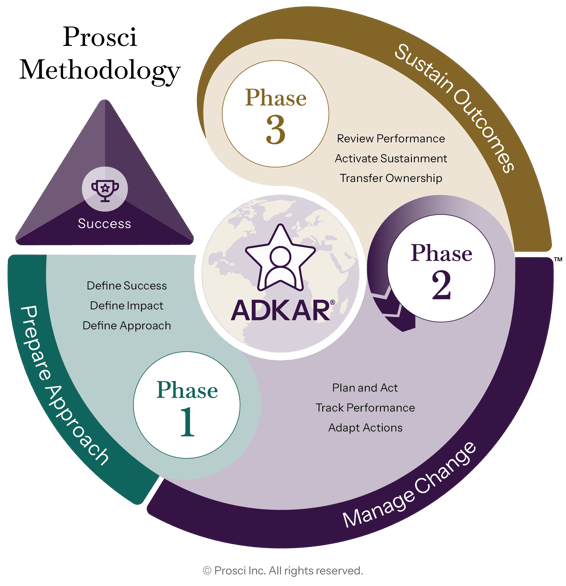
The Prosci Methodology can help ensure cultural change isn’t an afterthought. With its proven change management approach, you can drive culture-embedded digital transformations.
Ensuring values support high-impact transformation priorities
If company values are outdated or conflict with change efforts, cultural changes may stall. When culture aligns with business goals, employees see how their daily work connects to broader business goals. This alignment strengthens trust and creates a strong foundation for consistent decision-making and behavior.
Communicating the “why” behind changes
Targeted, consistent communication plays a key role in successful transformation. This is enabled by a comprehensive communications plan that addresses the Awareness and Reinforcement elements of the Prosci ADKAR Model—explaining why the digital change is happening and reinforcing its long-term value.
Tools and Practices to Reinforce Digital Culture
An effective digital transformation culture also requires the right digital tools and practices to support and sustain evolution. Key foundations include:
- Agile frameworks and design thinking – Promoting iterative problem-solving and innovation encourages teams to test ideas quickly, learn from the outcomes, and adapt in real-time.
- Collaborative platforms – Communication and collaboration tools such as Slack and Miro support seamless workflows across cross-functional teams, reinforcing a shared vision and alignment across the enterprise.
- Regular feedback loops and retrospectives – Structured opportunities to reflect and learn from previous experiences integrate a culture of learning into daily operations and cultural behavior.
 Measuring and Evolving Digital Transformation Culture
Successfully monitoring an evolving digital transformation culture requires qualitative and quantitative measures, including:
- Employee surveys and sentiment tracking – Ask employees how they feel about digital initiatives to identify areas of resistance and opportunities for improvement.
- KPIs tied to cultural outcomes – Emphasize the importance of the cultural evolution by incorporating cultural KPIs alongside traditional business metrics.
- Iterative improvement through experimentation – Test new cultural practices and gather feedback to refine approaches along the way.
Transform Your Culture, Transform Your Business
Digital transformation culture is not a one-time project; it’s an ongoing commitment that requires strong leadership, strategic alignment, and persistent effort. When cultivated intentionally, the right culture becomes a powerful accelerator, turning strategy into sustained digital success.