
6 Mins
Updated: May 11, 2026
Published: July 7, 2025



The success of digital transformation hinges on one question: How well can your people adapt to change?
Every transformation reaches deep into the organization. It changes systems, shifts responsibilities, and reimagines how work gets done. But as transformation accelerates, so do the potential risks, like stalled initiatives and resistance.
The most persistent obstacles—skill gaps, unclear leadership, communication breakdowns—aren’t surface issues. They’re signs of deeper friction that can hold your transformation hostage.
There is a way forward.
When digital initiatives are grounded in structured change management, they gain the traction to succeed. A people-first approach accelerates adoption and ensures transformation delivers long-term value and solid return on investment.
This article outlines five critical challenges that stand in the way of successful digital transformation and how to solve them with a deliberate, people-centered strategy.
Digital transformation succeeds when you support the people driving the change.
Why a People-Centric Approach Is Key to Digital Transformation Success
Digital transformation initiatives have the potential to drive real business growth. And leaders are well aware of its importance. 61% of C-suite executives view it as a top priority in their organizations, while 63% reported enhanced performance as a result of their digital transformation efforts.
But the true benefits of transformation can only be realized if people adopt the change.
Digital transformation challenges often stem from human factors such as uncertainty, disengagement or a lack of long-term support. When people don’t understand the reasons for change or don’t have the training to apply it, initiatives struggle to gain traction.
A people-centric approach can address these issues by ensuring individuals are prepared, equipped and supported to transition and sustain the change.
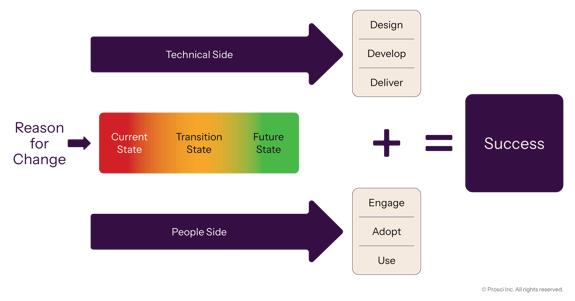
Change management is the structured process that guides both the technical and people sides of change. The Unified Value Proposition serves as the foundation for delivering change that lasts. A clear digital transformation strategy connects digital technology adoption with individual success, allowing organizations to achieve the full value of their transformation.
The Prosci Unified Value Proposition
Understanding the importance of a people-first strategy is the first step. The next is recognizing where digital transformation projects most often run into trouble.
5 Digital Transformation Challenges to Overcome
Digital transformation challenges take many forms, from misaligned leadership to digital skills gaps and outdated systems. By putting people at the center of your change approach, you can overcome these obstacles and strengthen the results of your digital transformation initiatives.
Below, we explore five common challenges you may encounter on your digital transformation project. In the next section, we’ll show you how to address them with structured change management.

1. Lack of change management strategy
Without a clear strategy for managing change, digital transformation efforts often lose momentum. Prosci’s study, Keys to Unlocking AI Adoption, shows that nearly one-third of executives identify change management as the dominant challenge of digital transformation plans, pointing to resistance and low adoption as common barriers.
Employees may hesitate to adopt new digital tools, unsure how changes will affect their roles. Some fear job displacement, while others feel overwhelmed by unfamiliar systems. Without early communication about the reasons for change and how it supports broader goals, it becomes difficult to build engagement—and even harder to sustain it.
2. Gaps in workforce skills and digital readiness
Even with the technology in place, your digital transformation strategy can be hard to implement if your people aren’t equipped to use the digital solutions effectively. Many organizations struggle to build the digital skills required to apply new tools in day-to-day work.
According to Prosci research, 27% of artificial intelligence implementation challenges relate to workforce capabilities, including the need for training, talent shortages and limited expertise in new technologies and more complex software. When employees don’t feel confident navigating new systems or business processes, progress slows. Gaps in digital readiness can reduce productivity and limit the benefits of your digital transformation investments.
3. Unclear leadership and misaligned sponsorship
Strong leadership is essential for guiding digital transformation. When business owners and leaders aren’t aligned or sponsors aren’t actively engaged, digital initiatives lose direction. Teams may receive conflicting messages and execution becomes inconsistent.
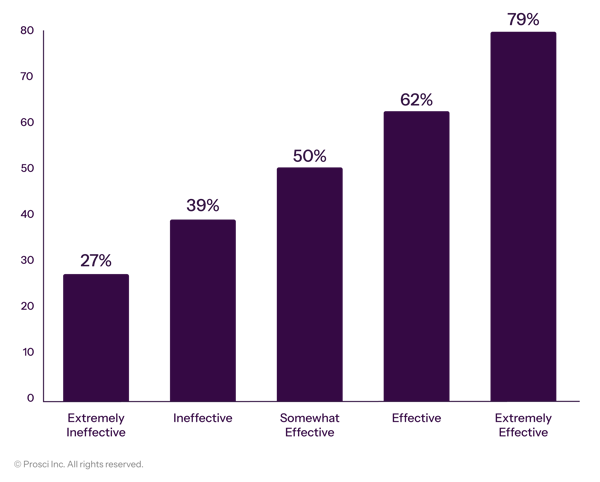
Prosci research shows the impact clearly: projects with extremely ineffective sponsors were only 27% likely to meet their objectives, compared to 79% with extremely effective sponsors. Without visible, unified support from senior leaders, employees are less likely to commit to the change.
Gaps in sponsorship affect more than the strategy. They impact how people understand the change and how willing they are to participate in making it successful.
Correlation of Sponsor Effectiveness With Meeting Objectives
4. Complex or siloed legacy systems
The digital transformation process often involves layering new technologies onto existing infrastructure or legacy systems. When these legacy systems are fragmented or outdated, integration becomes difficult. Outdated technology creates a huge challenge in leveraging the technological advancements needed to transform. Teams may struggle with inconsistent data or duplicated efforts. Digital tools might not communicate with one another or across locations.
These barriers slow progress and limit visibility into key processes. Prosci research shows that technical challenges account for 17% of the barriers to successful digital transformation. When current systems are complex or disconnected, even carefully planned initiatives face setbacks. Employees may feel frustrated navigating modern technology, especially when the digital tools in question don’t align with their traditional work practices.
5. Poor communication during transformation
Communication is one of the most visible elements of any transformation. When it’s unclear, inconsistent or delivered by the wrong people, it creates confusion and prevents advancement. Employees may feel left out of the process or uncertain about what the change means for them.
Prosci research shows that 58% of employees prefer to hear about the personal impacts of change directly from their supervisors. Most want to hear the business reasons from the CEO. When communication doesn’t match those expectations, it can cause misinformation and disengagement, making it harder to maintain alignment and momentum.
While each challenge presents unique complexities, they share a common solution: a structured approach to change that equips people to adopt and sustain transformation.

How to Solve Your Digital Transformation Challenges With Effective Change Management
People-focused change management turns these key challenges into opportunities for lasting business impact. It’s a strategic enabler that connects people, purpose and performance, and aligns them with your business goals.
Following a successful digital transformation journey, Cristina Moroyoqui Leon, Employee Experience Leader at SURA, said Prosci’s human-centric approach helped the multinational financial services firm “manage the people side of our changes as effectively as the technical side.”
This embedded approach is essential for the long-term success of any digital transformation effort. According to our most recent Best Practices in Change Management research study, organizations with excellent change management are seven times more likely to meet their objectives.
Correlation of Change Management Effectiveness With Meeting Objectives

Let’s explore how effective change management can help you overcome common digital transformation challenges.
Enhance leadership engagement
Visible, consistent leadership sets the tone for successful digital transformation. When business leaders actively participate in change initiatives, they build trust, reinforce priorities and demonstrate commitment. This includes clearly communicating the reasons for change, aligning around shared digital transformation goals, and modeling desired behaviors and new ways of working.
Engaged leaders help reduce uncertainty and address resistance by building a culture in which individuals feel safe and supported. Their involvement signals that change matters—and that people will be taken care of every step of the way.
Invest in training and development
Training is an essential component for building the skills needed to navigate change. When employees understand how to apply new digital solutions, technologies and processes, they’re more confident and capable in their job roles.
Effective programs include training on digital systems and role-specific changes. Providing development opportunities at every level of the organization strengthens overall readiness and creates a more resilient workforce—one that’s equipped to adapt, adopt and succeed in a constantly evolving environment.
Communicate effectively
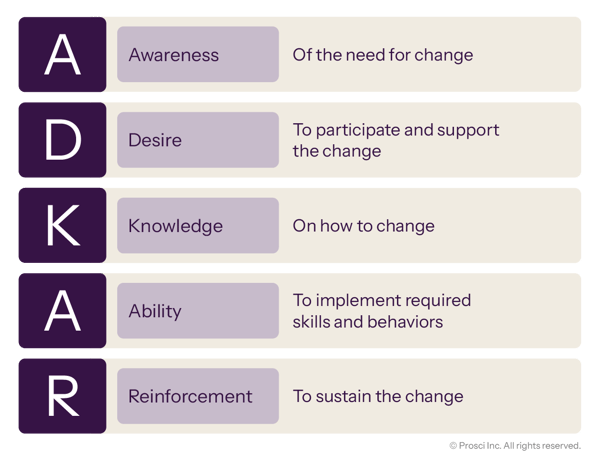
Targeted, consistent communication plays a key role in successful transformation. This is enabled by a comprehensive communications plan that addresses the Awareness and Reinforcement elements of the Prosci ADKAR® Model—explaining why the change is happening and reinforcing its long-term value.
Clear messaging and effective communication about benefits—such as cost savings or reducing manual processes—and the reasons for change helps reduce uncertainty. When employees hear the right messages from the right people at the right time, they’re more likely to engage, participate and stay committed to the change.
Prosci ADKAR Model
Use change readiness assessments
Change readiness assessments provide critical insight into the level to which an organization is prepared, willing and able to implement the change. They evaluate elements such as organizational culture, awareness, employee readiness and leadership commitment, before the rollout. Change practitioners use these insights to develop a change management strategy that fits the change and your organizational needs.
Measure and adapt
Ongoing measurement plays a crucial role in sustaining progress during digital transformation projects. Clearly defined metrics and key performance indicators (KPIs) provide visibility into what elements are working well and where adjustments are needed.
By tracking outcomes related to adoption, proficiency and overall impact, you can make more informed business decisions and refine change strategies in real time. This continuous feedback loop supports accountability, highlights opportunities for improvement and ensures that change efforts remain aligned with organizational goals and your business model as conditions evolve.
Establish a change management framework
A robust change management framework brings consistency and structure to how organizations managed change. Adopting a proven approach like the Prosci Methodology ensures both the technical and human sides of change are addressed from the start.
With defined processes in place, you’ll be equipped to plan, implement and sustain change more effectively. A structured change management program provides clear communication, reinforces accountability and supports people at every stage of the digital transformation journey.
Netherlands-based company Drechtsteden Shared Services used this structured approach to unify eight separate service desks into a single, integrated service center. With change management embedded from the beginning, they streamlined operations and improved service delivery across 11 organizations.

Turning Challenges Into Long-Term Change Capabilities
Digital transformation challenges often arise from people-related factors. Issues like unclear leadership, skill gaps, and inconsistent communication can slow adoption and impact progress. Digital transformation leaders overcome these obstacles by taking a structured approach that puts people first.
Change management strengthens the core capabilities that drive transformation in your digital journey. When you support your leaders in guiding change, equip your workforce to adopt new technologies and digital processes, and maintain clear communication throughout the process, you create a strong foundation for ongoing success.
Prosci helps organizations build these capabilities from the inside out. Through research-backed practices and practical tools, we enable your people to lead change with confidence. That’s how you turn transformation into a scalable, repeatable strength.