8 Mins
Updated: April 13, 2026
Published: September 26, 2025



Digital transformation is arguably the highest priority in business today. It’s also one of the hardest to get right.
Research shows that 70% of digital transformation initiatives fail. That’s not because the technology doesn’t work. It’s because people aren’t supported enough to adopt and embrace it.
Digital transformation goals sound promising: boosted productivity, reduced costs, improved customer experiences. But they only happen when people adopt new ways of working.
Good change management provides the framework to turn digital goals into measurable results. And it does so by preparing, equipping and supporting your people through change.
This article explores eight digital transformation goals and how to achieve them with change management. Because digital transformation only succeeds when people do.
What Digital Transformation Goals Often Miss
Digital transformation goals set out to reshape how an organization operates and competes. They aim to improve business processes, enhance customer experiences, and deliver a competitive edge through digital initiatives.
Common digital transformation goals focus on improving areas such as:
- Customer experience and service delivery
- Operational efficiency and business processes
- Agility, innovation, and responsiveness
- Decision-making through data and insights
- Employee performance and collaboration
- Competitiveness, compliance and risk management
But in the pursuit of these objectives, many organizations zero in on the tech and overlook the people. New systems roll out, but adoption doesn’t follow. Workflows change, but behaviors don’t. Transformation fails to take hold because people weren’t supported to succeed.
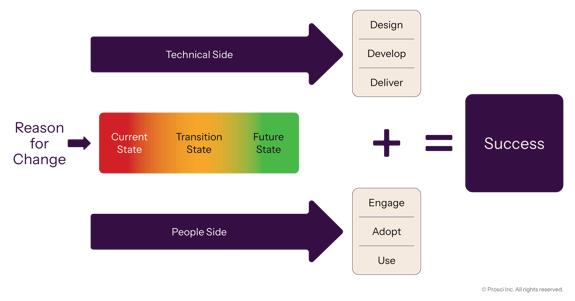
Effective change management fixes that. By addressing both the technical and people sides of change, you can implement new technologies and equip your people to adopt them. Prosci’s Unified Value Proposition shows how this dual focus improves outcomes, accelerates adoption, and delivers sustainable change.
Prosci Unified Value Proposition
Next, we’ll explore eight common digital transformation goals—and why getting them right depends on preparing, equipping and supporting your people.
8 Digital Transformation Goals—and How to Achieve Them With a People-Centric Approach
Digital transformation goals create the foundation for improved operations and business growth. Yet research shows that 70% of digital transformation initiatives fail. Transformation projects rely on new technologies, updated processes and expanded capabilities. But the key enabler of their success is people.
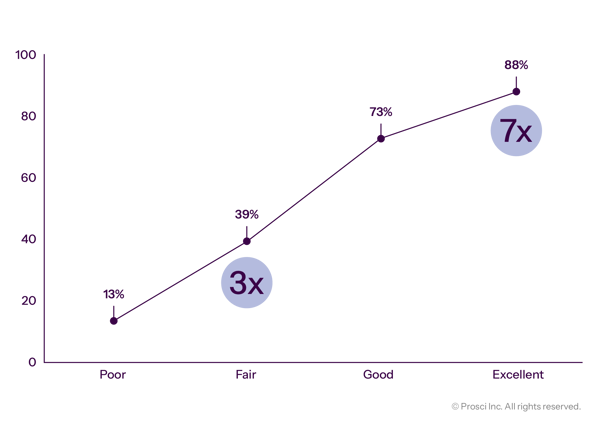
When people and leaders are supported through change with the right tools and resources, adoption follows. In fact, Prosci research shows that organizations with excellent change management are seven times more likely to achieve their objectives.
Correlation Between Change Management and Project Success
Here’s how a structured, people-centric approach helps you realize the objectives of your digital transformation journey and sustain its results in the long term.
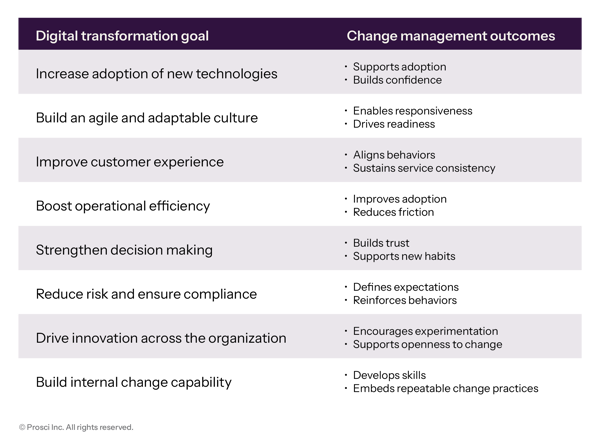
1. Increased adoption of new technologies
A key digital transformation goal is to improve the adoption of new technologies across the organization. Most companies invest in digital tools to improve operations and enhance customer experiences. For example, a recent study found that 77% of businesses are either using or exploring the use of AI.
But these improvements can only be realized when people understand, accept and use these technologies. Change management provides the structure to guide employees and leaders through this transition by:
- Empowering leaders to model commitment and reinforce the value of new technologies.
- Communicating the “why” and “how” behind the new technology and its impact on employees through a structured Communications Plan.
- Equipping employees with knowledge and skills to use the new technology effectively. This includes training plans, resources and ongoing support.
A multinational chemical company faced this challenge head-on. After realizing that technically successful projects were stalling due to low employee adoption, they partnered with Prosci. Together, we customized training for their engineering-focused workforce and integrated change management into project workflows.
Thanks to the partnership, the company increased its change maturity by 30%, cut training costs by over 75%, and aligned 20,000 employees under a common language for change.
2. Agility and adaptability
A common digital transformation strategy objective is to create a more agile and adaptable workforce. This allows organizations to respond faster to change and innovate continuously as market demands shift.
A people-centric approach is key to achieving this level of responsiveness. Employees need to be prepared and equipped to navigate change. And leaders need the skills to guide them through it.
Change management helps build this capability along your digital transformation journey by:
- Developing change leadership skills to equip people leaders with the mindset, tools and behaviors needed to lead change effectively.
- Involving employees in the change process so they feel invested in the digital transformation project, which increases their willingness to embrace changes.
- Embedding structured, repeatable change practices to strengthen organizational responsiveness to factors such as changing market conditions.
Over time, this builds a resilient organization that’s ready for what’s next.
3. Improved customer experience
Customer experience is a defining element of digital transformation. Innovative technologies such as mobile apps can greatly enhance the way customers interact with your brand. These digital tools can help you deliver consistent, high-quality service at every touchpoint.
But technology is only the first step in reaching this goal. Achieving it requires employees to understand their role in the customer journey and align their behaviors with the service vision. These behaviors are more likely to stick when they’re guided by leadership.
Change management makes this possible by:
- Clearly defining roles and responsibilities to align behaviors with new digital processes and expectations.
- Coaching people leaders to guide teams through new ways of working and reinforce service behaviors.
- Reinforcing positive behaviors by recognizing and rewarding employees who positively impact customer experiences and meet customer expectations.
The Drechtsteden Shared Services Center achieved this goal through structured change management. When eight separate service counters were causing inconsistent customer experiences, the firm partnered with Prosci to transform its service model and create a unified solution. After applying the Prosci ADKAR Model to guide individual transitions, the company achieved a customer satisfaction score of 7.9 out of 10, and created a sustainable framework for ongoing service improvement.
4. Increased operational efficiency
Improving efficiency is a common goal in any digital transformation strategy. Organizations aim to reduce waste and encourage revenue growth by replacing outdated processes and legacy systems with streamlined automation.
These process improvements only succeed when people adopt the new workflows correctly. Change management enables this by:
- Identifying adoption risks early so leaders can address issues before they impact performance.
- Training impacted teams so they understand how to apply new processes in their daily work.
- Tracking progress to ensure people are adopting the change and improvements are being realized.
When people adopt new ways of working, organizations can unlock the full value of new technologies and achieve meaningful efficiency gains.
How Change Management Supports Digital Transformation Goals
5. Data-driven decision-making
Digital transformation efforts often focus on improving decision-making. Organizations invest in dashboards, analytics platforms and AI tools to leverage data for more informed decisions.
Reaching this goal requires a shift in how people make these decisions, as they will need to rely on data rather than instinct or habit.
Change management supports this shift by:
- Establishing trust by communicating the purpose of data initiatives and how they align with business goals.
- Building skills and knowledge to access, interpret and apply data in their work.
- Reinforcing data-driven behaviors over time so they become part of daily decision-making.
When people have what they need to embrace new decision-making behaviors, they’re more likely to sustain those behaviors over time.
6. Improved compliance and lowered risk
Digital transformation can strengthen compliance and reduce risk. New technologies offer better tools to manage data, enforce controls and meet regulatory requirements.
But for these technologies to deliver compliance improvements, people need to understand and apply the changes correctly.
Structured change management can help achieve this by:
- Delivering targeted training so people know how to operate within new systems and processes.
- Clarifying responsibilities to ensure individuals understand their role in maintaining compliance.
- Reinforcing consistent behaviors that support regulatory and policy alignment.
With strong change management in place, compliance becomes embedded in processes and risk becomes easier to manage.
7. Innovation across the organization
Driving innovation is a core goal of digital transformation. New technologies can facilitate new thinking and continuous improvement throughout the enterprise.
Innovation only works when people feel confident to try new things. A people-centric approach helps instigate a cultural shift towards a more innovative environment.
Change management supports this by:
- Encouraging experimentation and open feedback during digital transformation initiatives.
- Reinforcing a supportive company culture where people have the confidence to explore and learn.
- Ensuring strong leadership that promotes innovation and recognizes and rewards adaptive behavior.
When people have the confidence to adopt an innovative mindset, it benefits the entire organization.
8. Internal change capability
A core goal of digital transformation is not only to implement new technologies but to ensure your organization can continuously adapt and evolve. Building internal change capability enables this by equipping your workforce to lead change from within.
Outsourcing this critical function limits long-term success. By equipping your people to lead and sustain change, you build the capability to drive successful outcomes across every initiative.
Developing internal change capability requires a robust, repeatable process and clear language for change. This structured approach integrates change into the way your organization operates:
- Training internal practitioners to apply a repeatable, research-based approach to change.
- Coaching sponsors and people leaders to activate their networks and build momentum.
- Embedding change as a core competency across roles, functions and strategic initiatives.
With internal change capability in place, you’ll be ready to navigate whatever changes lie ahead.
How Structured Change Management Supports Digital Transformation Goals
Successful digital transformation requires a deliberate approach to guiding people through changes in systems, processes and ways of working. Change management provides that structure. Supporting individuals while also addressing the technical side of change, it offers a foundation for implementing and sustaining digital transformation.
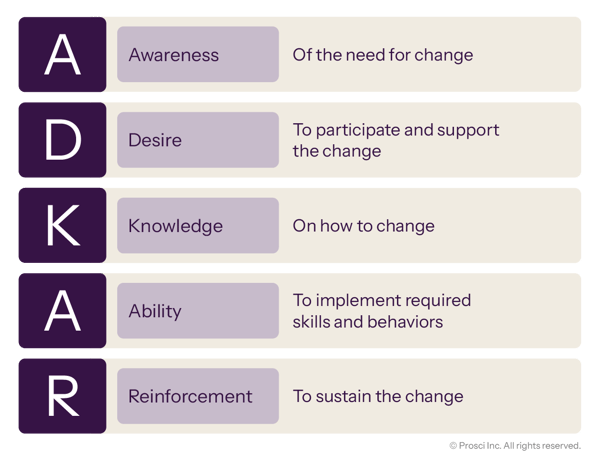
The Prosci ADKAR® Model is a proven change management approach that helps people adopt change successfully. Here’s how this people-centric model helps you overcome digital transformation challenges and achieve your transformation goals.
Prosci ADKAR Model
Awareness of the need for change
Our ADKAR Model starts by creating Awareness among employees about the need for digital transformation. This includes clearly communicating the reasons for change, such as improving efficiency, enhancing customer satisfaction or staying competitive.
When individuals don’t understand why change is happening, they’re more likely to resist it. Fostering awareness of why the transformation is necessary will prevent negative reactions such as fear and uncertainty.
Desire to support and participate
The second element of the ADKAR Model focuses on building Desire to engage with the digital transformation efforts. A key part of this is showing employees how they stand to benefit personally from the change. For example, new tools will make their jobs easier by automating manual tasks.
The Desire stage also encourages actively involving employees in the change process. This helps to foster a sense of ownership, increasing willingness to engage with new technologies and processes.
Knowledge on how to change
Lack of digital skills is a key barrier to successful transformation. Prosci’s study, Keys to Unlocking AI Adoption, reveals that nearly 40% of adoption challenges stem from skill gaps. The ADKAR Model provides a framework for delivering training programs that equip employees with the necessary knowledge to adopt new technologies.
The Knowledge element also focuses on resources and support materials that ensure employees understand how to adapt to new workflows and processes. This understanding is crucial to successful digital adoption—without it, people lack both the skills and confidence to adopt change effectively.
Ability to implement required skills
Advanced technologies often require new competencies. To put these into action, people need the Ability to apply them. Our ADKAR Model helps to develop the behaviors employees need to thrive in a digital environment, such as using new tools accurately, following updated workflows, and adapting to new performance expectations.
Targeted training programs build Ability in the specific areas that drive successful adoption. This includes hands-on practice and real-time feedback to build proficiency. Unlike the Knowledge element, which focuses on understanding, the Ability element ensures employees can apply what they’ve learned in real work situations. By removing barriers such as a missing capability, you can support employees to implement the change effectively.
Reinforcement to sustain the change
Reinforcing change is key to its sustainability. Without reinforcement, people can easily fall back into old habits and practices. Our ADKAR Model emphasizes this with strategies like recognition programs, ongoing support, and continuous improvement initiatives.
Monitoring progress is also critical to the long-term success of your digital transformation initiatives. Without visibility into how individuals are progressing, gaps can go unnoticed and adoption can stall. Use ADKAR Assessments to track individual and team progression over time. Ensure that employees remain engaged and on track to meet your digital transformation goals.
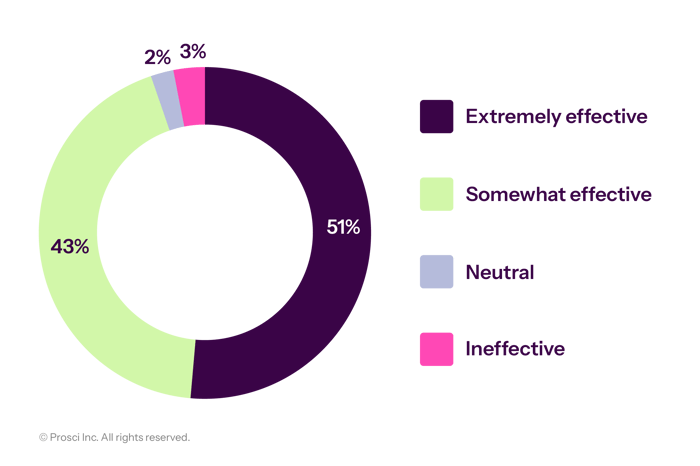
The Prosci ADKAR Model provides a framework for managing the people-side of the digital transformation journey. And its impact is clear; in a Prosci study, 51% of respondents rated the ADKAR Model as extremely effective for facilitating change.
Effectiveness of the ADKAR Model on Facilitating Change
Digital Transformation Goals FAQs
What is a digital transformation goal?
A digital transformation goal is a strategic objective set by an organization to improve its performance, customer experience, or competitiveness by leveraging digital technologies.
These goals define what the organization aims to achieve through its transformation efforts. They typically focus on outcomes such as streamlining operations, enhancing service quality, reducing costs, and increasing responsiveness.
What are the key objectives of digital transformation?
The key objectives of digital transformation focus on using technology to improve business performance, strengthen resilience and enable long-term growth opportunities.
The most common objectives of digital transformation include:
- Increase adoption of new technologies
- Improve agility and adaptability
- Enhance customer experience
- Increase operational efficiency
- Support data-driven decision-making
- Strengthen compliance and reduce risk
- Foster innovation across the organization
- Build internal change capability
These objectives guide digital transformation strategies and impact the investments organizations make.
Why does digital transformation matter?
Digital transformation matters because adopting new technologies enables businesses to adapt to changing customer expectations, improve efficiency and gain a competitive edge.
To sustain these changes, people need to adopt new ways of working. Change management helps build this capability, ensuring today’s transformation delivers results, and tomorrow’s changes are easier to lead.
How can a company succeed in digital transformation?
Digital transformation succeeds when organizations address both the technical- and people-side of change. A structured, adaptable approach to change management, like the Prosci Methodology, helps set your people up for successful adoption.
Achieving Digital Transformation Goals Starts With People
To unlock the benefits of digital transformation, you need to support the people at its center. Change management provides a structured approach to turn strategy into sustained adoption and improved results. Prosci gives you the tools, training, and support to achieve lasting digital transformation success.