7 Mins
Updated: April 13, 2026
Published: July 30, 2025


Oil and gas professionals are no strangers to volatility. Every day, you face price swings, shifting regulations, and the relentless drive toward a low-carbon future. But what if, instead of reacting to disruption, you could shape it? What if your organization could seize the moment, and revamp its technological infrastructure alongside the way your people work, learn, and adapt?That’s the power of true digital transformation. Yes, investments in artificial intelligence (AI), the internet of things (IoT), big data, and cloud computing solutions are soaring, but the real difference-maker isn’t the tools themselves. The impactful change comes from people who are ready, willing, and able to put them to use. According to McKinsey, 70% of oil and gas companies stall in pilot purgatory, unable to scale digital initiatives beyond early experiments. The obstacle isn’t technical; it’s human.
Change management is the key to moving beyond the trial phase and unlocking the power of cutting-edge tools. By integrating Prosci’s ADKAR® Model (Awareness, Desire, Knowledge, Ability, and Reinforcement) into every step of your transformation, you can turn hesitation into enthusiasm, confusion into clarity, and pilots into lasting, enterprise-wide success. True digital transformation isn’t so much about technology as it is unleashing your people to innovate, excel, and lead your industry into a bold new era.
In this article, we’ll explore how oil and gas companies can harness the power of change management to move from digital stagnation to transformation success, drawing on best practices, industry data, and real-world examples of change done right.
Emphasis on Technology Adoption in Digital Transformation
The data is clear that advanced digital technologies are now essential for improving productivity, operational efficiency, reducing downtime, and navigating volatile markets. McKinsey research shows that upstream companies using advanced analytics have captured additional value of more than $5 per barrel of oil equivalent, while downstream firms have achieved cost savings exceeding $1 per barrel through end-to-end optimization initiatives.
Deploying artificial intelligence-driven maintenance systems or IoT-enabled asset monitoring is only the beginning, however. The real challenge in digitization is ensuring employees have the Knowledge and Ability— two critical components of Prosci’s ADKAR Model—to effectively use these technologies day to day. This means oil and gas companies must invest in comprehensive upskilling programs that build digital fluency across all levels, from field technicians and engineers to operations managers and executives.
Deloitte’s assessment of leading firms in the oil and gas sector underscores this point: companies that successfully embed digital tools do so by creating consistent digital fluency throughout their workforce. Upskilling initiatives, such as virtual reality training for emergency scenarios or role-based software education, give workers the confidence and competence needed to embrace new tools, avoid costly errors, and maximize ROI on digital investments.
Moreover, building these capabilities early in the digital transformation journey reduces resistance and creates a culture where technology adoption becomes a shared priority, not a top-down mandate.
Cultural Shift Towards Agility in the Oil and Gas Industry
Don’t just think about digital transformation in oil and gas as if it’s just about adopting new tools. Instead, you need to look at it as redefining how your organization thinks, collaborates, and moves. Transformation demands a shift from rigid, hierarchical ways of working to agile, responsive cultures where teams feel empowered to act quickly and innovate boldly. Yet many companies remain bogged down by legacy systems and siloed processes that slow decision-making and make it nearly impossible to adapt to shifting market conditions or emerging technologies.
To truly lead in this new era, energy companies must dismantle these silos and build cross-functional, agile teams capable of turning challenges into opportunities. Deloitte’s research shows that leading oil and gas companies cultivate agile mindsets across their workforce by forming centralized innovation committees and executing projects through agile digital teams with a “fail fast” approach.
More than anything, a successful cultural shift begins with leaders who set the tone. Executives and managers must not only model openness to change but actively champion it by demonstrating commitment to new ways of working, celebrating early wins, and inspiring others to embrace change, now and in the future. They can do this by aligning with the Desire and Reinforcement stages of Prosci’s ADKAR Model. Employees need leaders who communicate the why, listen to concerns, and show what’s possible. That’s how you turn hesitation into momentum.
.png?width=600&height=350&name=Digital%20Transformation%20in%20Oil%20and%20Gas%20Industry%20%20(1).png)
Integration of Change Management Practices
For oil and gas companies aiming to scale digital solutions beyond isolated trial projects, integrating change management from the very start is critical. Here’s how organizations can embed change management as a core part of their digital strategy:
Start Early in the Planning Phase
Don’t wait until new technologies are deployed. Build change management into the project plan from the beginning to proactively identify obstacles and develop engagement strategies. Align transformation goals with overall business objectives so digital initiatives support your organization’s most pressing needs.
Position Change Management as a Core Competency
Make change management a central pillar, not a side task. Treat it with the same importance as technical execution. Establish dedicated, centralized change management teams that work closely with project management offices and business units.
Apply Proactive, Structured Support
Rather than reacting to problems after they surface, anticipate challenges before they slow progress. Use Prosci’s 3-Phase Process to guide teams through every stage, from planning to reinforcement. Engage employees early to build Awareness and Desire, while providing the training and resources needed to foster Knowledge and Ability.
Focus on Employee Engagement and Communication
Clear, consistent communication is the heartbeat of successful digital transformation. In oil and gas operations, where the stakes are high and conditions can change in an instant, professionals deserve to know not only what is changing, but why. Too often, organizations rush to deploy new technologies without explaining their purpose, leaving teams confused, frustrated, or resistant. To inspire confidence and build genuine buy-in from their people, leaders communicate the bigger picture: that these new tools will make operations safer, more efficient, more sustainable, or more competitive.

A helpful way to tailor messaging to your staff about digital transformation is to begin by considering what each group cares about most. Then, move it from an abstract initiative into something personal and motivating:
- Field technicians: Show how new technologies and automation reduce physically demanding tasks or provide real-time safety alerts, making daily work safer and less strenuous.
- Engineers: Highlight how digital tools streamline data analysis, improve modeling accuracy, and free up time for creative, high-value problem-solving.
- Project managers: Emphasize tools that improve efficiency, enhance scheduling, coordination, and budget tracking, so they can deliver projects faster and with fewer surprises.
- Office and administrative staff: Explain how new systems simplify reporting, reduce paperwork, and create opportunities for developing valuable digital skills.
Speaking directly to these unique priorities make digital transformation personally relevant and has a much better chance of sparking genuine excitement instead of uncertainty.
Building Awareness, the first critical step in Prosci’s ADKAR Model, depends on transparent, consistent communication that never stops. Regular updates, channels for feedback, and celebrating early wins keep people engaged and show them that their voices matter. Deloitte’s research confirms that leading oil and gas companies excel when they establish clear value governance frameworks and communicate progress consistently. When employees feel included and understand how their efforts move the entire organization forward, they become champions of change.
Addressing Operational Changes
Restructuring teams and redesigning workflows are often necessary to fully leverage new digital tools and maximize efficiency. This might mean teaching maintenance crews to use predictive analytics, integrating IT and operational technology (OT) functions, or adjusting reporting lines so decisions happen faster.
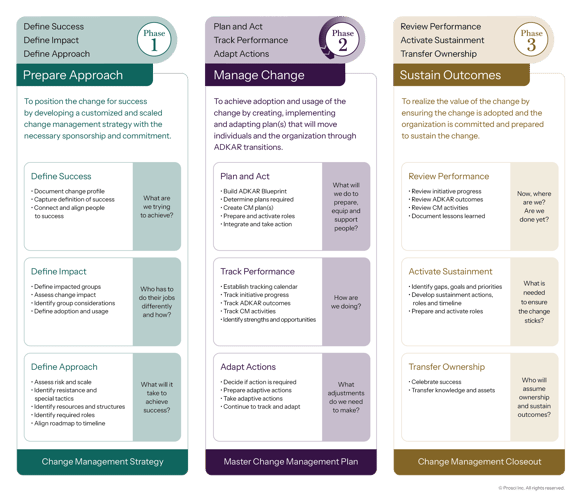
Successfully navigating these changes requires a structured approach like Prosci’s 3-Phase Process, which gives leaders a roadmap to plan, execute, and reinforce transitions to help new ways of working stick.
- Phase 1 – Prepare Approach: Companies can start by conducting a thorough assessment of existing workflows, equipment usage, and team structures. For example, mapping how maintenance scheduling happens today versus how it should work with predictive maintenance tools can reveal specific processes or skills gaps that need addressing.
- Phase 2 – Manage Change: Once gaps are identified, leaders can design targeted training, pilot new workflows, and engage employees through workshops or hands-on coaching. During this phase, it’s critical to listen to employee feedback and adjust plans quickly to reduce resistance and keep momentum.
- Phase 3 – Sustain Outcomes: After the new processes go live, leaders must reinforce changes with ongoing support by embedding new performance metrics into regular reviews, celebrating early successes publicly, or providing refresher training. This is a good way to make sure employees don’t revert to old habits.
The Prosci 3-Phase Process
Benefits of a Change-Led Transformation Approach
Here’s what a change-led approach can unlock for oil and gas leaders ready to set the pace for the industry:
Higher Adoption Rates and Reduced Project Risk
When employees understand the purpose of new tools and feel supported every step of the way, they adopt new tools and resources with confidence. This accelerates time to value, minimizes resistance, and reduces the risk of costly delays or failures. All this is available when change isn’t something that’s done to them but rather something they own.
Greater ROI From Digital Investments
Technologies like AI-driven maintenance, IoT monitoring, and predictive analytics only deliver promised returns when fully embraced by the workforce. Change management maximizes adoption and utilization, ensuring every dollar invested translates into measurable, sustained business value.
Improved Morale and Organizational Alignment
Clear communication, visible leadership, and a shared vision for change foster trust and enthusiasm. Employees feel connected to the company’s future and empowered to contribute, driving up morale, strengthening collaboration, and building an organization aligned around common goals.
Accelerated Time to Market
Proactively managing change allows organizations to scale digital initiatives faster, moving from pilot to enterprise-wide implementation without unnecessary roadblocks. This speed gives companies a decisive advantage where they can seize market opportunities before competitors can catch up.
Enhanced Safety and Compliance
Structured change management helps employees understand how new tools and processes impact safety protocols and regulatory requirements. This clarity reduces the risk of compliance breaches or workplace incidents, safeguarding both people and the environment—both of which are critical priorities in oil and gas.
Stronger Change Readiness for Future Initiatives
By developing change capability through today’s projects, organizations prepare their workforce to tackle future transformations with confidence. A culture skilled at navigating change becomes more resilient, turning every new challenge into an opportunity for growth.
Case in Point: SoCalGas Builds Change Capability With Prosci
/LPs/SoCalGas_logo_01_color-01.jpg?width=250&height=106&name=SoCalGas_logo_01_color-01.jpg)
A prime example of these benefits comes from Southern California Gas Company (SoCalGas), which successfully applied the Prosci Methodology on a massive gas meter upgrade affecting six million devices. Leadership recognized the power of structured change management and partnered with Prosci to establish an Enterprise Change Management (ECM) team. This effort:
- Raised the company’s change maturity score from 1.7 to 3.9, reflecting significant growth in organizational readiness.
- Certified 229 change practitioners, building widespread in-house change capability.
- Achieved a 145% improvement in processing speeds on key projects, proving that change management delivers measurable operational benefits.
Embedding change management as a core competency transformed both day-to-day operations and large-scale initiatives, ensuring consistent project success and building a change-ready culture that endures.
Final Thoughts on Leading Transformation in Oil and Gas
Digital transformation is the single greatest opportunity for oil and gas leaders to redefine how their organizations operate, compete, and thrive. But the truth is clear: transformation is as much about your people as it is about your technology. No AI model, IoT sensor, or predictive algorithm can deliver its full potential if your teams aren’t engaged, prepared, and ready to embrace what’s next.
Success depends on early, integrated, and sustained change efforts. Leaders who weave change management into every phase build unstoppable momentum and create cultures where people see change as a path to growth, not a threat to stability.
Using Prosci’s proven principles, including the ADKAR Model and 3-Phase Process, digital transformation becomes a foundation for long-term impact and resilience, empowering your organization to navigate industry volatility with confidence and agility. Putting change management at the core of your strategy sets the pace for a smarter, safer, and more sustainable future in oil and gas.